Acrylic On CanvasWallArtOrientalist Painting
 190719th Century
 9.0 x 12.0 cm
 Palazzo Fortuny
Museum-quality giclée or canvas print with fast production and flexible finish options. ( Buy Hand Made Painting Switch to Digital Image)





























Pick from our preset sizes that match the artwork's original proportions.

You may enter your own dimensions to fit a specific frame or space. If your selected size does not match the original image's proportions, we will either crop the artwork or extend the image with a mirrored or solid-fill edge. A digital mockup will be sent for your approval before production begins.
Please note that the on-screen preview does not reflect the actual cropping or extension. Only the mockup will accurately show the final composition.
While custom sizes are available, we recommend selecting a dimension from the predefined list to preserve the original proportions.
Worldwide Delivery () in 2 weeks instead of standard 4/5 weeks. (21 September)


The first textiles workshop
Reproduction Size
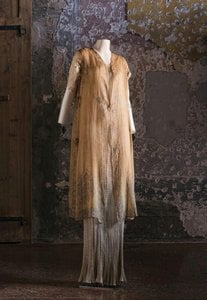
Captured in a striking black and white photograph, “The First Textiles Workshop” offers an intimate window into the creative heart of Mariano Fortuny y Madrazo’s studio. Dating back to 1907, this image isn't merely documentation; it’s a portal to a world where artistry seamlessly blended with industry, where the echoes of ancient cultures resonated within the walls of Venice’s Palazzo Pesaro degli Orfei. The scene is immediately arresting – a room brimming with the tangible evidence of a dedicated craft: bolts of fabric draped across walls, meticulously arranged bottles hinting at a vibrant palette of dyes, and a simple wooden table anchoring the space. Yet, it's more than just a workshop; it’s a testament to Fortuny’s revolutionary approach to design – one that sought to fuse historical inspiration with contemporary aesthetics.
Mariano Fortuny was a true innovator, not just as a painter but as a designer and inventor. His textile workshop wasn't simply about creating beautiful fabrics; it represented a radical departure from traditional methods. He pioneered techniques that allowed him to reproduce the intricate patterns and textures inspired by civilizations like Minoan Crete, ancient Egypt, and the Islamic world – motifs previously inaccessible through conventional printing processes. His meticulous research into these cultures, combined with his own artistic sensibility, resulted in designs of unparalleled beauty and sophistication.
Key Innovations:The photograph itself is laden with symbolism. The hanging fabrics represent not just finished products but also the ongoing process of creation—a continuous dialogue between past and present. Fortuny’s fascination with ancient cultures wasn't merely academic; it was a deeply felt desire to recapture the beauty, elegance, and spiritual richness he perceived in these civilizations. His designs weren’t simply imitations; they were reinterpretations, infused with his own artistic vision and a profound respect for their origins. The bottles of dyes are particularly evocative, representing the transformative power of color – a key element in Fortuny's ability to evoke the atmosphere and spirit of distant lands.
“The First Textiles Workshop” offers a rare glimpse into the mind of a visionary artist. It reveals not just a working space but a crucible where historical research, technical innovation, and artistic passion converged. Fortuny's legacy extends far beyond his beautiful textiles; he fundamentally changed the way we think about design, demonstrating that inspiration can be found in the most unexpected places – and that beauty can be achieved through a synthesis of tradition and modernity. Reproductions of this photograph capture not only the physical space but also the spirit of experimentation and artistic exploration that defined Fortuny’s remarkable career.


1871 - 1949 , Spain

Explore the profound emotional depth of documentary photography art. Discover how collectors curate powerful historical narratives through museum-quality black and white prints and fine art reproductions that preserve humanity's most resilient moments.

Explore the profound artistry of black and white photography. From historical mastery to the interplay of light and shadow, discover how monochrome captures timeless emotion and form through a sophisticated lens of art history.

Embark on a sophisticated journey through the tactile realm of textile art. Unveil the historical evolution from utilitarian craft to museum-grade masterpieces, exploring the intricate textures and legendary artists that redefine the boundaries of fine art.

Explore the profound evolution of documentary photography through a cultural lens. From early social realism to modern visual narratives, discover how photographers have captured history, labor, and the human condition to redefine fine art.

Explore the profound evolution of contemporary photography through a connoisseur's lens. From monochrome mastery to digital innovation, discover how modern photographic works shape fine art collections and define our cultural legacy.

 Preview
 Send
Send Share
Share
 Details
 Guide
Guide

 Download
 Similars
 X-Ray
X-Ray Diaporama
 Stats
Stats Read More







 Glass option is only available in size under 110 CM