DigitalDigitalArt Nouveau
 1949Modern
 29.0 x 178.0 cm
 Museo del Traje
Museum-quality giclée or canvas print with fast production and flexible finish options. ( Buy Hand Made Painting Switch to Digital Image)
Pick from our preset sizes that match the artwork's original proportions.

You may enter your own dimensions to fit a specific frame or space. If your selected size does not match the original image's proportions, we will either crop the artwork or extend the image with a mirrored or solid-fill edge. A digital mockup will be sent for your approval before production begins.
Please note that the on-screen preview does not reflect the actual cropping or extension. Only the mockup will accurately show the final composition.
While custom sizes are available, we recommend selecting a dimension from the predefined list to preserve the original proportions.
Worldwide Delivery () in 2 weeks instead of standard 4/5 weeks. (25 September)


Swatch
Reproduction Size
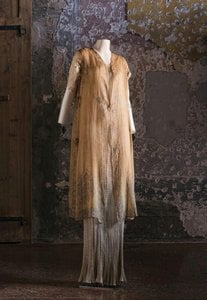
In the realm of decorative arts, few names resonate with as much multidisciplinary magic as Mariano Fortuny. His work, exemplified by this exquisite 1949 swatch, serves as a breathtaking window into a world where fashion, textile design, and fine art converge. This particular piece presents a mesmerizing, vertical composition that transcends mere pattern to become a rhythmic dance of light and shadow. Set against a profound, velvety backdrop of deep burgundy and dark umber, the artwork unfolds in a structured yet fluid arrangement of stylized floral and geometric motifs. It is an intricate web of interlacing swirls and circular forms that seem to pulse with a life of their own, inviting the viewer to lose themselves in its hypnotic, repetitive beauty.
The aesthetic language of this swatch speaks to the soul of Art Nouveau and the opulent grandeur of Byzantine aesthetics. Every line is deliberate, tracing delicate outlines that define complex, organic shapes which suggest the subtle presence of nature without ever lapsing into literal representation. There is a profound sense of order found in its symmetry, yet the flowing, curvilinear elements prevent the design from feeling rigid. Instead, the piece achieves a state of "ordered chaos," where the density of the detail creates a rich, tactile illusion. For the discerning collector or interior designer, this work offers a sophisticated way to introduce texture and historical depth into a modern space, acting as a focal point that commands attention through subtlety rather than volume.
Technically, the piece reflects Fortuny’s legendary mastery of layering and color manipulation. While we view it today through a digital lens, the essence of the work remains rooted in the traditional techniques of paint and canvas. The way the lighter, gilded tones emerge from the dark ground suggests a masterful use of light—a nod to Fortuny’s own revolutionary contributions to theatrical lighting and his ability to manipulate perception through reflection and shadow. This interplay creates a sense of internal depth, making the flat surface appear as though it possesses a hidden dimension. It is not merely a pattern; it is an atmospheric experience.
Beyond its visual splendor, the swatch carries an emotional weight of nostalgia and quiet luxury. It evokes the atmosphere of a grand European estate, where every textile tells a story of craftsmanship and heritage. The symbolic elements, though abstract, whisper of spiritual continuity and the eternal cycles of nature through their floral inspirations. For those seeking to curate an environment of intellectual depth and aesthetic harmony, this reproduction offers more than just decoration; it provides a piece of history that breathes elegance into any setting, bridging the gap between the storied past of 1949 and the sophisticated interiors of the contemporary era.


1871 - 1949 , Spain

Embark on a sophisticated journey through the tactile realm of textile art. Unveil the historical evolution from utilitarian craft to museum-grade masterpieces, exploring the intricate textures and legendary artists that redefine the boundaries of fine art.

Explore the profound impact of Constructivism on modern art. Discover how geometric abstraction and industrial aesthetics revolutionized design, from avant-garde textiles to architectural mastery, curated for the discerning art collector seeking depth and historical significance.

Explore the profound spiritual depth of geometric abstraction. From Malevich's Suprematism to modern masters, our expert guide reveals how pure form and color command presence in fine art collections.

Explore the profound impact of geometric form in art history. From Cubism to Op Art, discover how shape creates movement and emotion in masterpieces, and learn how to curate these powerful compositions for your private collection.

 Send
Send Share
Share
 Details
 Guide
Guide

 Download
 Similars
 Diaporama
 Stats
Stats Read More




































 Glass option is only available in size under 110 CM