FREE ART CONSULTATION

x
Buy Painting Buy PaintingBuy Image Buy Image SendSend
DetailsDetails Add to favorites Add to favorites DownloadDownload SimilarsSimilars X-RayX-Ray DiaporamaDiaporama

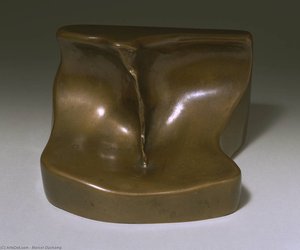
Sink Stopper

The artwork’s monochromatic gray hue emphasizes its textural qualities—the rough surface of aged metal—contrasting with the geometric simplicity of its form. Its inclusion in the Marcel Duchamp catalogue raisonné underscores its importance as a cornerstone of modern art.

Marcel Duchamp: Revolutionary artist who challenged art's definition with Dadaism & readymades like 'Fountain.' Explore his iconic works & philosophical impact.

Giclée / Art Print

Museum-quality giclée or canvas print with fast production and flexible finish options.

P118B $10
P118H $10
P118W $10
P438Z $10
P508JH $12
P508YH $12
P805H $10
P805Z $10
P919BZ $10
P919G $10
P919XJ $10
P959ZH $10
P968JZ $12
W106C $8
W218G $10
W218JH $8
W218Y $10
W307PJ $10
W316G $10
W316PJ $8
W316Y $10
W398PJ $8
W4111J $10
W500HY $15
W500JH $15
W692G $12
W849H $8
W940BG $15
W953PJ $8

Standard
custom
CM
INCH

Pick from our preset sizes that match the artwork's original proportions.

width
height

You may enter your own dimensions to fit a specific frame or space. If your selected size does not match the original image's proportions, we will either crop the artwork or extend the image with a mirrored or solid-fill edge. A digital mockup will be sent for your approval before production begins.
Please note that the on-screen preview does not reflect the actual cropping or extension. Only the mockup will accurately show the final composition.
While custom sizes are available, we recommend selecting a dimension from the predefined list to preserve the original proportions.

Worldwide Delivery () in 2 weeks instead of standard 4/5 weeks. (4 July)

why_choose_icon
Free Worldwide Express Shipping
why_choose_icon
High-Quality Linen Canvas
why_choose_icon
Full Shipping Insurance
why_choose_icon
Customs Tax Refund Guarantee
why_choose_icon
True Color Matching Guarantee
why_choose_icon
60-Day Return Policy (Defects Only)
why_choose_icon
100% Money-Back Guarantee
why_choose_icon
Bulk Discount Offer

Total Price

-

reproduction

Sink Stopper

Giclée / Art Print

Reproduction Size

-

Total Price

-

Quick Facts

  • Medium: Cast bronze
  • Artistic style: Documentary
  • Movement: Dada
  • Artist: Marcel Duchamp
  • Influences: Cubism
  • Title: Sink Stopper
  • Subject or theme: Utilitarian object

Art Quiz

There is only one correct answer for each question.

Question 1:
What artistic movement is Marcel Duchamp primarily associated with?
Question 2:
The photograph depicts the sink stopper against what background color?
Question 3:
What is Duchamp's approach to art described as in the text?
Question 4:
The photograph highlights which aspect of the sink stopper's appearance?
Question 5:
Why was Fountain initially rejected by the Society of Independent Artists?

Collectible Description

Sink Stopper: A Reflection on Functionality and Artistic Provocation

Marcel Duchamp’s “Sink Stopper,” formally known as Bouche-Evier, stands as a deceptively simple yet profoundly influential artwork—a testament to the Dada movement's radical questioning of artistic conventions. Created in 1964, this unassuming porcelain urinal signed “R. Mutt” transcends its mundane origins to become an emblem of conceptual art and a cornerstone of twentieth-century intellectual history.

  • The Object Elevated: Duchamp’s genius lay not in crafting aesthetically pleasing visuals but in elevating the commonplace—a functional item from everyday life—to the realm of artistic consideration. As he famously declared, “The idea precedes the form,” encapsulating the core principle of Dada and challenging the traditional hierarchy between concept and execution.
  • Dada’s Critique of Tradition: The artwork emerged during a period of intense disillusionment with established artistic institutions following World War I. Dada artists rejected bourgeois values and embraced absurdity, aiming to dismantle accepted notions of beauty and originality. “Sink Stopper” embodies this spirit of rebellion by deliberately undermining the expectations surrounding sculpture.
  • Materiality and Technique: Crafted from porcelain—a material typically associated with decorative arts—the sink stopper’s smooth surface contrasts sharply with its utilitarian purpose. Duchamp meticulously positioned it on a plain white background, minimizing distractions and focusing attention on its form and texture. The photograph itself utilizes a straightforward technique, prioritizing clarity of image and capturing the object's inherent qualities without embellishment.

Historical Context: Dada’s Challenge to Artistic Boundaries

Duchamp’s decision to submit “Sink Stopper” anonymously to the Society of Independent Artists—a pivotal event in Dada history—was a deliberate act of defiance. The committee's rejection stemmed from their adherence to conventional aesthetic standards, highlighting the broader tensions between artistic innovation and societal conservatism. Duchamp’s subsequent resignation from the society underscored his unwavering commitment to challenging established norms.

  • The Significance of “R. Mutt”: The pseudonym “R. Mutt” served as a symbolic gesture—a rejection of personal identity and an assertion that art could exist independently of its creator’s ego. It mirrored the Dada ethos of anonymity and questioned the role of authorship in artistic production.
  • Influence on Conceptual Art: "Sink Stopper" is widely recognized as a seminal work in conceptual art, paving the way for artists to prioritize ideas over visual representation. Its impact resonates throughout contemporary art practice, prompting ongoing debates about what constitutes art and its relationship to culture.

Symbolism Beyond Functionality

While ostensibly a simple plumbing fixture, “Sink Stopper” carries deeper symbolic resonances. Duchamp’s repositioning of the urinal—turning it upside down—represents an inversion of traditional sculptural conventions and disrupts established hierarchies. The inclusion of the signature "R. Mutt" reinforces this subversive impulse, questioning notions of originality and celebrating the democratization of artistic expression.

  • The Role of Chance: Duchamp’s embrace of chance—evident in his selection of the urinal and its positioning—reflects Dada's fascination with spontaneity and rejecting rational control. It underscores the artwork’s rejection of artistic dogma and its affirmation of alternative modes of creative engagement.

Emotional Impact: A Quiet Assertion of Artistic Vision

Despite its understated appearance, “Sink Stopper” commands attention through its intellectual provocation. Duchamp's work compels viewers to reconsider their assumptions about art and beauty—to confront the possibility that artistic value resides not in visual splendor but in conceptual rigor. It remains a powerful reminder that art can challenge societal norms and inspire profound reflection on the nature of creativity itself.


Artist Biography

A Revolutionary Spirit: The Life and Art of Marcel Duchamp

Marcel Duchamp, born Henri-Robert-Marcel Duchamp in 1887 in Blainville-Crevon, Normandy, was more than an artist; he was a philosophical provocateur who fundamentally altered the course of modern art. His early life, though seemingly conventional – nurtured within a family that appreciated artistic expression with both brothers pursuing successful careers as artists – hinted at the iconoclasm to come. Duchamp initially pursued formal training, mastering traditional techniques and experimenting with post-impressionist styles. However, this academic foundation served not as an end in itself, but as a springboard for questioning the very nature of art, its purpose, and its definition. He wasn’t content merely to depict the world; he sought to challenge how we perceive it, and what constitutes artistic value. This restless intellectual curiosity would become the defining characteristic of his prolific career.

From Cubism to Dada: A Rejection of Convention

Duchamp's artistic journey was marked by a constant evolution, a deliberate shedding of established norms. His initial engagement with Cubism, evident in works like *Portrait of Chess Players* (1911), demonstrated an interest in fragmented forms and multiple perspectives – a departure from traditional representation. Yet, he quickly moved beyond purely aesthetic concerns, recognizing that simply rearranging visual elements wasn’t enough to address the deeper questions swirling within him. The horrors of World War I fueled this discontent, leading Duchamp to embrace Dadaism, a movement born out of disillusionment and a rejection of logic, reason, and traditional artistic values. It was within the Dadaist framework that Duchamp truly began to dismantle conventional notions of art. He wasn’t interested in creating beautiful objects; he wanted to provoke thought, challenge assumptions, and expose the arbitrariness of aesthetic judgment. This period saw the birth of his most radical innovation: the ‘readymade’.

The Readymades and the Subversion of Art

The introduction of readymades – ordinary manufactured objects selected and presented as art – was Duchamp’s most significant contribution to the 20th century. These weren't simply found objects; they were deliberate acts of artistic subversion. By taking an everyday item, like a urinal (*Fountain*, 1917), signing it “R. Mutt,” and submitting it to an art exhibition, Duchamp challenged the very definition of artistic skill and authorship. Was it the artist’s hand that created the work, or was it the artist's *idea*? This question became central to his practice and laid the groundwork for Conceptual Art. Other notable readymades like *L.H.O.O.Q.* (1919), a postcard reproduction of the Mona Lisa defaced with a mustache and goatee, were playful yet pointed critiques of art history and established cultural icons. These works weren’t meant to be admired for their aesthetic qualities; they were intended to provoke debate and force viewers to reconsider their preconceived notions about what constitutes art. Duchamp believed that art should reside in the mind, not merely in the eye.

Legacy and Enduring Influence

Marcel Duchamp's impact on subsequent generations of artists is immeasurable. He fundamentally altered our understanding of art, paving the way for movements like Conceptual Art, Minimalism, Pop Art, and countless others. His emphasis on the artist’s idea – the concept behind the work – over its aesthetic qualities continues to inspire artists today.
  • Cubism: Early exploration of fractured forms and spatial representation.
  • Dadaism: Rejection of logic, reason, and traditional artistic values in response to World War I.
  • Conceptual Art: Emphasis on the idea behind the artwork rather than its aesthetic qualities.
His work continues to provoke debate and challenge viewers to reconsider their assumptions about creativity and artistic expression. Duchamp wasn’t simply an artist; he was a philosopher, a provocateur, and a revolutionary who dared to question everything. He remains a central figure in discussions about the nature of art and its role in society, his legacy resonating powerfully within the contemporary art world. The Large Glass (1915-1923), with its complex symbolism and enigmatic imagery, stands as a testament to his intellectual rigor and enduring influence. Duchamp’s work is not about providing answers; it's about asking questions – questions that continue to challenge and inspire us today.

Marcel Duchamp

Marcel Duchamp

1887 - 1968 , France

Quick Facts

  • Artistic Movement Or Style:
    • Cubism
    • Dadaism
    • Conceptual Art
  • Artists Or Movements Influenced By This Artist:
    • Conceptual Art
    • Pop Art
    • Minimalism
  • Date Of Birth: July 28, 1887
  • Date Of Death: October 2, 1968
  • Full Name: Marcel Duchamp
  • Nationality: French-American
  • Notable Artworks:
    • Fountain
    • L.H.O.O.Q.
    • The Large Glass
    • Boîte-en-valise
  • Place Of Birth: Blainville, France
Explore artworks organized by themes, styles, and characteristics.