Preview AR preview Buy Hand Made Painting Switch to Digital Image Send
Details Guide Add to favorites Download Similars X-Ray Diaporama Stats

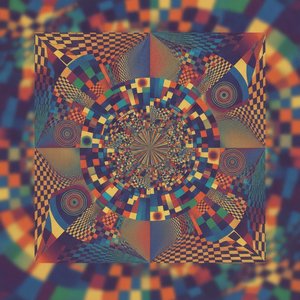
Rotorelief n°11 - Total Eclipse / Rotorelief n°12 - White spiral

Marcel Duchamp was a revolutionary artist who questioned the conventions of art, prioritizing intellectual exploration over traditional representation. Initially trained in Cubism and Impressionism, he embraced Dada's anti-establishment ethos, fundamentally reshaping artistic discourse.

Marcel Duchamp: Revolutionary artist who challenged art's definition with Dadaism & readymades like 'Fountain.' Explore his iconic works & philosophical impact.

Giclée / Art Print

Museum-quality giclée or canvas print with fast production and flexible finish options. ( Buy Hand Made Painting Switch to Digital Image)

P118B $10
P118H $10
P118W $10
P438Z $10
P508JH $12
P508YH $12
P805H $10
P805Z $10
P919BZ $10
P919G $10
P919XJ $10
P959ZH $10
P968JZ $12
W106C $8
W218G $10
W218JH $8
W218Y $10
W307PJ $10
W316G $10
W316PJ $8
W316Y $10
W398PJ $8
W4111J $10
W500HY $15
W500JH $15
W692G $12
W849H $8
W940BG $15
W953PJ $8

Standard
custom
CM
INCH

Pick from our preset sizes that match the artwork's original proportions.

width
height

You may enter your own dimensions to fit a specific frame or space. If your selected size does not match the original image's proportions, we will either crop the artwork or extend the image with a mirrored or solid-fill edge. A digital mockup will be sent for your approval before production begins.
Please note that the on-screen preview does not reflect the actual cropping or extension. Only the mockup will accurately show the final composition.
While custom sizes are available, we recommend selecting a dimension from the predefined list to preserve the original proportions.

Worldwide Delivery () in 2 weeks instead of standard 4/5 weeks. (23 September)

why_choose_icon
Free Worldwide Express Shipping
why_choose_icon
High-Quality Linen Canvas
why_choose_icon
Full Shipping Insurance
why_choose_icon
Customs Tax Refund Guarantee
why_choose_icon
True Color Matching Guarantee
why_choose_icon
100-Day Return Policy (Defects Only)
why_choose_icon
100% Money-Back Guarantee
why_choose_icon
Bulk Discount Offer

Total Price

$ 69

reproduction

Rotorelief n°11 - Total Eclipse / Rotorelief n°12 - White spiral

Giclée / Art Print

Reproduction Size

-

Total Price

$ 69

Quick Facts

  • Subject or theme: Visual perception
  • Location: Private Collection
  • Artist: Marcel Duchamp
  • Movement: Op Art
  • Notable elements or techniques: Circular spirals, optical illusion
  • Artistic style: Geometric abstraction
  • Year: 1935

Art Quiz

There is only one correct answer for each question.

Question 1:
What artistic movement is Marcel Duchamp’s ‘Rotorelief n°11 - Total Eclipse / Rotorelief n°12 - White spiral’ primarily associated with?
Question 2:
The lithographic printing technique utilized for this artwork contributes to which visual characteristic?
Question 3:
What is the dominant geometric element featured in ‘Rotorelief n°11 - Total Eclipse / Rotorelief n°12 - White spiral’?
Question 4:
What symbolic interpretation could be attributed to the swirling spirals within the artwork?
Question 5:
In what year was Marcel Duchamp’s ‘Rotorelief n°11 - Total Eclipse / Rotorelief n°12 - White spiral’ created?

A Dance of Illusion and Geometry

To gaze upon Marcel Duchamp’s Rotorelief n°11 - Total Eclipse / Rotorelief n°12 - White spiral is to enter a state of controlled disorientation. Created in 1935, this lithographic masterpiece does not merely sit upon a surface; it breathes with a phantom momentum. Through the meticulous application of concentric spirals and varying line weights, Duchamp orchestrates a visual symphony that tricks the eye into perceiving a rhythmic rotation where none exists. The monochromatic palette, stripped of the distractions of color, relies entirely on the stark tension between black and white to generate an astonishing sense of depth. This is not art meant for passive observation; it is an active participant in the viewer's sensory experience, pulling the gaze into a swirling vortex of light and shadow that defies the stillness of the paper.

The Spirit of Dadaist Rebellion

Beyond its mesmerizing surface lies the radical heart of the Dada movement. Born from the profound disillusionment following the horrors of World War I, Dadaism sought to dismantle the very foundations of traditional aesthetics and reject the notion of beauty as a primary artistic goal. Duchamp, a primary architect of this upheaval, used his Rotoreliefs to challenge the concept of "retinal art"—art that exists solely for the pleasure of the eye. By utilizing lithography to create an optical illusion, he forces us to confront the instability of our own perceptions and the fragility of reality itself. These spirals serve as symbols of a world in flux, reflecting a period where established hierarchies were being dismantled. The artwork acts as a profound bridge between the chaotic energy of Dada and the structured precision of what would later become Op Art, making it a pivotal moment in the evolution of modern abstraction.

A Timeless Focal Point for Modern Spaces

For the discerning collector or interior designer, this work offers an unparalleled opportunity to introduce intellectual depth and dynamic energy into a curated environment. The geometric rigor of the design allows it to integrate seamlessly into minimalist, industrial, or contemporary settings, where its monochromatic elegance can act as a sophisticated anchor. Because the piece relies so heavily on the interplay of light and shadow, its impact shifts subtly depending on the surrounding atmosphere, offering a different nuance of movement throughout the day. Incorporating a high-quality reproduction of this work is more than an aesthetic choice; it is an invitation to host a continuous dialogue between the viewer and the infinite, bringing a sense of profound, swirling mystery into the heart of any modern interior.

Artist Biography

A Revolutionary Spirit: The Life and Art of Marcel Duchamp

Marcel Duchamp, born Henri-Robert-Marcel Duchamp in 1887 in Blainville-Crevon, Normandy, was more than an artist; he was a philosophical provocateur who fundamentally altered the course of modern art. His early life, though seemingly conventional – nurtured within a family that appreciated artistic expression with both brothers pursuing successful careers as artists – hinted at the iconoclasm to come. Duchamp initially pursued formal training, mastering traditional techniques and experimenting with post-impressionist styles. However, this academic foundation served not as an end in itself, but as a springboard for questioning the very nature of art, its purpose, and its definition. He wasn’t content merely to depict the world; he sought to challenge how we perceive it, and what constitutes artistic value. This restless intellectual curiosity would become the defining characteristic of his prolific career.

From Cubism to Dada: A Rejection of Convention

Duchamp's artistic journey was marked by a constant evolution, a deliberate shedding of established norms. His initial engagement with Cubism, evident in works like *Portrait of Chess Players* (1911), demonstrated an interest in fragmented forms and multiple perspectives – a departure from traditional representation. Yet, he quickly moved beyond purely aesthetic concerns, recognizing that simply rearranging visual elements wasn’t enough to address the deeper questions swirling within him. The horrors of World War I fueled this discontent, leading Duchamp to embrace Dadaism, a movement born out of disillusionment and a rejection of logic, reason, and traditional artistic values. It was within the Dadaist framework that Duchamp truly began to dismantle conventional notions of art. He wasn’t interested in creating beautiful objects; he wanted to provoke thought, challenge assumptions, and expose the arbitrariness of aesthetic judgment. This period saw the birth of his most radical innovation: the ‘readymade’.

The Readymades and the Subversion of Art

The introduction of readymades – ordinary manufactured objects selected and presented as art – was Duchamp’s most significant contribution to the 20th century. These weren't simply found objects; they were deliberate acts of artistic subversion. By taking an everyday item, like a urinal (*Fountain*, 1917), signing it “R. Mutt,” and submitting it to an art exhibition, Duchamp challenged the very definition of artistic skill and authorship. Was it the artist’s hand that created the work, or was it the artist's *idea*? This question became central to his practice and laid the groundwork for Conceptual Art. Other notable readymades like *L.H.O.O.Q.* (1919), a postcard reproduction of the Mona Lisa defaced with a mustache and goatee, were playful yet pointed critiques of art history and established cultural icons. These works weren’t meant to be admired for their aesthetic qualities; they were intended to provoke debate and force viewers to reconsider their preconceived notions about what constitutes art. Duchamp believed that art should reside in the mind, not merely in the eye.

Legacy and Enduring Influence

Marcel Duchamp's impact on subsequent generations of artists is immeasurable. He fundamentally altered our understanding of art, paving the way for movements like Conceptual Art, Minimalism, Pop Art, and countless others. His emphasis on the artist’s idea – the concept behind the work – over its aesthetic qualities continues to inspire artists today.
  • Cubism: Early exploration of fractured forms and spatial representation.
  • Dadaism: Rejection of logic, reason, and traditional artistic values in response to World War I.
  • Conceptual Art: Emphasis on the idea behind the artwork rather than its aesthetic qualities.
His work continues to provoke debate and challenge viewers to reconsider their assumptions about creativity and artistic expression. Duchamp wasn’t simply an artist; he was a philosopher, a provocateur, and a revolutionary who dared to question everything. He remains a central figure in discussions about the nature of art and its role in society, his legacy resonating powerfully within the contemporary art world. The Large Glass (1915-1923), with its complex symbolism and enigmatic imagery, stands as a testament to his intellectual rigor and enduring influence. Duchamp’s work is not about providing answers; it's about asking questions – questions that continue to challenge and inspire us today.
Marcel Duchamp

Marcel Duchamp

1887 - 1968 , France

Quick Facts

  • Artistic Movement Or Style:
    • Cubism
    • Dadaism
    • Conceptual Art
  • Artists Or Movements Influenced By This Artist:
    • Conceptual Art
    • Pop Art
    • Minimalism
  • Date Of Birth: July 28, 1887
  • Date Of Death: October 2, 1968
  • Full Name: Marcel Duchamp
  • Nationality: French-American
  • Notable Artworks:
    • Fountain
    • L.H.O.O.Q.
    • The Large Glass
    • Boîte-en-valise
  • Place Of Birth: Blainville, France
Explore artworks organized by themes, styles, and characteristics.