

 Acrylic On CanvasWallArtSurrealism
 1961
1961 18.0 x 28.0 cm
The artwork displayed on this page is protected by copyright law, which means we cannot legally create or sell an identical reproduction. This protection is enforced under international agreements such as the Berne Convention and by national laws, including those outlined by the U.S. Copyright Law - Title 17.
This method fully complies with copyright regulations because it does not involve copying or duplicating the protected artwork. Instead, it is a creative reinterpretation - a new painting that is influenced by the original but not identical to it.
Museum-quality giclée or canvas print with fast production and flexible finish options. ( Buy Hand Made Painting Switch to Digital Image)





























Pick from our preset sizes that match the artwork's original proportions.

Type the width and the height you need, to fit your frame or your wall. A print can only be cut, never made bigger than the picture, so a size with a different shape loses a part of the image. We send you a digital mockup to approve before we print anything. The picture shown on this page does not show the real cut — only the mockup does.
Worldwide Delivery () in 2 weeks instead of standard 4/5 weeks. (26 October)
Paradise
Reproduction Size
Marc Chagall's "Paradise," painted in 1961, isn’t merely a depiction of an idyllic realm; it’s a vibrant portal into the artist’s deeply personal and profoundly Jewish imagination. This sketch, rendered in fluid black ink on lightly grid-lined paper, captures a moment suspended between earthly reality and celestial grace—a testament to Chagall's lifelong fascination with folklore, memory, and the spiritual. The work immediately draws the eye with its dynamic composition, a seemingly chaotic arrangement of figures and animals interwoven within an undefined space, yet possessing a remarkable sense of harmony and movement. It’s a scene brimming with life, not in a realistic sense, but through the sheer force of Chagall's expressive vision.
The sketch’s lack of a singular focal point is deliberate. Instead, elements—a reclining figure, a woman with outstretched arms, and various animals – are scattered across the page, creating an impression of perpetual motion and joyful disarray. Thick lines delineate the outlines of these figures, lending them solidity and presence, while thinner lines suggest details like hair or fur, adding layers of texture and nuance. The faint grid system, barely perceptible beneath the ink, hints at a preparatory study—a glimpse into Chagall’s process of translating his inner world onto paper. This technique, characterized by loose, gestural strokes and an emphasis on capturing movement and emotion rather than precise representation, is quintessential Chagall – a rejection of rigid academic constraints in favor of pure expression.
"Paradise" resonates deeply with the themes prevalent throughout Chagall’s oeuvre. The reclining figure, often interpreted as a self-portrait, embodies a sense of serenity and contemplation, while the woman with outstretched arms evokes a primal connection to nature and perhaps even to God. The presence of animals—dogs or wolves—adds an element of wildness and untamed beauty, suggesting a harmonious coexistence between humanity and the natural world. The title itself, “Paradise,” immediately anchors the scene within biblical tradition, referencing the Garden of Eden and the loss of innocence. However, Chagall’s interpretation transcends simple allegory; it's infused with his own personal mythology—a blend of Jewish folklore, childhood memories, and a yearning for spiritual transcendence. The sketch feels like a fragment of a larger, more complex narrative, inviting viewers to project their own interpretations onto its evocative imagery.
Created in 1961, during the twilight years of Chagall’s illustrious career, “Paradise” reflects his evolving artistic style. Having spent decades experimenting with Cubism, Surrealism, and other avant-garde movements, Chagall had settled into a deeply personal and recognizable idiom by this point. The sketch's loose, expressive quality aligns perfectly with the artist’s late-career work, characterized by a heightened sense of emotion and a rejection of formal constraints. It’s important to note that Chagall’s art was profoundly shaped by his Jewish heritage—his upbringing in Vitebsk, a vibrant multicultural city on the border between Russia and Poland, instilled within him a deep appreciation for folklore, religious symbolism, and the complexities of identity. His work continues to resonate with audiences today, not only for its aesthetic beauty but also for its profound exploration of universal themes such as faith, love, loss, and the search for meaning.
Reproductions of “Paradise” offer a remarkable opportunity to bring this captivating dreamscape into your home or office. WahooArt’s hand-painted reproductions capture the essence of Chagall's original sketch with stunning fidelity, allowing you to experience the artist’s vision in all its vibrant glory.
"Paradise" by Marc Chagall depicts: jewish folklore, dreams, figures, animals, harmony, chagall, surrealism, eden.
The suggested use for "Paradise" by Marc Chagall is statement. It can serve other purposes as well.
To get a digital file of "Paradise" by Marc Chagall, order a high-resolution digital image download on its Digital Image page.


1887 - 1985 , Belarus
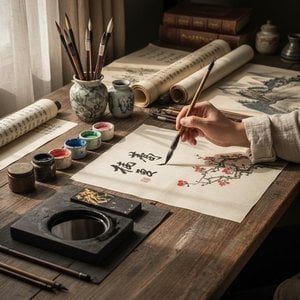
Embark on a sophisticated exploration of ink wash painting and Sumi-e. Uncover the profound historical lineages, Zen philosophies, and technical mastery behind this timeless medium in our authoritative guide for fine art enthusiasts.
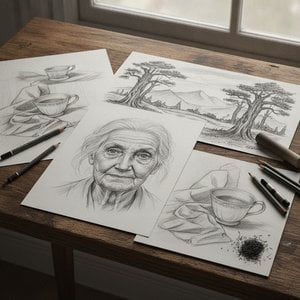
Explore the profound elegance of pencil and charcoal sketching. Discover how masters use line, shadow, and chiaroscuro to capture light and texture, bridging the gap between preparatory studies and timeless fine art masterpieces.

Embark on a profound journey through the soul of Chinese calligraphy. Explore the historical mastery of ink, brush, and script, from ancient Zhuanshu to elegant running script, and discover how this timeless art form reflects the enduring spirit of classical East Asian aesthetics.

 Preview
 Send
Send Share
Share
 Details
 Guide
Guide

 Download
 Similars
 X-Ray
X-Ray Diaporama
 Stats
Stats Read More









 Glass option is only available in size under 110 CM


