

 Acrylic On CanvasWallArtExpressionist Style
 1984
1984 83.0 x 60.0 cm
The artwork displayed on this page is protected by copyright law, which means we cannot legally create or sell an identical reproduction. This protection is enforced under international agreements such as the Berne Convention and by national laws, including those outlined by the U.S. Copyright Law - Title 17.
This method fully complies with copyright regulations because it does not involve copying or duplicating the protected artwork. Instead, it is a creative reinterpretation - a new painting that is influenced by the original but not identical to it.
Museum-quality giclée or canvas print with fast production and flexible finish options. ( Buy Hand Made Painting Switch to Digital Image)





























Pick from our preset sizes that match the artwork's original proportions.

You may enter your own dimensions to fit a specific frame or space. If your selected size does not match the original image's proportions, we will either crop the artwork or extend the image with a mirrored or solid-fill edge. A digital mockup will be sent for your approval before production begins.
Please note that the on-screen preview does not reflect the actual cropping or extension. Only the mockup will accurately show the final composition.
While custom sizes are available, we recommend selecting a dimension from the predefined list to preserve the original proportions.
Worldwide Delivery () in 2 weeks instead of standard 4/5 weeks. (10 October)
A sky
Reproduction Size
Marc Chagall’s “A Sky Over Opera,” created in 1984, transcends mere depiction; it embodies a profound exploration of memory and emotion—a hallmark of the artist's distinctive style. This lithograph captures a moment suspended between dream and reality, presenting a solitary figure ascending into an expansive azure expanse punctuated by swirling clouds.
Chagall’s Expressionist approach is immediately apparent. Rejecting academic conventions, he prioritized conveying feeling over precise representation. Bold brushstrokes and vibrant hues dominate the composition, mirroring the artist's recollections of Vitebsk—his birthplace and lifelong muse—where Orthodox churches stood alongside Jewish marketplaces, fostering a visual language rich in cultural duality.
The symbolism embedded within the artwork is layered and evocative. The soaring figure represents aspiration and transcendence, mirroring Chagall’s belief in the transformative power of imagination. Above him, the turbulent sky symbolizes uncertainty and emotional upheaval – mirroring the artist's personal struggles during his lifetime. The inclusion of a book subtly underscores the importance of knowledge and contemplation.
“A Sky Over Opera” isn’t simply a visual spectacle; it’s an invitation to contemplate the complexities of human consciousness and the enduring allure of memory. Its luminous colors and dynamic movement inspire viewers with a sense of wonder, capturing the essence of Chagall's artistic legacy—a testament to his ability to translate dreams into unforgettable images.
Similarly, “Lovers’ Sky,” painted in 1957, delves into themes of romance and longing with a masterful blend of Surrealist influences. Chagall’s signature Naive Art style—characterized by simplified forms and vibrant color palettes—transforms the canvas into an ethereal landscape brimming with symbolic resonance.
The lithograph technique employed ensures exceptional clarity and tonal accuracy, faithfully reproducing Chagall’s original artistic vision. This artwork stands as an enduring symbol of artistic brilliance—a captivating piece for collectors and interior designers alike.
"Lovers in the Sky of Nice," created in 1964, exemplifies Chagall's continued exploration of Surrealist aesthetics. The artwork portrays a couple ascending into a radiant sky—a visual metaphor for their journey toward unity and happiness.
The lithograph medium guarantees exceptional detail and vibrancy, preserving the artist's distinctive Naive Art style—a celebration of color and imagination.
The creation of "A sky" by Marc Chagall is dated 1984.
"A sky" is attributed to Marc Chagall.
Marc Chagall was 97 years old when creating "A sky" in 1984. The age is computed from the artist's birth year, 1887.
"A sky" was created by Marc Chagall, born in Belarus, within the Expressionist Style movement. The artist's origin links the work to Expressionist Style as practiced by artists from Belarus.
"A sky" is brilliant overall, and its luminance is bright balance.
Hand-painted copies of "A sky" by Marc Chagall are sold on this website: a hand-painted oil reproduction on linen canvas, ordered from this page.
Marc Chagall's recurring themes include german expressionism roots, jewish identity symbolism, opera house imagery, dreamlike surrealist vision, chagall’s recurring motif; "A sky" focuses on flying figure, celestial scene, surrealism, jewish folklore, lithograph print, opera house, dreamscape.


1887 - 1985 , Belarus

Explore the profound world of Franz Marc's Expressionist paintings. Discover his spiritual connection to animals, innovative use of color, and lasting impact on modern art history. Learn more at WahooArt.
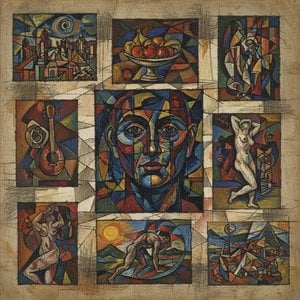
Explore 10 defining Cubist Expressionism masterpieces by Picasso, Braque & more. Discover the stories behind these bold, geometric paintings and bring museum-quality art to your home with WahooArt.com. Explore the full collection online.
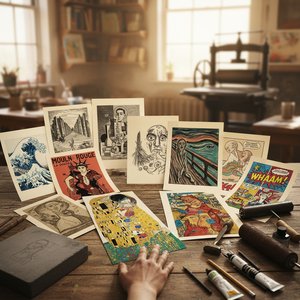
Explore 10 legendary lithographs by Toulouse-Lautrec, Munch & Picasso that redefined art! Discover the stories behind these iconic prints and find museum-quality reproductions for your home decor at WahooArt.com. Explore the full collection online.

Explore the profound history of Surrealist Expressionism. Discover how artists blended dream logic with raw emotion to navigate post-war trauma through masterful, evocative imagery and psychological depth.

Explore 10 defining German Expressionism masterpieces – from Munch's 'The Scream' to Kandinsky’s abstracts. Discover the artists, stories & bold colors behind this powerful art movement. Find museum-quality reproductions at WahooArt.com.

 Preview
 Send
Send Share
Share
 Details
 Guide
Guide

 Download
 Similars
 X-Ray
X-Ray Diaporama
 Stats
Stats Read More









 Glass option is only available in size under 110 CM


