
Preview AR preview Buy Hand Made Painting Switch to Digital Image Send
Details Add to favorites Download Similars X-Ray Diaporama Stats

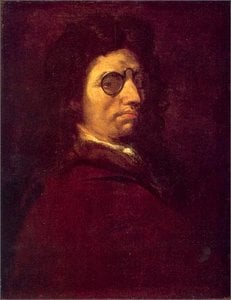
The Philosopher Cratetes

Luca Giordano (1634-1705) was a Neapolitan Baroque painter renowned for his prolific output and distinctive style characterized by luminosity and movement. His iconic painting ‘The Philosopher Cratetes,’ created in 1650, exemplifies his masterful technique and captures the spirit of the era.

Luca Giordano (1634-1705): Explore the vibrant Baroque masterpieces of 'Luca Fa Presto,' Naples' most celebrated painter, known for his speed & dazzling frescoes.

Giclée / Art Print

Museum-quality giclée or canvas print with fast production and flexible finish options. ( Buy Hand Made Painting Switch to Digital Image)

P118B $10
P118H $10
P118W $10
P438Z $10
P508JH $12
P508YH $12
P805H $10
P805Z $10
P919BZ $10
P919G $10
P919XJ $10
P959ZH $10
P968JZ $12
W106C $8
W218G $10
W218JH $8
W218Y $10
W307PJ $10
W316G $10
W316PJ $8
W316Y $10
W398PJ $8
W4111J $10
W500HY $15
W500JH $15
W692G $12
W849H $8
W940BG $15
W953PJ $8

Standard
custom
CM
INCH

Pick from our preset sizes that match the artwork's original proportions.

width
height

You may enter your own dimensions to fit a specific frame or space. If your selected size does not match the original image's proportions, we will either crop the artwork or extend the image with a mirrored or solid-fill edge. A digital mockup will be sent for your approval before production begins.
Please note that the on-screen preview does not reflect the actual cropping or extension. Only the mockup will accurately show the final composition.
While custom sizes are available, we recommend selecting a dimension from the predefined list to preserve the original proportions.

Worldwide Delivery () in 2 weeks instead of standard 4/5 weeks. (18 September)

why_choose_icon
Free Worldwide Express Shipping
why_choose_icon
High-Quality Linen Canvas
why_choose_icon
Full Shipping Insurance
why_choose_icon
Customs Tax Refund Guarantee
why_choose_icon
True Color Matching Guarantee
why_choose_icon
100-Day Return Policy (Defects Only)
why_choose_icon
100% Money-Back Guarantee
why_choose_icon
Bulk Discount Offer

Total Price

$ 69

reproduction

The Philosopher Cratetes

Giclée / Art Print

Reproduction Size

-

Total Price

$ 69

Quick Facts

  • Title: The Philosopher Cratetes
  • Dimensions: 113 x 90 cm
  • Year: 1650
  • Artistic style: Luminous, dynamic
  • Notable elements: Close-up portrait
  • Influences:
    • Ribera
    • Giordano
  • Artist: Luca Giordano

Luca Giordano’s *The Philosopher Cratetes*: A Portrait of Playful Contemplation

This captivating portrait, painted in 1650 by Luca Giordano, offers a rare glimpse into the Neapolitan artist's burgeoning talent during the late Baroque period. Measuring 113 x 90 cm, *The Philosopher Cratetes* immediately draws the eye with its intimate scale and the subject’s remarkably expressive face. The painting depicts a man – likely a scholar or philosopher, as suggested by the title – engaged in a moment of unguarded amusement. His hand is raised, seemingly either waving or gesturing emphatically, while his eyebrows are arched in what appears to be a wry smile or perhaps even a mischievous expression. This isn’t a solemn portrait of intellectual rigor; instead, Giordano captures a fleeting, human moment of contemplation and delight.

A Masterclass in Baroque Technique

Luca Giordano was a prolific artist known for his dynamic compositions and masterful use of light and color. Trained initially under Jusepe de Ribera, he quickly developed his own distinctive style – one characterized by luminosity, movement, and a remarkable ability to render realistic textures. In *The Philosopher Cratetes*, this is evident in the meticulous detail with which Giordano portrays the man’s facial features: the subtle wrinkles around his eyes, the texture of his beard, and the sheen on his skin. The dark background serves not as an absence of color but rather as a dramatic foil, intensifying the impact of the subject's face and emphasizing the play of light across his form. Giordano’s brushwork is loose yet controlled, creating a sense of immediacy and vitality that is characteristic of his work.

Historical Context and Symbolism

Painted in Naples during a period of significant artistic innovation, *The Philosopher Cratetes* reflects the broader trends of the late Baroque. The era was marked by a renewed interest in classical antiquity, but also by a desire to express emotion and drama through art. Giordano’s work aligns with this spirit, offering a departure from the more austere and idealized portraits that were prevalent at the time. While the precise identity of the sitter remains unknown, the title suggests an engagement with philosophical ideas – a common theme in Neapolitan portraiture during this period. The gesture itself could be interpreted as representing intellectual curiosity or even a playful rejection of conventional wisdom.

Emotional Impact and Artistic Value

*The Philosopher Cratetes* is more than just a portrait; it’s an invitation to connect with the human spirit. Giordano's ability to capture a moment of genuine emotion – a flicker of amusement, a hint of contemplation – elevates this work beyond mere representation. This painting exemplifies Luca Giordano’s skill and his contribution to the artistic landscape of Naples during the 17th century. A hand-painted reproduction offers an unparalleled opportunity to experience the full impact of this remarkable artwork in your own space.

Artist Biography

A Neapolitan Dynamo: The Life and Art of Luca Giordano

Luca Giordano, born in Naples in 1634, was a name that quickly became synonymous with the exuberant spirit of the late Baroque. He wasn’t merely an artist; he was a force of nature, a whirlwind of creativity whose prolific output transformed both canvases and architectural spaces across Italy and Spain. His father, Antonio Giordano, laid the initial foundations of his artistic training, but it was under the stern yet masterful guidance of Jusepe de Ribera that the young Luca truly began to forge his distinctive path. This early apprenticeship left an indelible mark, evident in the dramatic intensity and realistic portrayal of figures characteristic of Giordano’s initial works. However, unlike Ribera's often somber palette, Giordano possessed a natural inclination towards luminosity and movement—qualities that would ultimately define his unique style. Even then, he earned the nickname “Luca fa presto”—Luca the quick one—a testament to his remarkable speed and seemingly boundless energy. He wasn’t simply skilled; he was capable of capturing profound emotion and dazzling spectacle with an ease that astonished contemporaries.

From Naples to Spain: A Career in Constant Motion

Giordano's artistic journey was far from static. It was a dynamic progression fueled by commissions and travels, taking him across the Italian peninsula and beyond. After establishing himself as a rising star in Naples, he sought opportunities in Rome, Florence, and Venice, absorbing the diverse influences of each city like a sponge. In Venice, he studied the works of Titian and Veronese, embracing their vibrant color palettes and dynamic compositions—a stark contrast to the tenebrism of his early training. Florence saw him undertake significant fresco cycles, most notably in the dome of the Corsini Chapel at the Chiesa del Carmine, showcasing his burgeoning mastery of illusionistic space and narrative storytelling. But it was his decade-long sojourn in Spain (1682-1692) that cemented his international reputation. Appointed as court painter to Charles II, Giordano transformed Spanish interiors with lavish frescoes, injecting a much-needed dose of Italian exuberance into the more restrained Spanish artistic tradition. The Biblioteca Riccardiana in Florence, adorned with allegorical frescoes celebrating divine wisdom, stands as a testament to this period, showcasing his ability to blend intellectual depth with visual splendor.

A Synthesis of Styles: Giordano’s Artistic Signature

Giordano's genius lay not in inventing entirely new techniques but in synthesizing existing ones into a remarkably fluid and decorative style. He masterfully combined the dramatic realism inherited from Ribera, the luminous colorism inspired by Venetian painters, and the dynamic compositions reminiscent of Pietro da Cortona. His brushwork was characterized by its freedom and spontaneity, creating an impression of effortless grace. He wasn’t afraid to embrace ornamentation, filling his canvases with intricate details and swirling draperies—a hallmark of his mature style. This approach allowed him to tackle a wide range of subjects – from religious scenes and mythological narratives to portraits and decorative schemes – with equal aplomb. The Judgment of Paris, housed in the Berlin Museum, exemplifies this synthesis; it’s a vibrant display of classical mythology rendered with a distinctly Baroque flair. His frescoes, particularly those found in Naples Cathedral and various Neapolitan palaces, are monumental achievements, transforming architectural spaces into immersive visual experiences that enveloped viewers in a world of color and drama.

Legacy and Influence: The Enduring Impact of a Master

Luca Giordano’s influence extended far beyond his own lifetime. He trained numerous pupils, including Paolo de Matteis, who went on to become successful artists in their own right, spreading his stylistic innovations throughout Italy and beyond. His work served as a bridge between the High Baroque and the Rococo periods, paving the way for the lighter, more playful aesthetic that would characterize 18th-century art. His prolific output – estimated at over six hundred paintings and numerous fresco cycles – continues to captivate audiences today. The Palace of Capodimonte in Naples remains a treasure trove of his works, offering a comprehensive overview of his artistic evolution. Giordano’s ability to seamlessly blend technical virtuosity with emotional depth ensures his place as one of the most important and beloved figures of the Italian Baroque. He died in his native Naples in 1705, leaving behind a legacy that continues to inspire artists and art lovers alike.

Key Works & Artistic Connections

Here are some notable works and artistic connections:
  • The Judgment of Paris (Berlin Museum): A prime example of Giordano’s mythological paintings, showcasing his vibrant color palette and dynamic composition.
  • Christ with the Doctors in the Temple (Corsini Gallery, Rome): Demonstrates his skill in religious narrative and mastery of light and shadow.
  • Frescoes in Florence & Naples: Monumental works that transformed architectural spaces into immersive visual experiences.
  • Influences: Jusepe de Ribera, Titian, Veronese, Pietro da Cortona
  • Influenced Artists: Paolo de Matteis, and a generation of Neapolitan painters.
Luca Giordano

Luca Giordano

1634 - 1705 , Italy

Quick Facts

  • Artistic Movement Or Style: Late Baroque
  • Artists Or Movements Influenced By This Artist:
    • Paolo de Matteis
    • Neapolitan painters
  • Artists Who Influenced This Artist:
    • Jusepe de Ribera
    • Titian
    • Veronese
    • Pietro da Cortona
  • Date Of Birth: 1634
  • Date Of Death: 1705
  • Full Name: Luca Giordano
  • Nationality: Italian
  • Notable Artworks:
    • Judgment of Paris
    • Christ with Doctors
    • Frescoes in Naples
  • Place Of Birth: Naples, Italy
Explore artworks organized by themes, styles, and characteristics.


































