
x


Museum-quality giclée or canvas print with fast production and flexible finish options. ( Buy Hand Made Painting Buy Image)





























Pick from our preset sizes that match the artwork's original proportions.

You may enter your own dimensions to fit a specific frame or space. If your selected size does not match the original image's proportions, we will either crop the artwork or extend the image with a mirrored or solid-fill edge. A digital mockup will be sent for your approval before production begins.
Please note that the on-screen preview does not reflect the actual cropping or extension. Only the mockup will accurately show the final composition.
While custom sizes are available, we recommend selecting a dimension from the predefined list to preserve the original proportions.
Worldwide Delivery () in 2 weeks instead of standard 4/5 weeks. (29 August)


View of a Skull
Reproduction Size

Leonardo di ser Piero da Vinci, born in 1452 near the Tuscan village of Vinci, remains arguably the most universally recognized figure of the Renaissance—a true polymath whose insatiable curiosity propelled him across disciplines, leaving an indelible mark on art, science, and engineering. His very name has become synonymous with genius, a testament to his extraordinary breadth of talent and visionary thinking. Born out of wedlock to Piero da Vinci, a notary, and Caterina, a peasant woman, Leonardo’s early life was unconventional, yet provided him with access to both the practical world and an appreciation for nature that would profoundly shape his artistic vision. He received a basic education in reading, writing, and arithmetic, but it was his apprenticeship under Andrea del Verrocchio in Florence that truly ignited his creative spark. Within Verrocchio’s workshop, Leonardo wasn't merely learning to paint or sculpt; he was immersed in a world of technical skill, mastering metalworking, carpentry, drawing, and the intricacies of artistic creation—a foundation upon which he would build his multifaceted genius. Even during this formative period, whispers circulated regarding his exceptional talent, with accounts suggesting Verrocchio himself relinquished painting after witnessing Leonardo’s superior ability.
In 1482, Leonardo embarked on a new chapter, entering the service of Ludovico Sforza, Duke of Milan. This wasn't simply an artistic appointment; Leonardo functioned as a military engineer, architect, sculptor, and designer for the court—a testament to his diverse skills. He conceived innovative fortifications, designed elaborate stage sets, and even sketched plans for fantastical machines. However, it was during this period that he began work on one of his most iconic masterpieces: The Last Supper. Painted as a fresco in the refectory of Santa Maria delle Grazie monastery, the work transcends mere representation; it’s a profound exploration of human emotion and psychological drama, capturing the precise moment Christ announces his betrayal. The composition, innovative for its time, and the masterful use of perspective would profoundly influence Western art for centuries to come. While many sculptural projects remained unfinished during his Milanese period, Leonardo's inventive spirit continued to flourish, laying the groundwork for future scientific explorations.
Following the French invasion of Milan in 1499, Leonardo returned to Florence, a city experiencing a peak of artistic development. Though he produced fewer completed works during this time, their impact was immense. It was here that he began work on what would become arguably the most famous painting in the world: Mona Lisa (La Gioconda). The enigmatic smile and captivating gaze of the subject have fascinated viewers for generations, while Leonardo’s revolutionary *sfumato* technique—the subtle blending of light and shadow to create hazy outlines and atmospheric perspective—contributed significantly to the painting's ethereal quality. This period also saw continued refinement of his anatomical studies, driven by an unwavering desire to understand the human form with scientific precision. He dissected cadavers, meticulously documenting muscles, bones, and organs in a series of incredibly detailed drawings that were centuries ahead of their time.
Leonardo’s later years were marked by travel between Florence, Milan, and Rome, always sought after for his expertise but often leaving projects incomplete—a reflection perhaps of his restless intellect and the sheer scope of his interests. In 1516, he accepted an invitation from King Francis I to live and work at the Château du Clos Lucé near Amboise in France, where he spent his final years. He died there in 1519, leaving behind a vast legacy that extends far beyond the realm of art. His notebooks reveal pioneering work in anatomy, optics, hydraulics, geology, and cartography—and conceptualized inventions centuries ahead of their time, including flying machines, tanks, and advanced weaponry. Leonardo da Vinci’s impact on art history is immeasurable. He elevated the status of artists from skilled craftsmen to intellectual figures, demonstrating that artistic creation could be informed by scientific inquiry and a deep understanding of the natural world. His paintings are celebrated for their realism, psychological depth, and innovative techniques. He remains a symbol of human curiosity, creativity, and the relentless pursuit of knowledge—a true embodiment of the Renaissance spirit whose legacy continues to inspire awe and fascination centuries after his death.
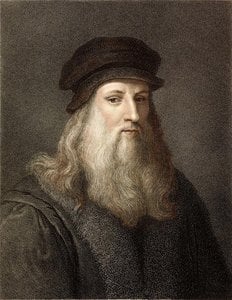
1452 - 1519 , Italy

Explore the profound genius of Leonardo, Michelangelo, and Raphael. An authoritative deep dive into the High Renaissance masters, analyzing their unique techniques, humanistic vision, and enduring influence on the world of fine art collecting.

Elevate your home with exquisite, hand-painted Renaissance reproductions by Da Vinci and Michelangelo. WahooArt offers museum-quality oil paintings, bespoke commissions, and expert art consultation for the discerning collector. Experience timeless luxury with our 100% satisfaction guarantee.


Stay updated with the latest art news, exclusive offers, and decoration ideas.
Tell us about your project and our art experts will provide you with 3 personalized art suggestions.
Let Us Curate 3 Options Just for You - Free!

 Preview
 Send
Send Share
Share
 Details

 Download
 Similars
 X-Ray
X-Ray Diaporama
 Read More







 Glass option is only available in size under 110 CM


