

Museum-quality giclée or canvas print with fast production and flexible finish options. ( Buy Hand Made Painting Switch to Digital Image)
Pick from our preset sizes that match the artwork's original proportions.

Type the width and the height you need, to fit your frame or your wall. A print can only be cut, never made bigger than the picture, so a size with a different shape loses a part of the image. We send you a digital mockup to approve before we print anything. The picture shown on this page does not show the real cut — only the mockup does.
Worldwide Delivery () in 2 weeks instead of standard 4/5 weeks. (28 October)
The Last Supper
Reproduction Size
Leonardo da Vinci’s The Last Supper (c. 1495-1498) is arguably the most recognizable and influential artwork in Western history. More than a depiction of a biblical event, it's a profound exploration of human emotion, faith, betrayal, and divine destiny – rendered with unparalleled artistic skill and innovative technique.
Commissioned by Ludovico Sforza for the refectory of the Santa Maria delle Grazie monastery in Milan, this monumental fresco portrays the dramatic moment immediately following Jesus’ announcement that one of his twelve apostles will betray him. The scene is drawn from the Gospel of John and captures the raw, varied reactions of the disciples – shock, denial, anger, confusion – as they grapple with this devastating revelation. This pivotal event in Christian theology is presented not as a static illustration, but as a dynamic psychological drama.
Da Vinci’s genius lies not only in his ability to capture realistic human form and emotion but also in his revolutionary approach to composition. He employed one-point linear perspective with masterful precision, drawing the viewer's eye directly to Jesus as the central focal point. The architectural setting, though simple, is meticulously rendered, creating a sense of depth and realism that was groundbreaking for its time. The grouping of apostles in threes adds balance and order while their individual gestures and expressions inject dynamism into the scene.
Rejecting traditional fresco techniques, Da Vinci experimented with an oil-tempera mix on a dry plaster wall. While this allowed for greater detail and nuance, it unfortunately contributed to the painting’s rapid deterioration. Despite centuries of restoration attempts, much of the original paint has been lost, yet its power remains undiminished. This innovative (though ultimately problematic) technique demonstrates Da Vinci's relentless pursuit of artistic perfection.
Beyond the literal depiction of the event, The Last Supper is rich in symbolism. The bread and wine represent the Eucharist – the body and blood of Christ – foreshadowing his sacrifice. Judas Iscariot, often identified as leaning back into shadow clutching a bag (representing his reward for betrayal), embodies guilt and deceit. Each apostle’s reaction is uniquely portrayed, reflecting a deep understanding of human psychology. The painting evokes feelings of tension, sorrow, and contemplation, inviting viewers to reflect on themes of faith, loyalty, and the complexities of human nature.
A reproduction of The Last Supper is more than just a decorative piece; it’s an investment in art history. Its timeless beauty and profound message make it a stunning focal point for any room – from grand dining halls to intimate studies. Its balanced composition and restrained color palette (ochres, browns, reds) complement a variety of interior design styles, adding sophistication and intellectual depth. Owning a hand-painted reproduction allows you to experience the power and beauty of Da Vinci’s masterpiece firsthand.
The author of "The Last Supper" is Leonardo da Vinci, and the work is dated 1495.
"The Last Supper" by Leonardo da Vinci was created in 1495.
"The Last Supper" by Leonardo da Vinci is classified as decor. The category describes the kind of artwork the original is.

In the quiet hills near the village of Vinci, a child named Lionardo di ser Piero da Vinci entered a world that would never truly contain his restless mind. Born to a Florentine notary and a peasant woman, his very beginnings were marked by an unconventional path, as his illegitimacy meant he was not destined to follow in his father's legal footsteps. Instead, this freedom allowed him to wander into the workshop of Andrea del Verrocchio in Florence. It was here, amidst the scent of oils and the dust of marble, that a young apprentice learned that seeing was the highest form of understanding. He did not merely study the brush; he studied the way light clings to a curved surface and how shadow dissolves the edges of a limb.
His early years in Florence were defined by this intense observation. He absorbed the technical rigors of metalworking, carpentry, and drawing, building a foundation that merged the physical with the cerebral. While others sought only to replicate what they saw, he sought to understand the mechanics behind it. This period of growth was not marked by a sudden burst of fame, but by a slow, methodical accumulation of knowledge that would later allow him to bridge the gap between the artist's eye and the scientist's inquiry.
When the winds of political change blew toward Milan, Leonardo followed the service of Ludovico Sforza. This move transformed him from a talented painter into a multifaceted presence within the ducal court. He arrived not merely as an artist, but as an engineer and designer, tasked with creating fortifications and even theatrical stage sets. It was during this long residency in Milan that he began to grapple with the profound drama of human interaction. In the refectory of Santa Maria delle Grazie, he applied his observations of psychology to a large-scale fresco, capturing the precise, heavy moment of betrayal within a group of apostles.
His mind during these years wandered far beyond the walls of the monastery. He filled notebooks with sketches of flying machines, advanced weaponry, and hydraulic systems, driven by a desire to map the hidden laws of nature. Yet, his ambitions often outpaced his ability to finish. A great equestrian statue, intended to honor the Sforza family, remained a dream of clay that was eventually shattered by invading French forces. This pattern of unfinished greatness followed him; he was a man who often found more satisfaction in the discovery of a principle than in the completion of a canvas.
A return to Florence brought with it a period of profound refinement. It was here that he worked on the portrait of a woman whose subtle, enigmatic expression would later haunt the halls of history. Through his use of sfumato, a technique where colors and tones blend so softly that they appear like smoke, he removed the harsh outlines of the world, creating an atmosphere that felt alive with breath and movement. His anatomical studies grew more precise during this time as well, fueled by his habit of dissecting cadavers to map the intricate architecture of bone and muscle.
In his final years, under the invitation of King Francis I, Leonardo moved to the Château du Clos Lucé in France. Even as age perhaps slowed his hand, his intellect remained sharp, focused on the study of optics, geology, and botany. He died in 1519, leaving behind a legacy that was never truly finished, much like his many drawings. His life remains a singular example of what can be achieved when the boundaries between art and science are erased, proving that to truly see the world, one must be willing to study every shadow and every muscle within it.
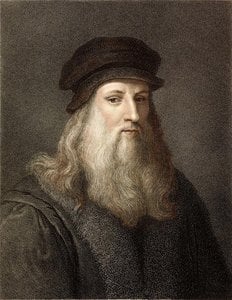
1452 - 1519 , Italy

Explore the profound genius of Leonardo, Michelangelo, and Raphael. An authoritative deep dive into the High Renaissance masters, analyzing their unique techniques, humanistic vision, and enduring influence on the world of fine art collecting.

Elevate your home with exquisite, hand-painted Renaissance reproductions by Da Vinci and Michelangelo. WahooArt offers museum-quality oil paintings, bespoke commissions, and expert art consultation for the discerning collector. Experience timeless luxury with our 100% satisfaction guarantee.

Explore the profound artistry of The Last Supper through an art historian's lens. From Leonardo da Vinci’s genius to diverse Renaissance interpretations, discover the symbolism and technique behind history's most iconic sacred depictions.

 Send
Send Share
Share
 Details
 Guide
Guide

 Download
 Similars
 Diaporama
 Stats
Stats


 Read More






































 Glass option is only available in size under 110 CM


