Neptun by Leonardo da Vinci, hand-painted oil painting reproduction by a master artist
Preview AR preview Switch to Print Switch to Digital Image Send

Details Guide Add to favorites Download Similars X-Ray Diaporama Q&A Presentation Stats

Neptun Hand-painted oil painting reproduction

Witness Leonardo da Vinci's 'Neptun' – a dynamic charcoal sketch of Roman god Neptune & Amphitrite, showcasing his mastery and artistic vision. Explore Renaissance art’s captivating beauty!

A High Renaissance master known for the Mona Lisa. Discover his legendary works and timeless genius today.

Hand Made Oil Reproduction

Hand-painted oil on canvas in your size and frame, made to order by our artists. ( Switch to Print Switch to Digital Image)

Corner sample of the P118B picture frame: moulded polystyrene, 5 cm wide and 3 cm thick
P118B $10
Corner sample of the P118H picture frame: moulded polystyrene, 5 cm wide and 3 cm thick
P118H $10
Corner sample of the P118W picture frame: moulded polystyrene, 5 cm wide and 3 cm thick
P118W $10
Corner sample of the P438Z picture frame: moulded polystyrene, 5.5 cm wide and 3.5 cm thick
P438Z $10
Corner sample of the P508JH picture frame: moulded polystyrene, 7 cm wide and 3.5 cm thick
P508JH $12
Corner sample of the P508YH picture frame: moulded polystyrene, 7 cm wide and 3.5 cm thick
P508YH $12
Corner sample of the P805H picture frame: moulded polystyrene, 5 cm wide and 3.5 cm thick
P805H $10
Corner sample of the P805Z picture frame: moulded polystyrene, 5 cm wide and 3.5 cm thick
P805Z $10
Corner sample of the P919BZ picture frame: moulded polystyrene, 7 cm wide and 3.5 cm thick
P919BZ $10
Corner sample of the P919G picture frame: moulded polystyrene, 7 cm wide and 3.5 cm thick
P919G $10
Corner sample of the P919XJ picture frame: moulded polystyrene, 7 cm wide and 3.5 cm thick
P919XJ $10
Corner sample of the P959ZH picture frame: moulded polystyrene, 5 cm wide and 3 cm thick
P959ZH $10
Corner sample of the P968JZ picture frame: moulded polystyrene, 6 cm wide and 4 cm thick
P968JZ $12
Corner sample of the W106C picture frame: solid wood, 5 cm wide and 3 cm thick
W106C $8
Corner sample of the W218G picture frame: solid wood, 5 cm wide and 3 cm thick
W218G $10
Corner sample of the W218JH picture frame: solid wood, 5 cm wide and 3 cm thick
W218JH $8
Corner sample of the W218Y picture frame: solid wood, 5 cm wide and 3 cm thick
W218Y $10
Corner sample of the W307PJ picture frame: solid wood, 6 cm wide and 3 cm thick
W307PJ $10
Corner sample of the W316G picture frame: solid wood, 6 cm wide and 3 cm thick
W316G $10
Corner sample of the W316PJ picture frame: solid wood, 6 cm wide and 3 cm thick
W316PJ $8
Corner sample of the W316Y picture frame: solid wood, 6 cm wide and 3 cm thick
W316Y $10
Corner sample of the W398PJ picture frame: solid wood, 5 cm wide and 3 cm thick
W398PJ $8
Corner sample of the W4111J picture frame: solid wood, 6.5 cm wide and 3.5 cm thick
W4111J $10
Corner sample of the W500HY picture frame: solid wood, 7 cm wide and 5 cm thick
W500HY $15
Corner sample of the W500JH picture frame: solid wood, 7 cm wide and 5 cm thick
W500JH $15
Corner sample of the W692G picture frame: solid wood, 8 cm wide and 4 cm thick
W692G $12
Corner sample of the W849H picture frame: solid wood, 5 cm wide and 3 cm thick
W849H $8
Corner sample of the W940BG picture frame: solid wood, 7.5 cm wide and 4.5 cm thick
W940BG $15
Corner sample of the W953PJ picture frame: solid wood, 6 cm wide and 3.5 cm thick
W953PJ $8

Standard
custom
CM
INCH

Pick from our preset sizes that match the artwork's original proportions.

width
height

Type the width and the height you need, to fit your frame or your wall. This is hand-painted, so for a size with a different shape the artist can paint a bit more around the picture, or cut a bit — you choose. We send you a digital mockup to approve before the painting starts. The picture shown on this page does not show the real result — only the mockup does.

Examples of what can be changed: Replace face with customer photo; Add pet (e.g., replace cat with dog); Include hidden message in background; Change background landscape or elements.
After order, WahooArt.com team will email client for instructions and provide a mockup preview

Worldwide Delivery () in 3/4 weeks instead of standard 5 weeks. (9 November). No compromise on quality.

Free Worldwide Express Shipping
High-Quality Linen Canvas
Full Shipping Insurance
Customs Tax Refund Guarantee
True Color Matching Guarantee
100-Day Return Policy (Defects Only)
100% Money-Back Guarantee
Bulk Discount Offer

Total Price

$ 272

Neptun

Reproduction Medium

Reproduction Size

-

Total Price

$ 272

Quick Facts

  • Notable elements: Mythological scene
  • Title: Neptun
  • Influences: Classical mythology
  • Medium: Charcoal on paper

Art Quiz

There is only one correct answer for each question.

Question 1:
What is the primary subject depicted in Leonardo da Vinci’s ‘Neptun’?
Question 2:
Based on the image description, what is prominent in the scene depicted in ‘Neptun’?
Question 3:
Leonardo da Vinci was primarily active during which historical period?
Question 4:
What is a key characteristic of Leonardo da Vinci’s artistic style, as evidenced by ‘Neptun’?
Question 5:
The image description mentions the presence of multiple birds. What does this detail likely contribute to the overall interpretation of the artwork?

Leonardo da Vinci’s “Neptune”: A Dance of Power and Poseidon

Leonardo da Vinci's "Neptun," often referred to simply as "Neptune," is not merely a painting; it’s a dramatic embodiment of Roman mythology, rendered with an arresting intensity that speaks volumes about the artist’s mastery of composition, light, and psychological depth. Completed around 1482, this charcoal drawing on black chalk offers a glimpse into da Vinci's early explorations of figure work and his fascination with classical themes – specifically, the turbulent power of the sea god Poseidon. Unlike many of his later, more polished works, “Neptun” retains a raw energy, a sense of immediacy that reflects its status as a preliminary study rather than a finished masterpiece.

The scene depicts Neptune, king of the gods and ruler of the oceans, seated upon a shell-shaped rock. He’s not presented in the idealized form often found in Renaissance sculpture; instead, da Vinci captures him with a palpable sense of authority and even a hint of brooding intensity. His posture is deliberately forceful, his gaze fixed ahead as if commanding the waves themselves. The figure is rendered with rapid, confident strokes – a characteristic of Leonardo’s working method – revealing the underlying structure beneath the surface. Notice how he uses hatching to create texture and volume, particularly in the folds of his drapery and the swirling patterns of the sea.

A Symphony of Movement: Technique and Composition

Da Vinci's technique is immediately striking. The charcoal is applied with a remarkable degree of spontaneity, creating a dynamic sense of movement that contrasts sharply with the static quality often associated with Renaissance art. He masterfully employs hatching – closely spaced parallel lines – to build up tones and create an illusion of depth and texture. The use of light and shadow is particularly effective in conveying the drama of the scene; the dark background emphasizes Neptune’s form, while strategically placed highlights draw attention to his face and hands.

Compositionally, “Neptun” is a tour de force. The figure dominates the frame, yet he's not isolated. The swirling waves, depicted with loose, expressive strokes, create a sense of chaos and power that mirrors Neptune’s dominion over the sea. The inclusion of Amphitrite, Neptune’s consort, riding on his back, adds another layer of visual interest and reinforces the theme of royal authority. The placement of the birds – one soaring above, another diving below – subtly connects the earthly realm with the divine, suggesting a broader cosmic order.

Symbolism and Mythological Resonance

“Neptun” is deeply rooted in Roman mythology, drawing upon centuries of tradition surrounding Poseidon. The shell-shaped rock serves as Neptune’s throne, symbolizing his connection to the sea – the very essence of his power. The turbulent waves are not merely decorative; they represent the unpredictable and potentially destructive forces that lie beneath the surface. The presence of birds, often associated with divine messengers or omens, adds a layer of symbolic complexity.

Interestingly, da Vinci’s depiction deviates slightly from traditional portrayals of Neptune. He doesn't present him as a benevolent protector; instead, he captures a more formidable and even somewhat menacing figure – a god who commands respect through sheer force of will. This nuanced portrayal reflects da Vinci’s broader interest in exploring the complexities of human nature and the darker aspects of the divine.

A Legacy of Artistic Innovation

Despite its status as an early study, “Neptun” reveals da Vinci's burgeoning genius and his willingness to experiment with new techniques. It demonstrates his ability to capture not just the physical appearance of a subject but also their psychological state – a skill that would become increasingly central to his later work. Reproductions of this captivating drawing offer a unique opportunity to appreciate da Vinci’s artistic process and to witness firsthand the genesis of one of the most iconic images in Western art history. Its raw energy and dramatic composition continue to resonate with viewers today, reminding us of the enduring power of classical mythology and the boundless creativity of Leonardo da Vinci.

Questions & Answers

What is the perceived brightness of "Neptun" by Leonardo da Vinci?

In terms of perceived brightness, "Neptun" by Leonardo da Vinci is brilliant.

How can I get a digital file of "Neptun" by Leonardo da Vinci?

"Neptun" is available as a high-resolution digital image download, purchased directly on its Digital Image page.

Where can I find statistics about "Neptun" by Leonardo da Vinci?

A Stats page exists for "Neptun". It charts the monthly visits of the artwork and of the artist's other works, with country and language breakdowns.


Artist Biography

The Early Life and Training of Leonardo da Vinci

Leonardo da Vinci was born on 15 April 1452 near the Tuscan hill town of Vinci. His origins were defined by a specific social reality: he was the illegitimate son of a successful notary, Piero Fruosino di Antonio da Vinci, and a lower-class woman named Caterina Cambi. This background placed him within the social structures of the Tuscan countryside from the start. He eventually moved to Florence, where his education took place. The city provided an atmosphere centered on the precision of disegno, a rigorous focus on drawing that would dictate his technical approach for the rest of his life.

At the age of fourteen, Leonardo da Vinci entered the workshop of Andrea del Verrocchio. This apprenticeship was the foundation of his technical capability. In Verrocchio's studio, the boundaries between different crafts were thin, and he learned to handle the tools of both a painter and a sculptor. This training was not merely about the brush; it involved understanding the mechanics of sculpture and the physical properties of various materials. He developed a way of seeing that connected the movement of a muscle to the way light falls across a surface, a skill rooted in the discipline of his early years.

Artistic Activity in Florence and Milan

Leonardo’s career was defined by a constant movement between the major centers of the High Renaissance. He was principally active in Florence from 1472 until about 1482, and again during the period between 1500 and 1508. These Florentine years provided the essential foundation for his development, but his long-term trajectory was heavily shaped by his time in Milan. He spent much of his life serving Ludovico Sforza in Milan, a tenure that lasted from approximately 1482 to 1499. This period of service was not a single continuous stretch, as he returned to Milan between 1508 and 1513.

While Florence and Milan were his primary operational hubs, his reach extended beyond these two cities. His professional life included significant work in Rome and eventually in France. This geographic mobility prevented his style from becoming static. Instead of remaining tethered to one court, he navigated the shifting political landscapes of the Italian peninsula. His presence in Milan was marked by a continuous dialogue with the court, where his interests in engineering and science often intersected with his artistic commissions. This intersection of disciplines ensured that his output was never limited to mere decoration.

Patrons and Major Commissions in Milan

Leonardo's presence in Milan was defined by his long-term service to Ludovico Sforza. This relationship dictated the scale and nature of his output, forcing a constant negotiation between the religious requirements of the era and the specific political needs of the Sforza court. His work during this period was not a series of isolated tasks but a continuous response to the ambitions of his patrons. He moved between diverse subjects, balancing the demands of a ruling dynasty with his own technical experimentation.

The most significant consequence of this patronage was the decoration of the wall of the mausoleum in the refectory of the Convent of Santa Maria delle Grazie. This commission resulted in The Last Supper. The project required a departure from traditional fresco methods, as Leonardo utilized an oil-based paint mixed with mastic to allow for the slow layering and frequent revisions his process demanded. This choice, while allowing for greater detail, created a physical vulnerability in the work that has required centuries of restoration. The mural remains a central part of the Milanese landscape, capturing a specific moment of human tension through a rigorous application of perspective.

  • The Last Supper (c. 1495–1498)

Key Masterpieces and Famous Works

The Mona Lisa remains the most famous painting in existence. Located in the Musée du Louvre, Paris, it commands a level of global attention that few other works can claim. Similarly, the Vitruvian Man drawing has become a cultural icon by mapping the proportions of the human form. These works demonstrate a capacity to translate complex observation into a visual language that persists in the modern consciousness.

Religious art reached a peak of reproduction with The Last Supper. This mural, located in the refectory of the Convent of Santa Maria delle Grazie in Milan, depicts the moment after Jesus announces a betrayal. Its use of perspective to pull the viewer into the room remains a standard for psychological drama. The market for his surviving canvases is equally intense. In 2017, the Salvator Mundi was sold at auction for US$450.3 million, a figure that reflects the immense value placed on his hand.

Technique and Artistic Style

Leonardo’s approach to the canvas was driven by a relentless need to reconcile scientific observation with visual representation. He did not merely paint figures; he reconstructed them through a rigorous investigation of human anatomy. By studying cadavers, he gained a precise understanding of how muscle and bone function, allowing him to render the human form with a level of accuracy that fundamentally altered the standards of anatomical illustration. This was not a matter of mere likeness, but a structural necessity that informed every stroke.

His technical innovations centered on the manipulation of light and atmosphere. He developed sfumato, a method of using subtle gradations of tone to blur the edges of his subjects. This technique removed the harshness of outlines, allowing forms to emerge from a smoky haze. He paired this with chiaroscuro to control the interplay of light and shadow, creating a sense of three-dimensional volume. To achieve these effects, he experimented with unconventional materials, including an oil-based paint mixed with mastic, a resin intended to allow for slow drying and continuous layering.

  • The Baptism of Christ, 1475
  • The Last Supper, ca. 1495–1498
  • Mona Lisa, ca. 1503–6

The Final Years and Death in France

Leonardo da Vinci’s later years were defined by a shift in geography that mirrored his restless intellectual movement. After working in Rome from 1513 to 1516, he moved toward the end of his life under the invitation of Francis I. This transition took him to France, where he spent his final three years living and working. His presence in the French court marked the conclusion of a career that had already spanned the major centers of the High Renaissance.

The end of his life was spent in France, where he continued his investigations until his death on 2 May 1519. His final years were not a period of quiet retirement but a continuation of the intense observation that characterized his entire existence. He died in France, leaving behind a body of work that remains a primary reference for the intersection of scientific inquiry and visual representation.

The Enduring Legacy of a Polymath

Leonardo da Vinci remains a central figure in Western art history, a status supported by a body of work that shaped European artistic development to a degree rivaled only by Michelangelo. His influence stems from a refusal to separate the act of painting from the act of investigation. He functioned simultaneously as a painter, draughtsman, engineer, scientist, theorist, sculptor, and architect. This breadth of interest ensured that his contributions were never confined to a single medium or discipline.

His notebooks provide the most direct evidence of this restless intellect. They reveal a mind that never stopped observing the mechanics of the world, documenting everything from the flow of water to the structural intricacies of human bone. This empirical approach meant that his drawings were not merely preparatory sketches but tools for recording a continuous investigation of nature. He treated the physical world as a subject to be decoded through rigorous observation.

The scale of his impact is visible in the way his diverse interests intersected. His scientific inquiries into anatomy and light informed his visual output, creating a feedback loop between theory and practice. This integration of disciplines allowed him to move beyond simple representation toward a profound understanding of how the world functions. His legacy is defined by this refusal to specialize, opting instead to master the mechanics of existence through a wide range of technical and scientific pursuits.

Where to See His Works Today

To witness the physical reality of his output, one must travel to specific institutional collections. The Mona Lisa remains in the Musée du Louvre in Paris. It is a central fixture of that museum's collection. In Krakow, the Czartoryski Museum holds the Lady with an Ermine. These locations represent the primary sites for viewing his most significant surviving canvases.

Florence remains a critical destination for those tracking his early development and technical shifts. The Galleria degli Uffizi contains both the Annunciation and the Baptism of Christ. These works allow for a direct comparison of his evolving command over light and landscape. Seeing them in situ provides a sense of the scale and the specific environments for which they were intended.

  • Salvator Mundi, attributed in whole or part
  • The Last Supper, Milan
  • Vitruvian Man, undated
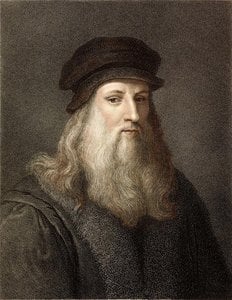
Leonardo da Vinci

Leonardo da Vinci

1452 - 1519 , Italy

Quick Facts

  • Artistic Movement Or Style: High Renaissance
  • Artists Or Movements Influenced By This Artist: ['Michelangelo']
  • Artists Who Influenced This Artist: ['Andrea del Verrocchio']
  • Full Name: Leonardo di Ser Piero Da Vinci
  • Nationality: Italian
  • Notable Artworks:
    • Mona Lisa
    • The Last Supper
    • Vitruvian Man
    • Lady with an Ermine
    • The Baptism of Christ
    • Salvator Mundi
  • Place Of Birth: Vinci, Italy
  • Date Of Birth: 1452
  • Date Of Death: 1519
Explore artworks organized by themes, styles, and characteristics.