
x


Purchase a high-resolution, enhanced digital image, far superior to the online preview.
Each file is meticulously prepared by our in-house specialists using advanced tools and expert manual retouching. We ensure every image has exceptional clarity, precise color accuracy, and fine detail.
The final file is delivered via email within 72 hours, optimized for immediate use in professional, editorial, and print environments. This is the same quality trusted by top-tier design studios, publishers, and galleries.
Download a high-resolution file for personal display, printing, and creative projects. ( Buy Print Buy Hand Made Painting)
When you choose WahooArt.com, you're not just getting an image - you're receiving a professionally enhanced digital artwork, crafted with precision and backed by a satisfaction guarantee. Here's everything that comes with your order, automatically:

Your high-resolution digital image file will be emailed to you within 72 hours of ordering - ready for immediate use.

Your artwork is professionally optimized using advanced AI tools and manual editing, ensuring maximum detail, clarity, and color accuracy.

Accidentally deleted or lost your file? No worries - we'll resend it to you anytime, free of charge.

Enjoy your artwork instantly with zero customs, duties, or delivery fees - digital downloads are always tax-free.

We ensure your digital image reflects the original colors as closely as possible using professional tools and color management.

If you're not satisfied with your digital image, we'll revise it or refund 100% within 60 days - no questions asked.

Not satisfied? Get a full refund within 60 days of receiving your digital file - no questions asked.

Buy 3 images, save 10% - Buy 5, save 15% - Buy 10+, save 20%. Great for creative projects, galleries, and agencies.
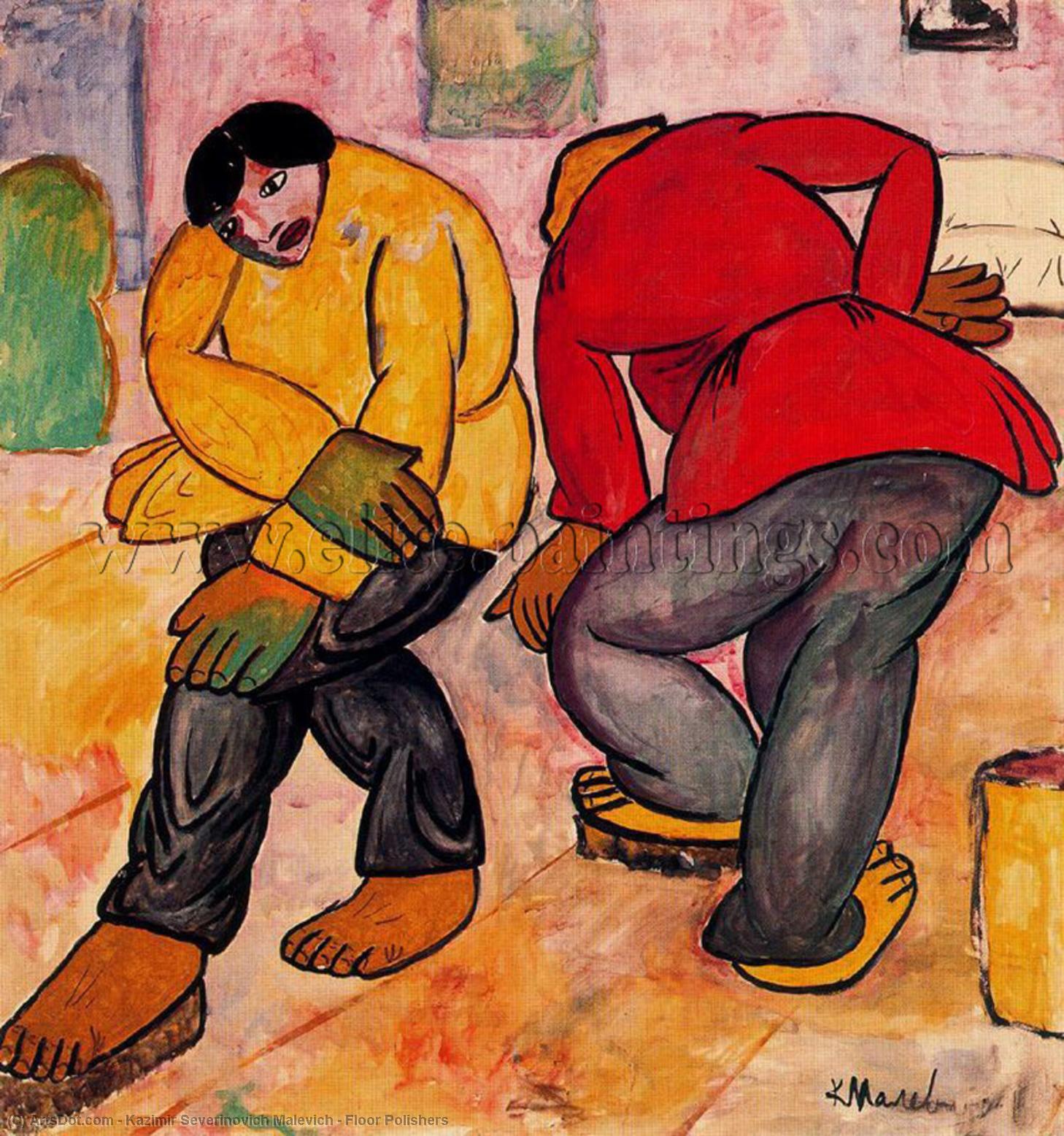
Kazimir Severinovich Malevich’s “Floor Polishers,” completed in 1912, stands as a cornerstone of Cubism and an emblem of the artistic fervor that characterized the early 20th century. At WahooArt.com, we recognize its enduring significance not merely as a visual spectacle but as a profound exploration of form, color, and perception—a testament to Malevich’s pioneering spirit.
Artist Background: Kazimir Malevich (1878-1935) was more than just a painter; he was a theorist who fundamentally reshaped the landscape of modern art. Driven by an unwavering conviction in abstraction, he rejected representational imagery altogether, advocating for pure geometric forms as the ultimate expression of artistic truth. His influence extends far beyond Cubism, shaping subsequent movements and inspiring generations of artists.
The Painting’s Composition: “Floor Polishers” depicts two figures diligently polishing a floor—a seemingly mundane activity elevated to monumental proportions through Malevich's distinctive stylistic choices. The scene pulsates with energy thanks to the bold color palette dominated by yellows and reds, juxtaposed against muted browns representing the floor surface. Geometric shapes – triangles, circles, and rectangles – dominate the composition, fracturing space and challenging conventional perspective. This deliberate fragmentation isn’t simply decorative; it symbolizes Malevich's desire to liberate art from illusionistic representation.
Key Features: Several elements contribute to the artwork’s impact. Firstly, the Cubist technique—characterized by multiple viewpoints simultaneously presented—forces the viewer to actively engage with the image and reconsider their understanding of reality. Secondly, Malevich's masterful use of color creates a dynamic interplay between hues, conveying emotion and emphasizing visual rhythm. The meticulous application of gouache on paper lends texture to the surface, enhancing the sense of physicality and immediacy.
Historical Context & Symbolism: Created during the height of Cubist experimentation, “Floor Polishers” reflects the broader intellectual currents of its time—a rejection of academic conventions in favor of radical innovation. Malevich’s aim was to distill art down to its essential elements, stripping away superfluous details and focusing on pure geometric abstraction. The repetition of shapes – particularly triangles – can be interpreted as representing stability and order amidst chaos, mirroring the artist's philosophical quest for universal harmony.
Where to Explore Further: For a deeper understanding of Cubism’s influence and Malevich’s broader artistic vision, visit /art/list/?Filter=A@D3C62K-Top-5-Famous-Cubism-Paintings-of-All-Time. You can also discover other captivating works by Kazimir Severinovich Malevich at /art/list/?Filter=kazimir+severinovich+malevich,kazimir,severinovich,malevich&. Don’t miss the Albertina Museum in Vienna, Austria, where masterpieces of Cubist art—including pieces by Picasso and Macke—await your discovery: /art/list/?Filter=pablo+picasso,pablo,pi


1878 - 1935 , Ukraine


Stay updated with the latest art news, exclusive offers, and decoration ideas.
Tell us about your project and our art experts will provide you with 3 personalized art suggestions.
Let Us Curate 3 Options Just for You - Free!

 Preview
 Send
Send Share
Share
 Details

 Download
 Similars
 X-Ray
X-Ray Diaporama

 Read More


