Hand-painted oil on canvas in your size and frame, made to order by our artists. ( Switch to Print Switch to Digital Image)
Pick from our preset sizes that match the artwork's original proportions.

You may enter your own dimensions to fit a specific frame or space. If your selected size does not match the original image's proportions, we will either crop the artwork or extend the painting with additional hand-painted elements. A digital mockup will be sent for your approval before production begins.
Please note that the on-screen preview does not reflect the actual cropping or extension. Only the mockup will accurately show the final composition.
While custom sizes are available, we recommend selecting a dimension from the predefined list to preserve the original proportions.
Worldwide Delivery () in 3/4 weeks instead of standard 5 weeks. (24 September). No compromise on quality.


Bridge
Reproduction Size
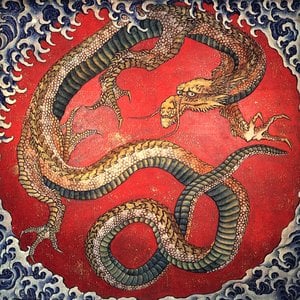
Katsushika Hokusai's “Bridge,” a captivating depiction of a graceful stone structure spanning a serene waterway, transcends the simple representation of a physical form. It is an embodiment of Japanese aesthetics – a harmonious blend of strength and fragility, dynamism and stillness. This artwork, likely created during the height of Hokusai’s prolific career in the early 19th century, offers a profound meditation on nature's power and human interaction with it, inviting viewers to contemplate the delicate balance between these forces.

“Bridge” exemplifies the core principles of *Ukiyo-e*, the “pictures of the floating world,” a dominant artistic movement in Edo period Japan. Hokusai masterfully employs woodblock printing techniques, utilizing meticulously carved blocks to achieve astonishing detail and tonal variation. The layering of colors – primarily blues, greens, and browns – creates a rich depth that is characteristic of Ukiyo-e prints. Notice the subtle gradations in the water’s reflection, achieved through multiple impressions of the block, demonstrating Hokusai's technical prowess and his ability to capture the ephemeral qualities of light and movement. The composition itself—a strong horizontal line representing the bridge contrasted with the verticality of the surrounding landscape—is a classic Ukiyo-e device designed to create visual impact and evoke a sense of grandeur.
The bridge itself is laden with symbolic meaning. In Japanese culture, bridges often represent transition – passage from one state to another, or from life to death. Here, it symbolizes the connection between land and water, representing a pathway for travel and contemplation. The surrounding landscape—the distant mountains shrouded in mist—adds to the artwork’s evocative power. These towering peaks, rendered with a masterful understanding of atmospheric perspective, suggest both immense strength and vulnerability. The reflection of the bridge in the water mirrors not just its physical form but also an idea of resilience – the ability to adapt and endure, much like the enduring spirit of Japan itself.
Katsushika Hokusai's work has had a profound and lasting impact on art history. His innovative use of perspective, his bold color palettes, and his ability to capture the beauty of the natural world influenced generations of artists, including Vincent van Gogh who famously studied Hokusai’s “The Great Wave.” "Bridge" stands as a testament to Hokusai's genius – a timeless masterpiece that continues to inspire awe and admiration. Today, reproductions like this offer an accessible way to experience the beauty and philosophical depth of one of Japan’s most celebrated artistic figures, bringing a touch of serene power into any space.


1760 - 1849 , Japan

Explore the profound beauty of Japanese landscape painting. From Hokusai's iconic vistas to Zen-inspired compositions, discover the spiritual depth and historical mastery of Ukiyo-e art in this expert cultural retrospective.

Discover the ethereal beauty of watercolor through an art-historical lens. Master the delicate balance of light, fluidity, and pigment to capture the luminous essence of nature, inspired by the legendary techniques of the Old Masters and Impressionist greats.

 Preview
 Send
Send Share
Share
 Details
 Guide
Guide

 Download
 Similars
 X-Ray
X-Ray Diaporama
 Stats
Stats
 Read More




































 Glass option is only available in size under 110 CM