x
PreviewPreview AR previewAR preview Buy Print Buy PrintBuy Image Buy Image SendSend
DetailsDetails Add to favorites Add to favorites DownloadDownload SimilarsSimilars X-RayX-Ray DiaporamaDiaporama

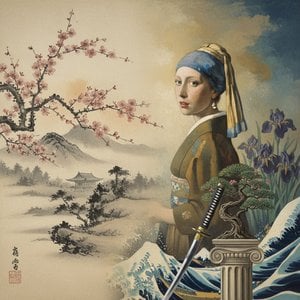
Untitled (D2X7EH)

Ancient Japanese painting by kasuga motomitsu (301). A serene vertical scroll depicting a monk & boy in muted tones. Explore this exquisite silk artwork's symbolism & traditional Buddhist style.

Discover kasuga motomitsu, a renowned Japanese artist of the Kamakura period known for exquisite silk paintings featuring bold colors, delicate lines, and traditional motifs like cherry blossoms and dragons. Explore his masterpieces and lasting legac

Hand Made Oil Reproduction

Hand-painted oil on canvas in your size and frame, made to order by our artists. (Buy Print Buy PrintBuy Image Buy Image)

Standard
custom
CM
INCH

Pick from our preset sizes that match the artwork's original proportions.

width
height

You may enter your own dimensions to fit a specific frame or space. If your selected size does not match the original image's proportions, we will either crop the artwork or extend the painting with additional hand-painted elements. A digital mockup will be sent for your approval before production begins.
Please note that the on-screen preview does not reflect the actual cropping or extension. Only the mockup will accurately show the final composition.
While custom sizes are available, we recommend selecting a dimension from the predefined list to preserve the original proportions.

Examples of what can be changed: Replace face with customer photo; Add pet (e.g., replace cat with dog); Include hidden message in background; Change background landscape or elements.
After order, WahooArt.com team will email client for instructions and provide a mockup preview

Worldwide Delivery () in 3/4 weeks instead of standard 5 weeks. (28 August). No compromise on quality.

why_choose_icon
Free Worldwide Express Shipping
why_choose_icon
High-Quality Linen Canvas
why_choose_icon
Full Shipping Insurance
why_choose_icon
Customs Tax Refund Guarantee
why_choose_icon
True Color Matching Guarantee
why_choose_icon
60-Day Return Policy (Defects Only)
why_choose_icon
100% Money-Back Guarantee
why_choose_icon
Bulk Discount Offer

Total Price

$ 297

reproduction

Untitled (D2X7EH)

Reproduction Medium

Reproduction Size

-

Total Price

$ 297


Artist Biography

A Brush with Eternity: The World of Kasuga Motomitsu

Kasuga Motomitsu remains a figure shrouded in the mists of early Japanese art history, yet his influence resonates through centuries of Kamakura period (1185-1333) painting. Unlike many artists whose lives are meticulously documented, details surrounding Motomitsu’s existence are scarce. He wasn't a court painter celebrated with official commissions or extensive biographical records; instead, he emerged as a pivotal figure in the development of *yamato-e*, a distinctly Japanese style of landscape and narrative painting that prioritized intimate observation and emotional resonance over strict adherence to Chinese conventions. Born sometime in Japan during the late 10th or early 11th century, his story is largely reconstructed through analysis of his surviving works—most notably, the exquisite Portrait of Xuanzang (Genjō) with Attendant. This painting isn’t merely a portrait; it's a window into the spiritual world of the period and a testament to Motomitsu’s mastery of silk as a medium.

Early Influences and Artistic Training

The artistic landscape in which Motomitsu matured was undergoing significant transformation. Prior to the Kamakura period, Japanese painting had been heavily influenced by Chinese styles—particularly Song Dynasty landscapes and figure paintings. However, a growing desire for uniquely Japanese expression began to take root. Buddhist art played a crucial role in shaping Motomitsu’s early aesthetic sensibilities. The emphasis on intricate detail, symbolic representation, and the use of gold leaf and vibrant colors within religious iconography profoundly impacted his approach. He received training in traditional Japanese art forms, absorbing techniques passed down through generations of artisans. This foundation allowed him to skillfully blend established conventions with a burgeoning sense of individuality. It’s believed that Motomitsu's early work focused on Buddhist themes, preparing him for the complex task of depicting religious figures and narratives with both technical precision and spiritual depth.

The Portrait of Xuanzang: A Masterpiece Unveiled

Portrait of Xuanzang (Genjō) with Attendant, created in the 14th century, stands as Motomitsu’s most celebrated achievement—and arguably a defining work within *yamato-e*. The painting depicts the Chinese Buddhist monk Xuanzang, revered in Japan as Genjō, alongside an attendant. Measuring 123.8cm x 74.3cm, the silk canvas is imbued with a serene atmosphere and remarkable attention to detail. Motomitsu’s use of color is striking—not through bold extravagance but through subtle harmonies and delicate gradations. The rendering of Xuanzang himself is particularly noteworthy; his face conveys wisdom, compassion, and an inner tranquility that transcends mere physical representation. The landscape surrounding the figures isn't a realistic depiction of nature but rather a symbolic evocation of the spiritual realm—a space conducive to contemplation and enlightenment.

Style and Technique: A Delicate Balance

Motomitsu’s artistic style is characterized by a delicate balance between precision and expressiveness. His lines are fluid yet controlled, creating a sense of movement and vitality within his compositions. He skillfully employed traditional Japanese motifs, such as cherry blossoms—symbols of impermanence and renewal—and dragons, representing power and good fortune. The choice of silk as his medium was crucial to his artistic vision. Silk allowed him to achieve an unparalleled level of detail and luminosity, enhancing the ethereal quality of his paintings. His technique involved layering colors meticulously, creating depth and texture that draws the viewer into the artwork’s world. This painstaking process reflects a deep reverence for materials and a commitment to craftsmanship.

Legacy and Impact: Shaping Japanese Aesthetics

While concrete details about Motomitsu's life remain elusive, his impact on the development of Japanese art is undeniable. He helped pave the way for a more distinctly Japanese aesthetic—one that prioritized emotional resonance, intimate observation, and symbolic representation over strict adherence to Chinese conventions. His work influenced generations of artists who followed, inspiring them to explore new forms of expression within *yamato-e*. The Portrait of Xuanzang (Genjō) with Attendant continues to be revered as a masterpiece of Japanese art—a testament to Motomitsu’s skill, vision, and enduring legacy. He represents a pivotal moment in the transition from Chinese-influenced styles towards a uniquely Japanese artistic identity, leaving an indelible mark on the cultural landscape of Japan.

Quick Facts

  • Artistic Movement Or Style: World Goes Pop
  • Artists Or Movements Influenced By This Artist: ['Influences various contemporary artists']
  • Artists Who Influenced This Artist: ['Influenced by diverse artists within the World Goes Pop movement']
  • Date Of Death: Living
  • Notable Artworks: ['Various works featured in The World Goes Pop exhibition']
  • Place Of Birth: WahooArt
Explore artworks organized by themes, styles, and characteristics.