Oil On CanvasWallArtBaroque
 1637Late Medieval
 104.0 x 130.0 cm
 Hermitage Museum
Museum-quality giclée or canvas print with fast production and flexible finish options. ( Buy Hand Made Painting Switch to Digital Image)





























Pick from our preset sizes that match the artwork's original proportions.

Type the width and the height you need, to fit your frame or your wall. A print can only be cut, never made bigger than the picture, so a size with a different shape loses a part of the image. We send you a digital mockup to approve before we print anything. The picture shown on this page does not show the real cut — only the mockup does.
Worldwide Delivery () in 2 weeks instead of standard 4/5 weeks. (20 October)
St. Onuphrius
Reproduction Size
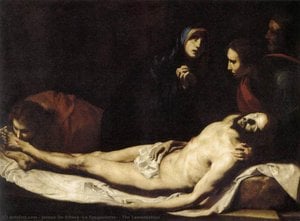
Jusepe de Ribera's “St. Onuphrius,” painted in 1637, is not merely a depiction of a religious figure; it’s a visceral plunge into the depths of human suffering and spiritual struggle. This arresting oil on canvas immediately commands attention with its dramatic chiaroscuro – a masterful manipulation of light and shadow that dominates the composition. Ribera, working within the powerful framework of Baroque painting, doesn't offer a serene portrayal of sanctity; instead, he presents a raw, unflinching depiction of St. Onuphrius enduring a torment both physical and profound. The scene unfolds within a deliberately dark and indistinct background, amplifying the figure’s isolation and intensifying the sense of his internal battle.
The central focus is undeniably St. Onuphrius himself, rendered with an almost sculptural realism. His body, taut with muscle and etched with lines of pain, speaks volumes about years spent in solitary asceticism. The outstretched hands, clasped together in a gesture of supplication, are particularly poignant – conveying not just prayer but a desperate plea for release from his earthly burdens. Ribera’s meticulous attention to detail is evident in every brushstroke; the texture of the skin, the folds of the drapery, and even the rough edges of the skull all contribute to an overwhelming sense of physicality and immediacy. The artist's use of glazing – layering thin, translucent paint – builds up depth and luminosity, creating a surface that seems both intensely tactile and imbued with spiritual significance.
Ribera’s mastery lies in his ability to fuse anatomical precision with emotional intensity. He was deeply influenced by Caravaggio's use of tenebrism – the dramatic contrast between light and dark – which he employs here with exceptional skill. The strong directional lighting, originating from an unseen source, highlights St. Onuphrius’ face and hands, drawing the viewer directly into his suffering. The composition itself is carefully structured to emphasize this drama; the figure dominates the frame, creating a sense of claustrophobia and intensifying the feeling of isolation. Note the flattened perspective, characteristic of Baroque painting, which subtly recedes into the background, adding depth without sacrificing the immediacy of the scene.
The symbolic elements woven throughout the painting further enrich its meaning. The chains represent the weight of past sins, a constant reminder of his earthly failings. The skull serves as a stark memento mori – a visual meditation on mortality and the inevitability of death. Even the discarded crown, lying at St. Onuphrius’ feet, symbolizes the relinquishing of worldly power and ambition. These carefully chosen symbols work in concert to convey not just the saint's personal suffering but also a broader commentary on human existence – a confrontation with our own mortality and the ongoing struggle between earthly desires and spiritual aspirations.
Jusepe de Ribera, known as “Lo Spagnoletto,” was a pivotal figure in the Spanish Baroque. Born in Xàtiva, Spain, he spent much of his career in Naples, where he developed a distinctive style characterized by its dramatic realism and profound emotional intensity. His work reflects the turbulent political and religious landscape of 17th-century Europe, particularly the Counter-Reformation’s emphasis on religious fervor and martyrdom. Ribera's influence extended far beyond Spain; his powerful depictions of biblical scenes and saints resonated throughout Italy and beyond.
“St. Onuphrius” stands as a testament to Ribera’s artistic genius – a hauntingly beautiful and profoundly moving portrayal of human suffering and spiritual yearning. It's a work that invites contemplation, prompting viewers to consider not only the saint’s personal ordeal but also their own place within the larger narrative of faith, mortality, and redemption. Reproductions of this powerful image offer a unique opportunity to experience the intensity and emotional depth of Ribera’s vision in your own space.
The X-Ray page of "St. Onuphrius" by Jusepe de Ribera is an interactive viewer that lets you slide through eleven optical layers of the artwork's image, including an X-ray style view.
The contrast level of "St. Onuphrius" by Jusepe de Ribera is gentle.
"St. Onuphrius" by Jusepe de Ribera combines religious art, suffering, penance, spirituality, martyrdom, baroque, augustine, emotion with a dramatic atmosphere.


1591 - 1652 , Spain

Immerse yourself in the profound legacy of Spanish Baroque art. From the spiritual intensity of Zurbarán to Goya’s emotive genius, explore museum-quality, hand-painted reproductions and bespoke commissions curated for the most discerning global collectors.

 Preview
 Send
Send Share
Share
 Details
 Guide
Guide

 Download
 Similars
 X-Ray
X-Ray Diaporama
 Stats
Stats Read More









 Glass option is only available in size under 110 CM