x


 Oil On CanvasWallArtTenebrist Baroque
 1641
1641 152.0 x 203.0 cm
 Gemäldegalerie Alte Meister
Hand-painted oil on canvas in your size and frame, made to order by our artists. ( Buy Print Buy Image)





























Pick from our preset sizes that match the artwork's original proportions.

You may enter your own dimensions to fit a specific frame or space. If your selected size does not match the original image's proportions, we will either crop the artwork or extend the painting with additional hand-painted elements. A digital mockup will be sent for your approval before production begins.
Please note that the on-screen preview does not reflect the actual cropping or extension. Only the mockup will accurately show the final composition.
While custom sizes are available, we recommend selecting a dimension from the predefined list to preserve the original proportions.
Worldwide Delivery () in 3/4 weeks instead of standard 5 weeks. (28 August). No compromise on quality.


St. Agnes in Prison
Reproduction Size
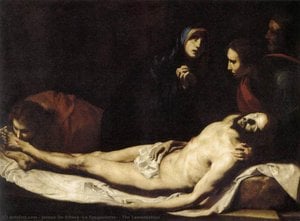
Jusepe de Ribera’s “St. Agnes in Prison,” painted in 1641, is not merely a depiction of a biblical scene; it's a profound exploration of faith, endurance, and the agonizing beauty of spiritual suffering. Created during the height of the Baroque period, this arresting work transcends simple narrative to become a visceral experience for the viewer, drawing upon Ribera’s mastery of tenebrism – a technique he honed in Naples where light and shadow are employed with almost brutal intensity.
The subject itself, St. Agnes, a young virgin martyred for her unwavering faith, is rendered with an unflinching realism that was characteristic of Ribera's style. She kneels on the cold stone floor, her body partially exposed, a stark contrast to the opulent garments she once wore – remnants of a life stripped away by persecution. The composition immediately commands attention; the darkness surrounding Agnes is almost palpable, punctuated only by the single shaft of light illuminating her face and hands, highlighting her serene expression amidst profound distress. This dramatic use of chiaroscuro isn’t merely stylistic; it serves to amplify the emotional weight of the scene, forcing us to confront the raw vulnerability of a saint enduring unimaginable hardship.
Ribera's artistic choices are deeply rooted in the Baroque aesthetic. The painting is dominated by deep browns, blacks, and grays – colors associated with mourning, sacrifice, and the mysteries of faith. These somber hues create a claustrophobic atmosphere, mirroring Agnes’s confinement and her internal struggle. The limited use of color, particularly the stark white of her garments against the oppressive darkness, serves to isolate her figure and draw our focus entirely onto her face – an expression of quiet acceptance and unwavering devotion. The artist's meticulous attention to detail, evident in the textures of the fabric, the rough stone floor, and the delicate folds of Agnes’s clothing, further enhances the realism and immediacy of the scene.
The presence of the angel figure in the background is equally significant. Rather than offering comfort or intervention, this ethereal being seems to bear witness to Agnes's suffering, holding a large cloth – perhaps representing her former life, now discarded – with an expression of solemn contemplation. The angel’s form is deliberately indistinct, shrouded in shadow and rendered with a ghostly quality that reinforces the painting’s themes of spiritual transcendence and the eternal nature of faith.
Beyond its immediate visual impact, “St. Agnes in Prison” is rich in symbolic meaning. The act of imprisonment itself represents the suppression of faith and the persecution faced by those who adhere to their beliefs. The exposed body of St. Agnes symbolizes her willingness to sacrifice everything for her convictions – a potent reminder of the ultimate cost of spiritual commitment. The bird she holds, often interpreted as a symbol of hope or resurrection, offers a glimmer of solace amidst the darkness.
Ribera’s choice to depict Agnes in such a vulnerable state was deliberate. He wasn't interested in glorifying martyrdom; instead, he sought to capture the raw emotional reality of suffering and the enduring strength of the human spirit. The painting invites viewers to contemplate not only St. Agnes’s plight but also their own capacity for resilience and faith in the face of adversity.
“St. Agnes in Prison” stands as a testament to Jusepe de Ribera's extraordinary talent and his profound understanding of human emotion. His masterful use of tenebrism, combined with his meticulous attention to detail and his ability to imbue his subjects with psychological depth, cemented his place as one of the most important artists of the Baroque era. Reproductions of this powerful work continue to resonate with audiences today, offering a timeless meditation on faith, suffering, and the enduring beauty of the human spirit.


1591 - 1652 , Spain

Immerse yourself in the sacred grandeur of Baroque church interiors. Explore museum-quality, hand-painted oil reproductions and bespoke religious art commissions. From breathtaking frescoes to dramatic altarpieces, we bring historical majesty to your luxury space with unmatched expertise.


Stay updated with the latest art news, exclusive offers, and decoration ideas.
Tell us about your project and our art experts will provide you with 3 personalized art suggestions.
Let Us Curate 3 Options Just for You - Free!

 Preview
 Send
Send Share
Share
 Details

 Download
 Similars
 X-Ray
X-Ray Diaporama
 Read More







 Glass option is only available in size under 110 CM