x


Museum-quality giclée or canvas print with fast production and flexible finish options. ( Buy Hand Made Painting Buy Image)
Pick from our preset sizes that match the artwork's original proportions.

You may enter your own dimensions to fit a specific frame or space. If your selected size does not match the original image's proportions, we will either crop the artwork or extend the image with a mirrored or solid-fill edge. A digital mockup will be sent for your approval before production begins.
Please note that the on-screen preview does not reflect the actual cropping or extension. Only the mockup will accurately show the final composition.
While custom sizes are available, we recommend selecting a dimension from the predefined list to preserve the original proportions.
Worldwide Delivery () in 2 weeks instead of standard 4/5 weeks. (29 August)


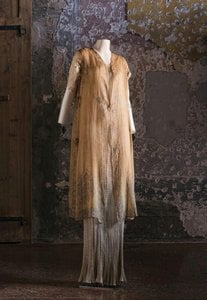
Arboreal Stand
Reproduction Size

The story of June Ruth Jacobs is one defined by an unyielding pursuit of justice and a profound commitment to the human spirit. Born in London in 1930, her early years were shaped by a family environment rich in intellectual curiosity and humanitarian concern. Raised by Lilly and Louis Caller, she was instilled from a young age with a deep sense of social responsibility—a value that would become the North Star of her life's journey. Her formative education, which included time as a wartime evacuee in the United States followed by studies at Westonbirt School, provided her with a unique, international perspective and a foundation of scientific inquiry paired with humanist ideals.
In 1950, her life took a transformative turn when she married Basil Jacobs. The couple met while volunteering at a youth club in London's East End, a meeting that forged a partnership built on shared passion for activism. This period of her life was marked by the blossoming of a lifelong dedication to community service and the defense of the vulnerable. As she navigated the complexities of the mid-20th century, Jacobs emerged not merely as a participant in social movements, but as a leader capable of mobilizing international attention toward the most pressing human rights crises of her era.
Perhaps the most harrowing and heroic chapters of Jacobs’s life occurred during the height of the Cold War. As the founder and first Chair of the National Council for Soviet Jews (NCSFJ), she undertook perilous missions to Moscow and Leningrad. Risking imprisonment and political retaliation, she navigated the treacherous landscape of the Soviet Bloc to visit Jewish refuseniks—those denied the fundamental right to emigrate. These daring excursions were not merely acts of bravery but were calculated efforts to break the silence surrounding the plight of those trapped behind the Iron Curtain. Her ability to maneuver through these high-stakes environments underscored her conviction that dialogue and visibility could pierce even the most impenetrable political barriers.
Her activism was characterized by a refusal to remain a passive observer. In 1971, demonstrating her characteristic resolve, she staged a twenty-four-hour fast outside the Soviet embassy in London to draw global attention to the suffering of a Jewish woman imprisoned in a Soviet labor camp. This period of intense, hands-on campaigning continued and expanded following the death of her husband in 1973, as she transitioned into full-time advocacy, ensuring that the voices of the marginalized were heard on the world stage.
As her influence grew, so did the scope of her work, moving from grassroots activism to international diplomacy. During her tenure as President of the International Council of Jewish Women (ICJW) from 1996 to 2002, Jacobs became a formidable presence in New York, representing her organization at the United Nations Commission on the Status of Women. Her leadership was marked by an intersectional approach, advocating for the rights of women and the preservation of cultural identity with equal fervor. She held various prestigious roles that bridged the gap between local community needs and global policy, including:
The historical significance of June Ruth Jacobs lies in her ability to translate empathy into tangible political action. She did not merely witness history; she actively shaped it through a lifetime of service. Her legacy remains a testament to the power of individual agency in the face of systemic oppression, reminding us that the pursuit of peace and justice requires both the courage to act and the persistence to endure.

1930 - 2018 , United Kingdom


Stay updated with the latest art news, exclusive offers, and decoration ideas.
Tell us about your project and our art experts will provide you with 3 personalized art suggestions.
Let Us Curate 3 Options Just for You - Free!

 Preview
 Send
Send Share
Share
 Details

 Download
 Similars
 X-Ray
X-Ray Diaporama

 Read More




































 Glass option is only available in size under 110 CM