x
PreviewPreview AR previewAR preview Buy Print Buy PrintBuy Hand Made Painting Buy Hand Made Painting SendSend
DetailsDetails Add to favorites Add to favorites DownloadDownload SimilarsSimilars X-RayX-Ray DiaporamaDiaporama

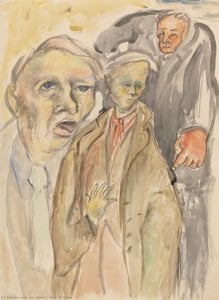
Mujer desnuda reclinada

Joy Hester's 'Mujer desnuda reclinada' (1955) is an emotionally charged Expressionist ink drawing capturing vulnerability and introspection through fluid lines & earthy tones, reflecting her unique vision.

Joy St Clair Hester (1920-1960): Australian Modernist renowned for emotionally charged ink drawings exploring love, loss, & the human psyche. A key figure of the Angry Penguins/Heide Circle.

Purchase a high-resolution, enhanced digital image, far superior to the online preview.

Each file is meticulously prepared by our in-house specialists using advanced tools and expert manual retouching. We ensure every image has exceptional clarity, precise color accuracy, and fine detail.

The final file is delivered via email within 72 hours, optimized for immediate use in professional, editorial, and print environments. This is the same quality trusted by top-tier design studios, publishers, and galleries.

Digital Image

Download a high-resolution file for personal display, printing, and creative projects. (Buy Print Buy PrintBuy Hand Made Painting Buy Hand Made Painting)

Total Price

$ 24.90

Included in Every Digital Image Order

Expert Digital Delivery, Guaranteed

When you choose WahooArt.com, you're not just getting an image - you're receiving a professionally enhanced digital artwork, crafted with precision and backed by a satisfaction guarantee. Here's everything that comes with your order, automatically:

shipping_icon
Fast Email Delivery

Your high-resolution digital image file will be emailed to you within 72 hours of ordering - ready for immediate use.

canvas_icon
AI-Enhanced Digital File

Your artwork is professionally optimized using advanced AI tools and manual editing, ensuring maximum detail, clarity, and color accuracy.

insurance_icon
Free Lifetime Re-Delivery

Accidentally deleted or lost your file? No worries - we'll resend it to you anytime, free of charge.

tax_icon
No Import Fees - Ever

Enjoy your artwork instantly with zero customs, duties, or delivery fees - digital downloads are always tax-free.

color_icon
Color Accuracy Guarantee

We ensure your digital image reflects the original colors as closely as possible using professional tools and color management.

return_icon
60-Day Satisfaction Guarantee

If you're not satisfied with your digital image, we'll revise it or refund 100% within 60 days - no questions asked.

guarantee_icon
100% Money-Back Guarantee

Not satisfied? Get a full refund within 60 days of receiving your digital file - no questions asked.

discount_icon
Bulk Order Discounts

Buy 3 images, save 10% - Buy 5, save 15% - Buy 10+, save 20%. Great for creative projects, galleries, and agencies.

Quick Facts

  • Artist: Joy St Clair Hester
  • Influences:
    • Hester
    • O'Connor
  • Location: Art Gallery NSW
  • Movement: Expressionism
  • Medium: Ink wash/Watercolor
  • Artistic style: Modernist
  • Year: 1955

Art Quiz

There is only one correct answer for each question.

Question 1:
What is the primary medium used in Joy St Clair Hester’s ‘Mujer desnuda reclinada’?
Question 2:
The artwork primarily focuses on:
Question 3:
Joy St Clair Hester was associated with which artistic movement?
Question 4:
What is the dominant color palette of ‘Mujer desnuda reclinada’?
Question 5:
According to the provided information, what influenced Joy Hester’s artistic style?

A Portrait of Introspection: Joy St Clair Hester’s *Mujer Desnuda Reclinada*

Joy St Clair Hester's *Mujer Desnuda Reclinada*, painted in 1955, is not merely a depiction of the human form; it’s an intimate exploration of vulnerability, loss, and the quiet power of observation. This arresting work, rendered primarily in shades of white, cream, and charcoal against a profound dark background, embodies the core tenets of Hester's distinctive Expressionist style – a language born from personal experience and imbued with a haunting emotional resonance.

The subject, a reclining nude female figure, is presented with an arresting directness. Her pose, relaxed yet subtly alert, suggests both vulnerability and a quiet strength. The artist’s masterful use of fluid, almost hesitant lines defines the contours of her body, avoiding any overtly sensual portrayal. Instead, Hester focuses on capturing the essence of the form – its curves, its weight, its inherent dignity – through a deliberate restraint that amplifies the emotional impact. The simplicity of the palette and the emphasis on line create an atmosphere of profound introspection, inviting the viewer to contemplate the figure’s inner world.

Echoes of the Heide Circle and Australian Modernism

To fully appreciate *Mujer Desnuda Reclinada*, it's crucial to understand its context within the vibrant artistic circles of 1950s Australia. Hester was a key member of both the Heide Circle, centered around the Reed family’s home, and the Angry Penguins group – movements that challenged traditional art practices and sought to forge a distinctly Australian modern identity. The influence of these groups is evident in Hester's willingness to break free from academic constraints and embrace a more personal, emotionally charged approach to her work.

Her early life, marked by the loss of her father at a young age, profoundly shaped her artistic vision. This experience, coupled with the anxieties surrounding World War II and her own battle with Hodgkin’s disease, fueled a deep exploration of mortality and the human psyche – themes that resonate powerfully in *Mujer Desnuda Reclinada*. The painting can be seen as a meditation on fragility, resilience, and the enduring beauty found within moments of quiet contemplation.

The Language of Line: Technique and Style

Hester’s technique is characterized by a remarkable economy of line. She eschews detailed rendering in favor of bold, expressive strokes that define form and convey emotion with exceptional subtlety. The varying weights of the lines – thick for outlining major contours, thinner for suggesting texture and shadow – create a dynamic interplay of visual elements. The predominantly monochromatic palette further emphasizes this linear approach, allowing the lines themselves to carry the weight of meaning.

The painting’s flatness—a deliberate choice by Hester—contributes to its immediate impact. There's no illusion of depth or spatial perspective; instead, the viewer is drawn into a close encounter with the subject, invited to engage with her presence on an emotional level. The dark background serves not as a mere backdrop but as a crucial element in defining the figure’s luminosity and emphasizing her vulnerability.

Symbolism and Emotional Resonance

*Mujer Desnuda Reclinada* transcends a simple depiction of a nude form; it's a potent symbol of introspection, resilience, and the quiet dignity of the human spirit. The reclining pose itself suggests surrender, acceptance, and a willingness to confront one’s own vulnerabilities. The figure’s averted gaze invites the viewer to share in her silent contemplation, fostering a sense of empathy and connection.

Ultimately, this painting is a testament to Hester's extraordinary ability to distill complex emotions into simple, yet profoundly moving forms. It remains a powerful example of Australian Modernism—a poignant exploration of the human condition rendered with remarkable grace and emotional depth.


Artist Biography

A Life Etched in Ink: The World of Joy St Clair Hester

Joy St Clair Hester, a pivotal figure in Australian Modernism, lived a life marked by both artistic fervor and personal hardship. Born in Elwood, Australia, in 1920, her early years were shadowed by the loss of her father, an event that would subtly yet profoundly influence the emotional depth of her later work. From her formative studies at St Michael's Grammar School and Brighton Technical School, Hester demonstrated a clear artistic inclination, culminating in recognition at the National Gallery School in Melbourne where she won the Drawing Head from Life prize in 1938. This early success signaled not just technical skill but an emerging ability to capture the essence of human form—a talent that would become her signature. It was also during this period that Hester began to break free from traditional artistic constraints, seeking a more expressive and personal visual language.

The Heide Circle and the Angry Penguins

Hester’s trajectory took a defining turn in 1938 with her meeting of Albert Tucker, initiating both a significant romantic relationship and an important artistic partnership. This connection led her into the orbit of Sunday Reed, a crucial patron of the arts, and subsequently into the vibrant heart of the Heide Circle. Alongside artists like Sidney Nolan, Arthur Boyd, and Charles Blackman, Hester found herself immersed in an environment of radical experimentation and collaborative spirit. The atmosphere at Heide was one of intellectual ferment, encouraging artists to challenge conventions and forge new paths. Simultaneously, she became a founding member of the Contemporary Art Society (CAS) and, notably, the sole female participant in the groundbreaking Angry Penguins movement. This association wasn’t merely circumstantial; Hester's work embodied the group’s rebellious spirit and commitment to modernism, pushing against the prevailing conservative artistic norms of Australia at the time. Her inclusion challenged the male-dominated art world and signaled a growing recognition of women’s contributions to Australian Modern Art.

A Distinctive Style: From Observation to Emotion

Hester's artistic development was characterized by a bold shift in both subject matter and technique. Initially, her work reflected traditional influences, but she quickly moved towards bolder forms and more expressive lines. The 1940s saw a focus on depicting everyday life—street scenes and factory workers rendered with an increasingly personal touch. However, it was her decision to abandon oil painting in favor of watercolor and inks that truly defined her style. This choice allowed for a fluidity and immediacy that perfectly suited her exploration of psychological states. Her lines became charged with emotion, often dark and sinuous, creating images that were both haunting and compelling. The shadow of World War II loomed large over this period, infusing her work with a sense of anxiety and existential questioning. This era marked the beginning of Hester’s signature style—a raw, intensely personal expressionism conveyed through the evocative power of ink.

Themes of Mortality, Love, and Loss

Joy St Clair Hester is perhaps best known for her series *Face, Sleep,* and *Love* (1948–49), a profound exploration of human emotion and relationships. These works are not merely portraits; they are psychological studies, delving into the complexities of inner life with unflinching honesty. Recurring motifs—faces rendered with haunting intensity, symbolic floral elements—appear throughout her oeuvre, acting as visual anchors for her emotional explorations. The awareness of mortality, deeply rooted in personal experiences – the early loss of her father and later diagnosis with Hodgkin's disease – became a central theme in her art. Later works like *The Lovers* (1956–58) continued this exploration, portraying love not as idyllic romance but as a fragile and often painful experience. Her work doesn’t shy away from the darker aspects of human existence; instead, it confronts them with courage and vulnerability. Hester's art is a testament to her ability to transform personal suffering into universal statements about the human condition.

Legacy and Enduring Influence

Despite facing challenges in gaining widespread recognition during her lifetime, Joy St Clair Hester’s work has experienced a significant resurgence of interest in recent decades. Influenced by artists like Ailsa O'Connor and Danila Vassilieff, who shared her commitment to psychological depth and the integration of art and life, she forged a unique path that paved the way for future generations of Australian artists. Her bold use of line, expressive style, and unflinching exploration of difficult themes continue to resonate with audiences today. Hester’s legacy lies not only in her artistic achievements but also in her courage to challenge conventions and express her inner world with such raw honesty. Diagnosed with Hodgkin's lymphoma in 1947, she continued to create art even as her health declined, holding solo exhibitions in 1950, 1955, and 1956. She passed away in December 1960, leaving behind a powerful body of work that stands as a testament to the enduring power of human expression. Her contribution to Australian Modernism is now firmly established, ensuring her place among the most important artists of her generation.
Joy St Clair Hester

Joy St Clair Hester

1920 - 1960 , Australia

Quick Facts

  • Artistic Movement Or Style: Modernism, Expressionism
  • Artists Or Movements Influenced By This Artist: ['Australian Modernism']
  • Artists Who Influenced This Artist:
    • Ailsa O'Connor
    • Danila Vassilieff
  • Date Of Birth: August 21, 1920
  • Date Of Death: December 4, 1960
  • Full Name: Joy St Clair Hester
  • Nationality: Australian
  • Notable Artworks:
    • Face series
    • Love series
    • The Lovers
    • Hombre con sombrero de corcho
    • Untitled
  • Place Of Birth: Elwood, Australia