
x


Museum-quality giclée or canvas print with fast production and flexible finish options. ( Buy Hand Made Painting Buy Image)
Pick from our preset sizes that match the artwork's original proportions.

You may enter your own dimensions to fit a specific frame or space. If your selected size does not match the original image's proportions, we will either crop the artwork or extend the image with a mirrored or solid-fill edge. A digital mockup will be sent for your approval before production begins.
Please note that the on-screen preview does not reflect the actual cropping or extension. Only the mockup will accurately show the final composition.
While custom sizes are available, we recommend selecting a dimension from the predefined list to preserve the original proportions.
Worldwide Delivery () in 2 weeks instead of standard 4/5 weeks. (28 August)


The cook's helper
Reproduction Size

The life of Joseph Alexis Bailly was as much a dramatic narrative as the monumental works he left behind in stone and wood. Born in Paris around 1825 to a skilled cabinetmaker, his early years were steeped in the tactile language of craftsmanship. The precision required for fine furniture carving would later become the hallmark of his sculptural style, yet his path to artistic immortality was paved with rebellion. During the tumultuous French Revolution of 1848, Bailly found himself caught in the gears of military conscription. In a moment of profound impulse and defiance, he assaulted a commanding officer and deserted his post, an act that set him on a wandering trajectory through England and Argentina before finally anchoring him in the burgeoning artistic landscape of Philadelphia in 1850.
This period of displacement served as a crucible for his talent. In England, he sought the mentorship of Edward Hodges Baily, a connection that bridged his Parisian training with the broader traditions of British sculpture. By the time he reached American shores, Bailly was no longer merely a craftsman but an artist prepared to translate classical ideals into the architectural fabric of a growing nation. His arrival in Philadelphia marked the beginning of a prolific era where his hands would shape both the intimate details of domestic ornamentation and the grand, public symbols of American identity.
Upon settling in Philadelphia, Bailly’s career flourished through strategic partnerships and an uncanny ability to harmonize sculpture with architecture. His collaboration with Charles Buschor proved to be a defining chapter, as the duo undertook ambitious projects that elevated the city's aesthetic prestige. One of their most significant early triumphs was the interior ornamentation for Philadelphia’s Masonic Hall in 1855. This commission allowed Bailly to explore the intersection of human emotion and structural design, creating life-sized painted-wood statues that personified Masonic virtues with a grace that captivated the public imagination.
Bailly’s talent for integrating art into grand, functional spaces was further demonstrated through his contributions to the Academy of Music. Between 1855 and 1857, he worked to decorate this legendary opera house, ensuring that the sculptural elements complemented the soaring aspirations of Victorian society. His work during this period was not merely decorative; it was an attempt to breathe life into the very walls of Philadelphia’s cultural institutions. This mastery of scale—moving from the delicate carvings of his youth to the sweeping ornamentation of grand halls—cemented his reputation as a sculptor who understood both the intimate and the monumental.
The zenith of Bailly’s career is perhaps best represented by his involvement with the United States Capitol Commission, a testament to his standing among the premier sculptors of his era. His design for the clock in the House chamber in 1858 remains a remarkable feat of both engineering and artistry, showcasing his ability to oversee complex fabrications involving masters like Bembe & Kimball. Yet, it is perhaps his most enduring contribution to the American psyche that remains his statue of George Washington in front of Independence Hall. This work stands as a silent sentinel of history, embodying the very essence of the republic through the meticulous technique he inherited from his Parisian roots.
Though his life ended in 1883, the historical significance of Joseph Bailly persists through the enduring presence of his works in the American landscape. He remains a vital figure in the transition of sculptural art from the rigid traditions of the Old World to the expressive, civic-minded needs of the New World. His legacy is found not only in the marble and wood he shaped but in the way he taught a young nation to see its own virtues reflected in the permanence of art.

1825 - 1883

Elevate your collection with the tactile elegance of hand-painted oil masterpieces. From bespoke reproductions to custom portraits from photography, discover museum-quality artistry crafted by academy-trained experts for discerning collectors and designers worldwide.

Discover the profound allure of oil on canvas. Explore the mastery of impasto textures, the science of pigment longevity, and expert guides to selecting museum-quality reproductions that elevate your collection with timeless elegance and tactile depth.
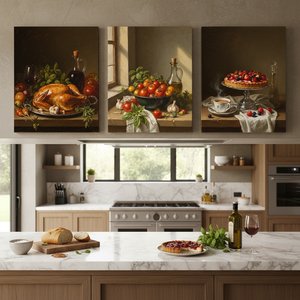
Elevate your home with WahooArt’s bespoke oil paintings. Transform cherished kitchen memories into museum-quality still life masterpieces. Hand-painted by master artists using traditional techniques to create a timeless legacy for your luxury interior.

Discover the enduring allure of oil on canvas. Explore how master techniques like impasto and glazing create the depth, texture, and emotional resonance found in the world's greatest masterpieces. An essential guide for fine art enthusiasts and discerning collectors.

Discover the enduring legacy of oil on board painting. Explore how historical techniques, rich impasto textures, and structural durability create timeless masterpieces that bridge Renaissance grandeur with modern art collecting excellence.


Stay updated with the latest art news, exclusive offers, and decoration ideas.
Tell us about your project and our art experts will provide you with 3 personalized art suggestions.
Let Us Curate 3 Options Just for You - Free!

 Preview
 Send
Send Share
Share
 Details

 Download
 Similars
 X-Ray
X-Ray Diaporama
 Read More




































 Glass option is only available in size under 110 CM


