

Museum-quality giclée or canvas print with fast production and flexible finish options. ( Buy Hand Made Painting Switch to Digital Image)
Pick from our preset sizes that match the artwork's original proportions.

You may enter your own dimensions to fit a specific frame or space. If your selected size does not match the original image's proportions, we will either crop the artwork or extend the image with a mirrored or solid-fill edge. A digital mockup will be sent for your approval before production begins.
Please note that the on-screen preview does not reflect the actual cropping or extension. Only the mockup will accurately show the final composition.
While custom sizes are available, we recommend selecting a dimension from the predefined list to preserve the original proportions.
Worldwide Delivery () in 2 weeks instead of standard 4/5 weeks. (10 September)


Woman’s Baeja
Reproduction Size
“Woman’s Baeja” is a striking studio photograph showcasing a garment of the same name designed by Johnny Hates Jazz (Choi Ji Hyung). The artwork centers entirely on this vest-like piece, presented against a stark white background. This deliberate simplicity directs all attention to the garment's form, texture, and intricate details. The composition is carefully balanced, with the vest angled slightly to reveal both its front and side aspects. This perspective allows for a comprehensive view of its construction.
The photograph itself exemplifies contemporary fashion photography, elevated by elements of conceptual art due to the garment’s unique design and presentation. Choi Ji Hyung masterfully utilizes studio lighting – even and diffused – to minimize shadows and accentuate the textures inherent in the materials. The technique prioritizes clarity and detail, ensuring every seam, panel, and embellishment is visible. The "Woman's Baeja" itself appears to be constructed from a combination of materials: primarily black leather with contrasting white fabric panels, complemented by silver metal hardware (likely zippers or eyelets for lacing), and vibrant ribbon ties. The garment’s construction likely involved pattern making, precise cutting, meticulous sewing, and potentially some hand-finishing details.
The "Baeja" itself is a traditional Korean vest, and Choi Ji Hyung's design represents a fascinating fusion of heritage and modernity. The garment’s name directly references this tradition. However, the use of edgy materials like black leather and the unconventional construction techniques signal a deliberate departure from classic interpretations. This juxtaposition suggests a commentary on cultural identity in a contemporary context – a blending of old-world influences with modern aesthetics and perhaps even a subtle element of rebellion. The bold color contrast—black, white, and royal blue—further reinforces this sense of confidence and dynamism.
“Woman’s Baeja” evokes a feeling of boldness and sophistication. The starkness of the background amplifies the visual impact of the garment's textures and lines. The interplay between the rough leather, smooth panels, and delicate laces creates a compelling tactile experience for the viewer, even through a photograph. Beyond its aesthetic appeal, the artwork prompts reflection on themes of cultural preservation, innovation in fashion design, and the evolving nature of identity in a globalized world. It is a testament to Choi Ji Hyung’s ability to transform traditional elements into a striking contemporary statement.


1984 - , South Korea

Discover the unparalleled elegance of Art Deco through the lens of Erté. Explore a masterclass in linear precision, theatrical costume design, and high-fashion illustration that continues to define modern luxury and sophisticated interior aesthetics.

Embark on a visual journey through the evolution of fashion photography. Discover how masters like Gianfranco Ferré blended geometry, surrealism, and texture to redefine high-fashion art for collectors and connoisseurs of luxury imagery.
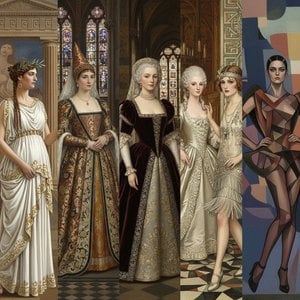
Explore the breathtaking intersection of fine art and high fashion. Discover how iconic masterpieces from Art Deco to Impressionism have shaped the world of luxury couture and timeless design in this curated visual journey.
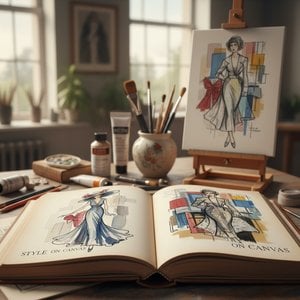
Discover the exquisite world of fashion illustration art. From Art Deco elegance to bespoke oil reproductions, explore how timeless sartorial beauty transforms luxury interiors through masterfully crafted canvas works and curated historical masterpieces.

 Send
Send Share
Share
 Details

 Download
 Similars
 Diaporama
 Stats
Stats

 Read More




































 Glass option is only available in size under 110 CM


