Museum-quality giclée or canvas print with fast production and flexible finish options. ( Buy Hand Made Painting Switch to Digital Image)
Pick from our preset sizes that match the artwork's original proportions.

Type the width and the height you need, to fit your frame or your wall. A print can only be cut, never made bigger than the picture, so a size with a different shape loses a part of the image. We send you a digital mockup to approve before we print anything. The picture shown on this page does not show the real cut — only the mockup does.
Worldwide Delivery () in 2 weeks instead of standard 4/5 weeks. (22 October)
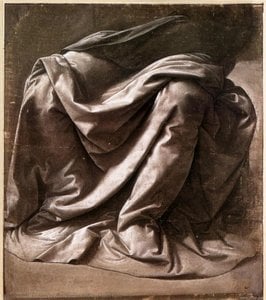
Jesse Steele Reading
Reproduction Size

John White Alexander (1856-1915) emerges from the late 19th and early 20th centuries as a significant, yet often overlooked, figure in American art. His work, deeply rooted in the Aesthetic Movement and characterized by an exquisite sensitivity to light, color, and form, offers a captivating glimpse into a world of refined beauty and quiet contemplation. Born in Allegheny County, Pennsylvania – now part of Pittsburgh – Alexander’s early life was marked by personal tragedy, shaping his artistic sensibility with a poignant awareness of loss and the fleeting nature of experience. His upbringing, fostered by his grandparents after being orphaned at a young age, instilled within him a deep appreciation for art and learning, ultimately leading to an education steeped in European artistic traditions.
Alexander’s formal training began in New York City, where he apprenticed under Edwin Austin Abbey at Harper's Weekly. This early exposure to illustration honed his technical skills and introduced him to the vibrant world of contemporary visual culture. However, it was a pivotal journey to Europe – specifically Munich, Florence, and Paris – that truly shaped his artistic vision. He studied with Frank Duveneck in Munich, absorbing the Impressionistic techniques and embracing a looser, more expressive approach to painting. The influence of Whistler’s emphasis on color and atmosphere proved particularly formative, guiding him toward a nuanced understanding of light and its transformative power.
Alexander’s work is inextricably linked to the broader context of the Aesthetic Movement, a late 19th-century artistic and intellectual current that prioritized beauty, emotion, and individual expression above all else. Rejecting the didacticism and moralizing tendencies of earlier art movements, aesthetes sought to create works that were purely beautiful, regardless of their representational accuracy or social significance. Alexander’s paintings perfectly embody this ethos – they are not merely depictions of reality but rather carefully constructed expressions of feeling and atmosphere.
His portraits, in particular, are notable for their psychological depth and subtle emotional resonance. He eschewed the formal poses and stiff gazes often associated with traditional portraiture, instead capturing his subjects in moments of quiet introspection or private contemplation. Consider “Miss Dorothy Quincy Roosevelt (later Mrs. Langdon Geer),” a stunning example of his ability to convey elegance and grace through delicate brushwork and a masterful use of light. The painting’s luminous quality and the subject's serene expression evoke a sense of timeless beauty, solidifying Alexander’s reputation as a painter of exquisite detail.
A defining characteristic of Alexander’s work is his extraordinary sensitivity to light and atmosphere. He meticulously observed how light transformed surfaces, creating subtle shifts in color and tone that conveyed a sense of depth and realism. “Still Life with Flagon and Roses,” for instance, showcases this talent brilliantly. The loose brushwork and the careful rendering of reflected light on the flagon and the velvety petals of the roses create an intimate and evocative scene—a testament to his ability to capture the ephemeral beauty of everyday objects.
His landscapes are equally compelling, often depicting quiet scenes of rural life or glimpses of the natural world bathed in soft, diffused light. These paintings are not merely representations of scenery but rather expressions of a profound connection with nature – a sense of wonder and reverence for the beauty that surrounds us. “Young Woman Arranging Her Hair” exemplifies this approach, presenting a serene portrait of a young woman engaged in a simple, yet deeply personal act.
Despite his considerable talent and critical acclaim, John White Alexander’s work remained relatively obscure for many years. However, in recent decades, there has been a growing appreciation for his unique artistic vision and technical skill. His paintings are now recognized as important contributions to the American art landscape of the late 19th and early 20th centuries – a testament to his ability to capture the delicate beauty of the world around him.
Alexander’s legacy extends beyond his individual works; he also played a significant role in the development of the National Academy of Design, serving as its president from 1909 until his death. His dedication to art education and his commitment to fostering artistic excellence ensured that his influence would continue to resonate within the American art community for generations to come. His work continues to be exhibited and studied today, offering a poignant reminder of the enduring power of beauty and the importance of capturing fleeting moments of grace.

1856 - 1915 , United States of America

 Preview
 Send
Send Share
Share
 Details
 Guide
Guide

 Download
 Similars
 X-Ray
X-Ray Diaporama
 Stats
Stats Read More






































 Glass option is only available in size under 110 CM