

 Oil On CanvasWallArtNeo-Classicism
 1767Early Modern
 100.0 x 102.0 cm
 Thyssen-Bornemisza Museum
Museum-quality giclée or canvas print with fast production and flexible finish options. ( Buy Hand Made Painting Switch to Digital Image)
Pick from our preset sizes that match the artwork's original proportions.

Type the width and the height you need, to fit your frame or your wall. A print can only be cut, never made bigger than the picture, so a size with a different shape loses a part of the image. We send you a digital mockup to approve before we print anything. The picture shown on this page does not show the real cut — only the mockup does.
Worldwide Delivery () in 2 weeks instead of standard 4/5 weeks. (21 October)
Martin Howard
Reproduction Size
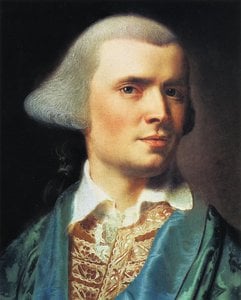
The painting Martin Howard by John Singleton Copley, dated 1767, is a masterpiece that embodies the essence of Neo-Classicism. This captivating portrait, measuring 100 x 102 cm and executed in oil on canvas, is currently housed at the prestigious Thyssen-Bornemisza Museum in Madrid, Spain.
The subject of the painting, Martin Howard, is depicted wearing a striking red coat with a white collar and ruffled hair. He appears to be seated on a chair, exuding an air of sophistication and elegance. The attire suggests that he was a prominent figure during his time, likely holding a position of importance. Howard (1725–1781) was a politician in colonial Rhode Island, known for his controversial support of the Stamp Act of 1765. Later appointed Chief Justice of North Carolina, his life and career were marked by both legal distinction and political upheaval.
The background features a serene blue sky with clouds, adding depth and visual interest to the scene. Notably, there is a book visible in the image, which may indicate that Martin Howard was engaged in reading or studying at the time the portrait was painted. This element adds a layer of symbolism, highlighting his intellectual pursuits. The lighting is dramatic, originating from the left side, casting strong shadows that define the folds of his clothing and create a sense of depth.
John Singleton Copley’s work is characterized by its adherence to the principles of Neo-Classicism. This style emphasizes realism, simplicity, and a return to classical ideals. In Martin Howard, Copley masterfully captures the essence of his subject with precise attention to detail, creating a sense of authenticity. The technique employed is traditional oil painting, utilizing layering and glazing to build up color and form. Copley was known for his ability to depict textures realistically – the sheen of the fabric, the wrinkles on the man’s face - all contributing to the portrait's lifelike quality.
Painted in 1767, this portrait reflects a pivotal moment in American history—the growing tensions between Britain and its colonies. Howard’s support of the Stamp Act made him a controversial figure, and the painting can be seen as both a record of his status and a subtle commentary on the political climate of the time. The overall impression is one of dignified authority tempered by an underlying sense of complexity. The portrait invites viewers to contemplate not only the individual depicted but also the broader historical forces shaping colonial America.
"Martin Howard" belongs to the American Period of John Singleton Copley's career. This classification relates the work to the artist's development.
The format of "Martin Howard" is portrait. This is useful when planning where a reproduction will be placed.
"Martin Howard" by John Singleton Copley shows a monochromatic color intensity.

1738 - 1815 , United Kingdom

Discover the profound beauty of Academic Classicism. Explore the principles of order, anatomical precision, and the enduring legacy of Neoclassical masters through this expert guide to timeless elegance and technical perfection in fine art.

 Preview
 Send
Send Share
Share
 Details
 Guide
Guide

 Download
 Similars
 X-Ray
X-Ray Diaporama
 Stats
Stats Read More






































 Glass option is only available in size under 110 CM


