A Norfolk Son: The Life and Art of John Sell Cotman
John Sell Cotman, a name synonymous with the evocative landscapes and maritime scenes of early 19th-century England, emerged from the thriving artistic community of Norwich to become a pivotal figure in British Romanticism. Born on May 16, 1782, into a family engaged in the prosperous trades of silk merchantry and lace dealing, Cotman’s path wasn't immediately destined for artistry. Yet, an innate sensitivity to the natural world and a burgeoning talent quickly steered him away from commerce and toward a life dedicated to capturing its beauty on canvas and paper. His early education at Norwich Grammar School provided a foundation, but it was his move to London in 1798 that truly ignited his artistic journey. There, he encountered the luminaries of the era – J.M.W. Turner, Peter de Wint, and Thomas Girtin – joining Girtin’s sketching club and embarking on formative excursions to Wales and Surrey. These experiences were transformative, instilling in him a passion for *plein air* observation and a dedication to translating fleeting impressions into enduring works of art. His debut at the Royal Academy in 1800, with scenes of Surrey and Harlech Castle, signaled the arrival of a significant new voice within the British art scene.
The Norwich School and Artistic Development
Cotman’s artistic identity became inextricably linked to the Norwich School, a group of painters who celebrated the distinctive character of the Norfolk countryside. Unlike many of their contemporaries preoccupied with grand historical narratives or idealized classical forms, the Norwich School artists focused on depicting the local landscape with realism and sensitivity. Cotman quickly rose as one of its leading figures, developing a style characterized by masterful watercolor technique, meticulous attention to detail, and a uniquely Romantic sensibility. He possessed an exceptional ability to utilize washes and dry brushstrokes to create atmospheric effects, capturing subtle nuances of light and color that imbued his landscapes with a sense of tranquility and mood. His etchings and illustrations further demonstrated his versatility and commitment to documenting the world around him. While grounded in observation, Cotman’s work often transcended mere representation, evoking feelings of melancholy, awe, or quiet contemplation through carefully constructed compositions and evocative perspectives. He wasn't simply recording what he saw; he was interpreting it through a lens of poetic feeling.
A Master of Mediums: Watercolor, Etching, and Beyond
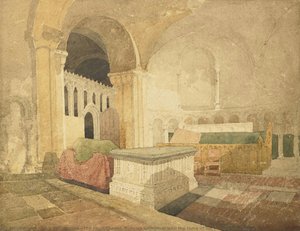
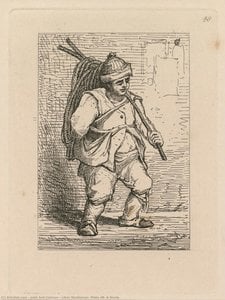
Cotman’s artistic output spanned a diverse range of mediums, but he is perhaps best known for his watercolor paintings. He elevated the medium to new heights, demonstrating its potential for expressive depth and atmospheric nuance. His watercolors are not merely sketches or studies; they are finished works of art that possess a remarkable sense of completeness. Beyond watercolor, Cotman was a prolific etcher, producing hundreds of plates that showcase his skill in line and tone. These etchings often served as preparatory studies for his paintings, but many stand on their own as compelling works of art. He also engaged in illustration, contributing to various publications with detailed and accurate depictions of architectural subjects and landscapes. This commitment to diverse artistic pursuits underscores his dedication to both technical mastery and a comprehensive exploration of the visual world. Notable examples include “The Jesus Chapel, Norwich Cathedral with the tomb of Sir Thomas Windham,” a quintessential example of the Norwich School’s style, and "View From Yarmouth Bridge, Norfolk, Looking Towards Breydon, Just After Sunset," which beautifully captures the charm of maritime life.
Legacy and Influence
John Sell Cotman's influence extended far beyond his own prolific output. He played a crucial role in shaping the development of British art, particularly within the context of the Norwich School movement. His emphasis on direct observation, atmospheric effects, and emotional resonance resonated with subsequent generations of artists. Furthermore, his dedication to teaching ensured that his artistic principles were passed down to a new cohort of painters. Both of his sons, Miles Edmund Cotman and John Joseph Cotman, followed in their father’s footsteps, contributing to the family's enduring legacy within the art world. Today, Cotman’s works are held in prestigious collections worldwide, including the Tate Gallery, the British Museum, the Victoria and Albert Museum, and the Yale Center for British Art. His paintings continue to captivate viewers with their beauty, sensitivity, and profound connection to the natural world. He remains a celebrated figure, not only as a master of watercolor and etching but also as a key representative of the Romantic spirit in English art. His dedication to capturing the essence of place and emotion ensures his enduring relevance for generations to come.
Further Exploration
- To delve deeper into Cotman’s life and work, visit WahooArt.com or consult his Wikipedia page: https://en.wikipedia.org/wiki/John_Sell_Cotman
- Explore the extensive collection of Cotman’s works at the Castle Museum and Art Gallery in Norwich, boasting over 2000 pieces.
- Discover more about the Norwich School of painters and their contribution to British art history.



 Preview
 Buy Hand Made Painting
 Send
Send Share
Share
 Details

 Download
 Similars
 X-Ray
X-Ray Diaporama
 Read More






































 Glass option is only available in size under 110 CM