
FREE ART CONSULTATION

x
Buy Painting Buy PaintingBuy Image Buy Image SendSend
DetailsDetails Add to favorites Add to favorites DownloadDownload SimilarsSimilars X-RayX-Ray DiaporamaDiaporama

Untitled (D2X2SL)

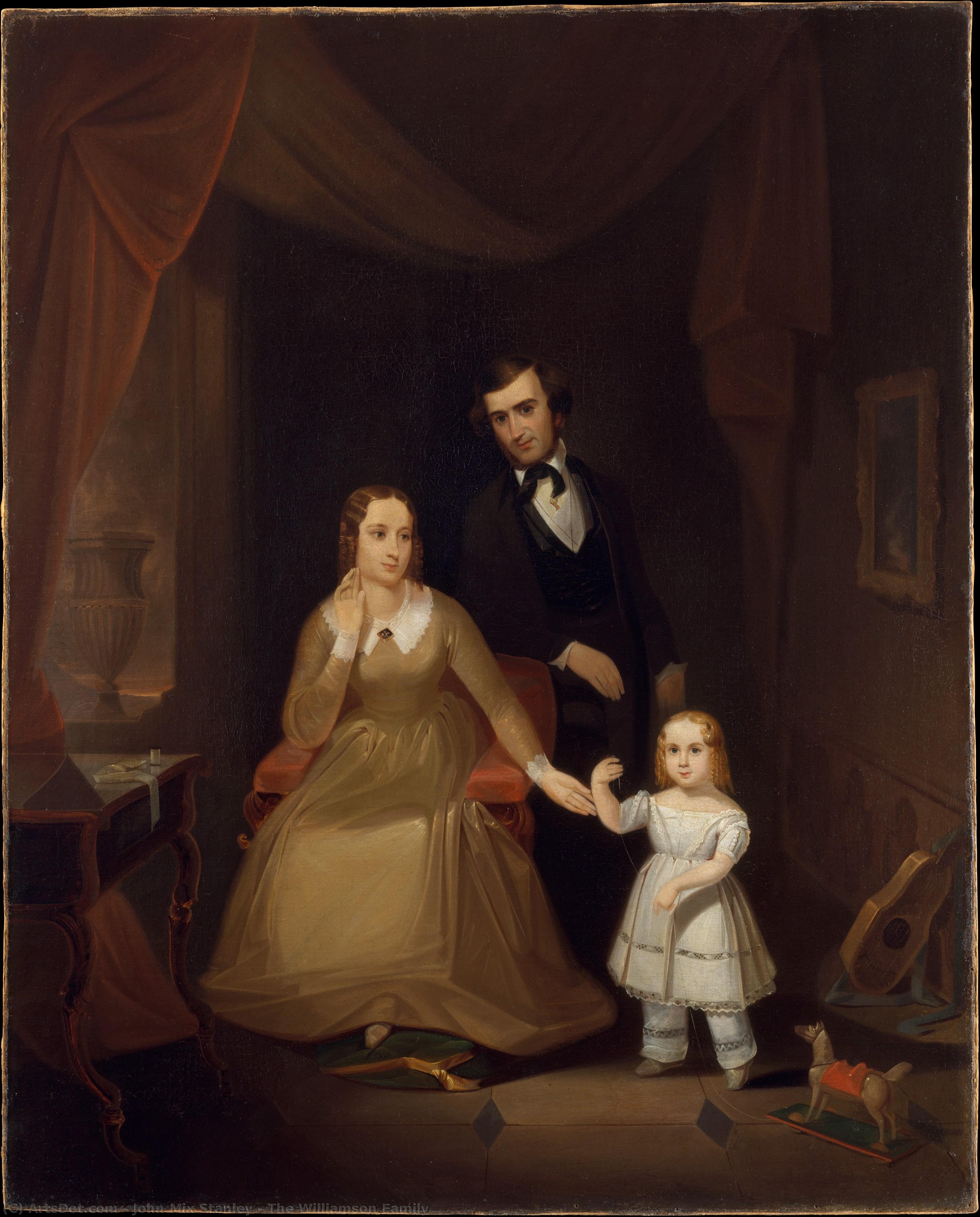
Discover John Mix Stanley’s "Untitled (D2X2SL)", a captivating portrait of the Williamson family from 1841, showcasing formal attire and domestic life amidst Western landscapes. A rare glimpse into 19th-century American society.

Discover John Mix Stanley (1814-1872), a pioneering American painter celebrated for his vivid landscapes & insightful portraits of Native American life in the West. Explore his legacy!

Giclée / Art Print

Museum-quality giclée or canvas print with fast production and flexible finish options.

P118B $10
P118H $10
P118W $10
P438Z $10
P508JH $12
P508YH $12
P805H $10
P805Z $10
P919BZ $10
P919G $10
P919XJ $10
P959ZH $10
P968JZ $12
W106C $8
W218G $10
W218JH $8
W218Y $10
W307PJ $10
W316G $10
W316PJ $8
W316Y $10
W398PJ $8
W4111J $10
W500HY $15
W500JH $15
W692G $12
W849H $8
W940BG $15
W953PJ $8

Standard
custom
CM
INCH

Pick from our preset sizes that match the artwork's original proportions.

width
height

You may enter your own dimensions to fit a specific frame or space. If your selected size does not match the original image's proportions, we will either crop the artwork or extend the image with a mirrored or solid-fill edge. A digital mockup will be sent for your approval before production begins.
Please note that the on-screen preview does not reflect the actual cropping or extension. Only the mockup will accurately show the final composition.
While custom sizes are available, we recommend selecting a dimension from the predefined list to preserve the original proportions.

Worldwide Delivery () in 2 weeks instead of standard 4/5 weeks. (6 July)

why_choose_icon
Free Worldwide Express Shipping
why_choose_icon
High-Quality Linen Canvas
why_choose_icon
Full Shipping Insurance
why_choose_icon
Customs Tax Refund Guarantee
why_choose_icon
True Color Matching Guarantee
why_choose_icon
60-Day Return Policy (Defects Only)
why_choose_icon
100% Money-Back Guarantee
why_choose_icon
Bulk Discount Offer

Total Price

-

reproduction

Untitled (D2X2SL)

Giclée / Art Print

Reproduction Size

-

Total Price

-

Quick Facts

  • Year: 1841
  • Notable elements: Family portrait, dining table
  • Artistic style: Realism, American West art
  • Subject or theme: Family life, Western scene
  • Influences:
    • Catlin
    • Stanley
  • Dimensions: 69 x 56 cm
  • Location: Metropolitan Museum of Art

Art Quiz

There is only one correct answer for each question.

Question 1:
What is the primary subject of John Mix Stanley’s ‘Untitled (D2X2SL)’?
Question 2:
According to the description, what formal attire is worn by the figures in the painting?
Question 3:
What object is prominently displayed on the dining table in the painting?
Question 4:
In what year was ‘Untitled (D2X2SL)’ painted?
Question 5:
John Mix Stanley is best known for his depictions of which group of people?

Collectible Description

A Window into Victorian Domesticity: John Mix Stanley’s “Untitled (D2X2SL)”

John Mix Stanley's "Untitled (D2X2SL)" offers a remarkably intimate glimpse into the life of an American family during the mid-19th century. Painted in 1841, this portrait transcends mere documentation; it’s a carefully constructed tableau of Victorian domesticity, imbued with a quiet dignity and understated elegance. The scene unfolds within a modestly furnished room – a dining table bearing a vase of flowers, two chairs strategically placed, and the subtle suggestion of a life lived comfortably within these walls. The composition is remarkably balanced, drawing the eye to the central figures: a man, a woman, and their young child, united in a gesture of tender affection—their hands clasped together, a visual anchor for the entire scene.

Stanley’s skill lies not just in his ability to capture likenesses, but in his nuanced understanding of light and shadow. He employs a soft, diffused lighting that washes over the figures, creating an atmosphere of warmth and intimacy. Notice how he subtly models the fabric of their clothing – the folds of the man's tie, the gentle curve of the woman’s dress—revealing textures with remarkable detail. The muted color palette—earth tones punctuated by touches of crimson and gold—contributes to the painting’s overall sense of quiet refinement. This restrained approach was characteristic of Stanley’s style, prioritizing observation and emotional resonance over flamboyant display.

The Williamson Family: A Portrait of Early American Life

The subject of the portrait is the Williamson family – James Abeel Williamson, his wife, and their son. Research through The Metropolitan Museum of Art reveals that this particular painting was commissioned to document a prominent New York family during a period of significant westward expansion. Williamson’s lineage extends into Wyoming, New Jersey, and beyond, highlighting the interconnectedness of American society at the time. Stanley's decision to portray them in formal attire speaks volumes about their social standing and the importance placed on appearances within Victorian culture. The inclusion of the dog further reinforces this sense of domesticity – a loyal companion integrated seamlessly into family life.

Further research, accessed through the Smithsonian Institution Archives, reveals that Stanley’s collection was tragically lost in the 1865 fire at the Smithsonian. This loss is a poignant reminder of the fragility of artistic legacy and underscores the importance of reproductions like this one. The archival materials detail Stanley's meticulous process – his extensive travels throughout the American West, his dedication to accurately depicting Native American life alongside portraits of settlers, and his ambition to create a comprehensive visual record of the era.

Symbolism and Context: A Window into Victorian Values

Beyond its straightforward depiction of a family gathering, “Untitled (D2X2SL)” is rich in symbolic meaning. The formal attire represents respectability and adherence to social norms—a key value within 19th-century America. The act of holding hands signifies familial love and unity, while the child’s presence embodies hope for the future. The dining table, with its vase of flowers, suggests prosperity and a celebration of domestic harmony. Stanley's inclusion of Native Americans in the background subtly acknowledges the complex relationship between settlers and indigenous populations – a theme prevalent throughout his work.

Considering the context of John Mix Stanley’s life as a pioneer documenting the American West, this painting is more than just a portrait; it’s a testament to his commitment to capturing the realities of frontier life. His meticulous observations and artistic skill offer a valuable window into the social customs, values, and aspirations of a rapidly changing nation. The reproduction offered by WahooArt.com allows you to experience the beauty and emotional depth of this remarkable work firsthand.

Bringing “Untitled (D2X2SL)” Home: A Reproduction for Your Space

WahooArt.com’s hand-painted reproductions faithfully recreate Stanley's original techniques, capturing the subtle nuances of light, color, and texture. This ensures that you receive a piece of art that not only honors the legacy of John Mix Stanley but also seamlessly integrates into your own home décor. The size (69 x 56 cm) is ideal for adding a touch of Victorian elegance to living rooms, studies, or hallways.

Whether you are an art enthusiast, a collector seeking authentic reproductions, or simply someone looking to infuse their space with timeless beauty, “Untitled (D2X2SL)” offers a captivating glimpse into the past—a testament to family, tradition, and the enduring power of American artistry.

Related Artworks


Artist Biography

A Pioneer of the American West: The Life and Art of John Mix Stanley

John Mix Stanley, born in Canandaigua, New York, on January 17, 1814, emerged as a pivotal figure in documenting the landscapes and peoples of the 19th-century American West. His life story is one of remarkable self-reliance and artistic dedication, forged amidst personal hardship and relentless exploration. Orphaned at the tender age of twelve and apprenticed to a coach maker by fourteen, Stanley’s early years instilled within him a practical resourcefulness that would serve him well throughout his adventurous career. It was through diligent self-teaching that he cultivated his innate talent for painting, eventually leading him to Detroit in 1832 where he began his artistic journey as an itinerant sign and portrait painter. This period of apprenticeship wasn’t merely about honing technical skills; it was a crucial phase of observation, learning the nuances of light, form, and human expression that would later define his distinctive style.

From Frontier Portraits to Panoramic Visions

Stanley's artistic trajectory took a decisive turn in 1842 when he embarked on an expedition to the American Southwest alongside Sumner Dickerman. This journey wasn’t simply about capturing scenic vistas; it was a deliberate quest to document Native American life, inspired perhaps by the earlier work of George Catlin. Establishing himself at Fort Gibson in Indian Territory (present-day Oklahoma), Stanley immersed himself in tribal cultures, attending significant councils like the one between Cherokee and Texas representatives at Tahlequah. He meticulously recorded these encounters through portraits and scenes of daily life, offering a valuable visual record of a rapidly changing world. His commitment to documentation continued during the Mexican-American War in 1846, where he served as a draftsman for Colonel Stephen Watts Kearney’s expedition to California and the Oregon Territory, producing sketches that captured the drama and scale of the military campaign. A subsequent sojourn to Hawaii from 1847 to 1848 saw him immortalizing King Kamehameha III and his family in striking portraits. Stanley wasn't content with static representation; he sought to capture the dynamism of a culture, the weight of history, and the individual character of his subjects. He organized large exhibitions of his work throughout the 1850s, culminating in a major display at the Smithsonian Institution in 1852 featuring nearly 200 works representing 43 tribes. Though met with critical acclaim, his attempts to secure government funding for his collection proved unsuccessful—a frustrating setback that foreshadowed later challenges. He even created a monumental 42-scene panorama of Western scenes exhibited across Washington D.C., Baltimore, New York and London, but sadly this ambitious work is now lost to time.

Style, Influences, and Historical Significance

Stanley’s artistic style was rooted in academic principles, yet infused with the immediacy of on-site observation. While he utilized sketches and preliminary studies—a practice akin to early photographic documentation—his paintings were carefully composed and executed. He drew inspiration from George Catlin, a pioneer in depicting Native American life, but often lacked the same level of empathetic engagement with his subjects. Critics sometimes noted a certain detachment in Stanley’s portrayals, viewing them more as objective records than deeply felt interpretations. Nevertheless, his work remains invaluable as historical documentation, providing insights into 19th-century encounters between European Americans and Native American tribes. His paintings offer glimpses into the clothing, customs, and social structures of diverse cultures at a pivotal moment in history. The tragic loss of much of his artwork in the 1865 Smithsonian fire—along with subsequent losses in other fires—contributed to a period where Stanley’s contributions were somewhat overshadowed. However, recent decades have witnessed a renewed appreciation for his work, recognizing its significance as both art and historical record.

A Legacy Rediscovered

Returning to Detroit in 1863, Stanley continued to paint until his death on April 10, 1872. Though he faced financial hardship and the devastating loss of much of his life’s work, his legacy endures through the surviving paintings held by museums across the nation. These works serve as a testament to his dedication, skill, and pioneering spirit. John Mix Stanley was more than just an artist; he was a chronicler of a vanishing world, a visual anthropologist who captured the essence of the American West during a period of profound transformation. His paintings are not merely beautiful objects; they are windows into the past, offering invaluable insights into the lives and cultures of those who inhabited this vast and dynamic landscape. His contribution to understanding 19th-century America is immeasurable.
  • Pioneering Documentation: Stanley was among the first artists to systematically document Native American cultures through painting.
  • Extensive Travel: His travels across the American West and Hawaii resulted in a vast body of work depicting diverse landscapes and peoples.
  • Historical Record: Surviving paintings provide valuable insights into 19th-century frontier life and Native American cultures.
John Mix Stanley

John Mix Stanley

1814 - 1872 , United States of America

Quick Facts

  • Artistic Movement Or Style: Romantic realism
  • Artists Who Influenced This Artist: ['George Catlin']
  • Date Of Birth: January 17, 1814
  • Date Of Death: April 10, 1872
  • Full Name: John Mix Stanley
  • Nationality: American
  • Notable Artworks:
    • Ko rak koo kiss
    • Passing an Obstruction
    • Interior of Wigwam
  • Place Of Birth: Canandaigua, USA
Explore artworks organized by themes, styles, and characteristics.



































