Museum-quality giclée or canvas print with fast production and flexible finish options. ( Buy Hand Made Painting Buy Image)
Pick from our preset sizes that match the artwork's original proportions.

You may enter your own dimensions to fit a specific frame or space. If your selected size does not match the original image's proportions, we will either crop the artwork or extend the image with a mirrored or solid-fill edge. A digital mockup will be sent for your approval before production begins.
Please note that the on-screen preview does not reflect the actual cropping or extension. Only the mockup will accurately show the final composition.
While custom sizes are available, we recommend selecting a dimension from the predefined list to preserve the original proportions.
Worldwide Delivery () in 2 weeks instead of standard 4/5 weeks. (6 September)


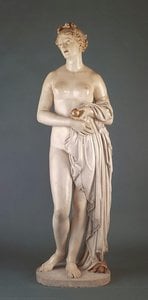
Tinted Venus
Reproduction Size

The life of John Gibson Paton (1824-1907) presents a fascinating duality, a rare intersection where the fervent devotion of a missionary meets the delicate precision of a classical artist. Born in Barrow-in-Furness, Scotland, Paton’s early years were steeped in the rigorous piety of a Presbyterian upbringing. Under the influence of his father, James Paton, a man dedicated to the spread of scripture, the young John developed a profound sense of purpose that would eventually lead him far from the familiar landscapes of Cumbria. Yet, beneath this layer of theological preparation lay an emerging sensitivity to beauty and form, a creative impulse that would later find expression in works that bridged the gap between the sacred and the mythological.
Paton’s journey was one of extraordinary geographical and spiritual breadth. In 1858, he embarked on a transformative mission to the New Hebrides, now known as Vanuatu. This period of his life was defined by intense humanitarian struggle and pioneering evangelism. Alongside his wife, Mary Ann Robson, Paton navigated the complexities of colonial-era Pacific life, working tirelessly to establish Protestant missions and advocating against the horrific practice of blackbirding—the kidnapping of indigenous peoples for forced labor. This era of his life provided a stark, visceral contrast to the idealized worlds of classical myth, yet it was perhaps this very encounter with the raw realities of human existence that deepened the emotional resonance found in his artistic sensibilities.
While his missionary work focused on the salvation of souls, Paton’s artistic output sought to capture the eternal beauty of classical antiquity. His work often drew upon the rich tapestry of Greek mythology, utilizing neoclassical themes to explore concepts of desire, nature, and the divine. One of the most striking examples of this is seen in Hylas Surprised by the Naiades. This piece captures a quintessential moment of mythological tension: the encounter between the young Hylas and the enchanting nymphs at a woodland fountain. Through his mastery of composition, Paton was able to evoke an atmosphere of dreamlike enchantment, where the boundaries between the human and the supernatural become beautifully blurred.
The technical execution of his work reflects a deep reverence for the idealized forms characteristic of the 19th-century neoclassical tradition. His ability to render texture and light suggests a profound understanding of the classical masters, aiming to achieve a sense of balance and harmony that transcends time. Whether exploring the soft, ethereal presence in works like Tinted Venus or the intimate character studies found in his Portrait of Woman, Paton’s art remains anchored in a pursuit of aesthetic perfection. His paintings do not merely depict scenes; they invite the viewer into a contemplative space where the legends of old are given new, luminous life.
The historical significance of John Gibson Paton lies in his ability to inhabit two seemingly disparate worlds with equal intensity. He was a man of action in the Pacific, a defender of human rights and a pioneer of religious expansion, yet he remained a man of reflection, finding solace and expression in the timeless narratives of myth. This tension between the historical reality of his missionary life and the mythological escapism of his art creates a unique biographical narrative that continues to intrigue scholars and art enthusiasts alike.
Today, Paton is remembered not only for his impactful humanitarian efforts but as an artist who successfully translated the spiritual fervor of his era into the language of classical beauty. His legacy serves as a testament to the complexity of the human spirit—capable of both the most rigorous moral conviction and the most delicate aesthetic appreciation. Through his works, we are reminded that even in the midst of life's most arduous journeys, there remains an enduring search for the sublime.

1824 - 1907 , United Kingdom


 Send
Send Share
Share
 Details

 Download
 Similars
 Diaporama


 Read More




































 Glass option is only available in size under 110 CM