FREE ART CONSULTATION

x
Buy Painting Buy PaintingBuy Image Buy Image SendSend
DetailsDetails Add to favorites Add to favorites DownloadDownload SimilarsSimilars X-RayX-Ray DiaporamaDiaporama

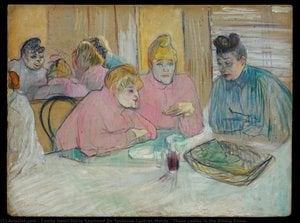
Taverna

John Craxton (1922-2009) was a British Neo-Romantic painter known for his evocative depictions of Greek life, landscapes, and mythology. Explore his vibrant works inspired by Crete, ballet designs, and contributions to 20th-century art.

Giclée / Art Print

Museum-quality giclée or canvas print with fast production and flexible finish options.

Standard
custom
CM
INCH

Pick from our preset sizes that match the artwork's original proportions.

width
height

You may enter your own dimensions to fit a specific frame or space. If your selected size does not match the original image's proportions, we will either crop the artwork or extend the image with a mirrored or solid-fill edge. A digital mockup will be sent for your approval before production begins.
Please note that the on-screen preview does not reflect the actual cropping or extension. Only the mockup will accurately show the final composition.
While custom sizes are available, we recommend selecting a dimension from the predefined list to preserve the original proportions.

Worldwide Delivery () in 2 weeks instead of standard 4/5 weeks. (18 July)

why_choose_icon
Free Worldwide Express Shipping
why_choose_icon
High-Quality Linen Canvas
why_choose_icon
Full Shipping Insurance
why_choose_icon
Customs Tax Refund Guarantee
why_choose_icon
True Color Matching Guarantee
why_choose_icon
60-Day Return Policy (Defects Only)
why_choose_icon
100% Money-Back Guarantee
why_choose_icon
Bulk Discount Offer

Total Price

-

reproduction

Taverna

Giclée / Art Print

Reproduction Size

-

Total Price

-


Artist Biography

John Craxton: Echoes of Arcadia and Grecian Light

John leith craxton ra (1922-2009) stands as a singular figure in British Neo-Romantic painting, an artist who relentlessly pursued the idealized beauty of nature—specifically the landscapes and myths of Greece—with unwavering dedication. Born in St John’s Wood, London, he was the son of musician Harold Craxton and Essie, inheriting a creative lineage that extended to his brother, Harold Antony Craxton, a celebrated television producer. His sister Janet pursued a distinguished career as an oboist, fostering a family environment rich in artistic pursuits. From a young age, craxton’s fascination with art was nurtured by attending Clayesmore School and applying unsuccessfully for Chelsea School of Art's nude life classes—a testament to his early ambition. Nevertheless, he embarked on formative studies at the Académie Julian and the Académie de la grande chaumière in Paris during 1939-40, interrupted by the onset of World War II which necessitated completing his education remotely in London. His time at Goldsmiths College further honed his artistic sensibilities before a brief foray into military service was rejected, allowing him to participate in a transformative journey with Graham Sutherland through Pembroke shire in 1943. Craxton’s artistic breakthrough arrived swiftly after the war, beginning with his debut solo exhibition in London in 1942 at the Swiss Cottage Café and culminating in a landmark retrospective showcasing his oeuvre. His work resonated deeply within the Neo-Romantic movement—a reaction against the austerity of postwar Britain—drawing inspiration from Sutherland and Samuel Palmer, while acknowledging the profound influence of Peter Watson, who became both a friend and patron. This period witnessed craxton’s exploration of Grecian landscapes and mythology, fueled by firsthand experience during his travels to Scilly Isles, Switzerland, Istanbul, Spain, Italy, and predominantly Crete. From 1946 to 1966, he established himself as a permanent resident on the island, oscillating between Cretan life and London engagements—a duality that profoundly shaped his artistic vision. Craxton’s ballet designs for Sadler's Wells Ballet’s production of Daphnis et Chloé in 1951 exemplify his commitment to blending art and storytelling. His ability to translate mythological narratives into visually arresting stage settings solidified his reputation as a visionary artist, demonstrating an understanding of theatrical aesthetics that transcended mere decoration. Throughout his career, craxton produced numerous paintings—works like “An Acrobatic Cretan Butcher,” “Sleeping Fisherman,” and “Taverna”—each imbued with meticulous detail and luminous color palettes reflecting the grandeur of Grecian vistas. His retrospective exhibitions in England and Greece cemented his legacy as a pivotal voice within 20th-century art, securing his place among the champions of Neo-Romantic idealism and reminding viewers of the enduring power of artistic contemplation.
John Craxton

John Craxton

1922 - 2009 , United Kingdom

Quick Facts

  • Artistic Movement Or Style: Neo-Romanticism
  • Artists Or Movements Influenced By This Artist: ['Ballet Design']
  • Artists Who Influenced This Artist:
    • Samuel Palmer
    • Graham Sutherland
    • Peter Watson
  • Date Of Birth: 1922
  • Date Of Death: 2009
  • Full Name: John Leith Craxton RA
  • Nationality: British
  • Notable Artworks:
    • Taverna
    • An Acrobatic Cretan Butcher
    • Sleeping Fisherman
  • Place Of Birth: St John's Wood, United Kingdom
Explore artworks organized by themes, styles, and characteristics.