x


 Oil On PanelWallArtRomantic Landscape Painting
 19th Century
 51.0 x 76.0 cm
Hand-painted oil on canvas in your size and frame, made to order by our artists. ( Buy Print Buy Image)





























Pick from our preset sizes that match the artwork's original proportions.

You may enter your own dimensions to fit a specific frame or space. If your selected size does not match the original image's proportions, we will either crop the artwork or extend the painting with additional hand-painted elements. A digital mockup will be sent for your approval before production begins.
Please note that the on-screen preview does not reflect the actual cropping or extension. Only the mockup will accurately show the final composition.
While custom sizes are available, we recommend selecting a dimension from the predefined list to preserve the original proportions.
Worldwide Delivery () in 3/4 weeks instead of standard 5 weeks. (25 August). No compromise on quality.


Windmills in landscape
Reproduction Size
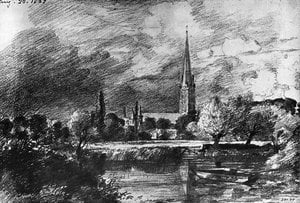
In his 1830 masterpiece, "Landscape with Windmills Near Haarlem," John Constable invites the viewer into a world where the atmosphere itself becomes a living, breathing protagonist. This evocative landscape is far more than a mere topographical record of rural life; it is a profound meditation on the transient beauty of nature. The scene unfolds across a sprawling vista, dominated by two windmills that stand as silent sentinaries against a dramatic, brooding sky. One windmill anchors the left side of the composition, while another rests more centrally, partially veiled by the lush greenery of the trees. Through his masterful command of light and shadow, Constable creates an illusionistic depth that pulls the observer into the very heart of the English countryside, making the damp, cool air of a cloudy afternoon feel almost tangible.
The painting captures a moment of quiet drama, where the interplay between sunlight and heavy, moisture-laden clouds creates a sense of movement across the canvas. Scattered throughout the verdant fields, small figures move with the unhurried rhythm of pastoral life, adding a human dimension to the vastness of the landscape. This careful arrangement of elements—the sturdy structures of industry, the organic silhouettes of trees, and the ephemeral textures of the clouds—works in harmony to evoke the quintessential charm of the Romantic era. For the collector or interior designer, this piece offers a window into a serene yet powerful world, providing a focal point that brings both tranquility and a sense of historical grandeur to any sophisticated space.
To behold a Constable is to witness the revolution of the landscape genre. Moving away from the rigid, academic conventions of his predecessors, Constable embraced the Romantic ideal, prioritizing emotional resonance and the "feeling" of a place over clinical precision. His technique in this work is nothing short of extraordinary; utilizing oil paint on oak panel, he employed a thick, textured application known as impasto. This method allowed him to build up layers of pigment that catch the light, mimicking the physical presence of earth, foliage, and the heavy textures of storm clouds. This tactile quality gives the painting an incredible vitality, ensuring that the landscape feels less like a static image and more like a captured moment in time.
Historically, this work sits at the pinnacle of Constable’s mature period, reflecting his deep-seated connection to the landscapes of his youth. While the title suggests a nod to the Dutch masters—specifically the influence of Jacob van Ruisdael—the soul of the painting remains rooted in the English tradition of capturing the sublime. The windmills themselves serve as potent symbols: they represent the harmonious integration of human endeavor and industrial progress within the natural world. By placing these symbols of labor against a turbulent, ever-changing sky, Constable underscores the delicate balance between man and the elements, creating an emotional impact that continues to resonate with modern viewers seeking a connection to the enduring power of nature.


1776 - 1837 , United Kingdom

Explore the profound legacy of John Constable. Discover how his mastery of light, atmosphere, and the English landscape redefined Romanticism through timeless, museum-quality oil reproductions for discerning collectors.


Stay updated with the latest art news, exclusive offers, and decoration ideas.
Tell us about your project and our art experts will provide you with 3 personalized art suggestions.
Let Us Curate 3 Options Just for You - Free!

 Preview
 Send
Send Share
Share
 Details

 Download
 Similars
 X-Ray
X-Ray Diaporama
 Read More







 Glass option is only available in size under 110 CM