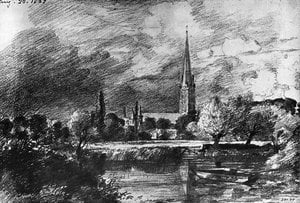
Hand-painted oil on canvas in your size and frame, made to order by our artists. ( Switch to Print Switch to Digital Image)





























Pick from our preset sizes that match the artwork's original proportions.

You may enter your own dimensions to fit a specific frame or space. If your selected size does not match the original image's proportions, we will either crop the artwork or extend the painting with additional hand-painted elements. A digital mockup will be sent for your approval before production begins.
Please note that the on-screen preview does not reflect the actual cropping or extension. Only the mockup will accurately show the final composition.
While custom sizes are available, we recommend selecting a dimension from the predefined list to preserve the original proportions.
Worldwide Delivery () in 3/4 weeks instead of standard 5 weeks. (7 October). No compromise on quality.
The Valley Farm
Reproduction Size
John Constable’s “The Valley Farm,” painted in 1835, isn't merely a depiction of a rural scene; it’s an immersive experience, a carefully constructed meditation on light, landscape, and the quiet dignity of everyday life. This oil-on-canvas masterpiece, now residing within the hallowed halls of Tate Britain, offers a profound glimpse into Constable’s revolutionary approach to painting – one that prioritized feeling and observation over rigid academic rules. The scene unfolds in what is now known as Constable Country, specifically along the River Stour in Suffolk, a region intimately connected with the artist's life and artistic development.
At first glance, “The Valley Farm” presents a deceptively simple composition: a modest farmhouse nestled within a verdant valley, framed by rolling hills and the shimmering expanse of the river. However, beneath this apparent tranquility lies a complex interplay of light and shadow, meticulously rendered with Constable’s signature loose brushwork. He wasn't interested in creating photographic realism; instead, he sought to capture the *impression* of the landscape – its atmosphere, its mood, its inherent beauty. Notice how the sunlight filters through the clouds, casting dappled patterns across the fields and illuminating the thatched roof of the farmhouse with a warm, golden glow. This masterful use of light is central to Constable’s style, transforming a commonplace scene into something extraordinary.
To fully appreciate “The Valley Farm,” it's crucial to understand its place within the broader context of the 19th-century English landscape movement – the Hudson River School. While geographically distant, this movement shared a common spirit with Constable’s work: a deep reverence for nature and a rejection of neoclassical formality. The Hudson River School, centered in New York, focused on capturing the grandeur of the American wilderness, while Constable, rooted in the heart of rural England, similarly sought to portray the beauty and serenity of his native landscape. Both movements were profoundly influenced by Romanticism, an artistic and intellectual movement that emphasized emotion, imagination, and individualism.
Constable’s connection to Suffolk is undeniable. He spent much of his life in this region, drawing inspiration from its rolling hills, meandering rivers, and picturesque villages. “The Valley Farm” isn't simply a representation of a specific place; it’s an embodiment of Constable’s deep affection for his homeland. The painting feels intensely personal, as if the artist himself is standing on the banks of the River Stour, capturing its beauty with his brush.
The central figure in “The Valley Farm” – a man rowing a small boat across the water – adds another layer of narrative to the scene. This seemingly simple detail is far from arbitrary; it’s a deliberate choice by Constable, intended to evoke a sense of human connection with nature. The rower, dressed in a vibrant red jacket, appears to be engaged in a leisurely activity, enjoying the tranquility of the valley. He represents humanity's ability to find solace and contentment within the natural world.
The presence of other figures – a group standing near the farmhouse and others further away – suggests a community connected by shared land and livelihood. The painting subtly hints at the rhythms of rural life, the daily routines of farming and fishing, and the close-knit relationships that bind people together. The horse grazing in the foreground adds to this sense of pastoral harmony.
Constable’s technique is characterized by its spontaneity and immediacy. He employed a loose, expressive brushstroke, allowing the paint to flow freely across the canvas. This approach was revolutionary for his time, as it departed from the meticulous detail favored by many of his contemporaries. Constable's use of color is equally striking – he relied on subtle gradations of tone and hue to create a sense of depth and atmosphere. The painting’s palette is dominated by greens, blues, and browns, reflecting the colors of the English countryside.
“The Valley Farm” stands as a testament to Constable's artistic genius and his profound understanding of landscape painting. It remains one of the most beloved works in the Tate Britain collection, inspiring generations of artists and art lovers alike. Reproductions of this iconic piece offer a remarkable opportunity to bring its serene beauty into your own home, capturing the essence of rural England and the timeless appeal of Constable’s vision.
The earthy palette of "The Valley Farm" by John Constable goes together with its nostalgic emotional tone. Color is one of the ways a work conveys feeling.
"The Valley Farm" was created by John Constable. The information on this page describes John Constable's original work.
The Preview page of "The Valley Farm" lets you preview the artwork before ordering.
To get a print of "The Valley Farm" by John Constable, simply order it on this page: a fine art print on cotton canvas or archival canvas paper.
In "The Valley Farm", the oil on canvas technique meets the Hudson River School movement.
Hand-painted copies of "The Valley Farm" by John Constable are sold on this website: a hand-painted oil reproduction on linen canvas, ordered from this page.
"The Valley Farm" by John Constable is recorded with a balanced soft saturation.


1776 - 1837 , United Kingdom

Explore the profound legacy of John Constable. Discover how his mastery of light, atmosphere, and the English landscape redefined Romanticism through timeless, museum-quality oil reproductions for discerning collectors.
Discover the profound tranquility of rural art through an expert exploration of Impressionist landscapes. From pastoral scenes to textured oil masterpieces, learn how timeless nature-inspired artworks bring enduring elegance and serenity to sophisticated collectors.

Explore the profound beauty of village scene art. From Impressionist light to pastoral realism, discover how timeless landscapes capture nostalgia through expert artistry and historical depth. Perfect for collectors seeking evocative, museum-quality landscape inspirations.

 Preview
 Send
Send Share
Share
 Details
 Guide
Guide

 Download
 Similars
 X-Ray
X-Ray Diaporama
 Stats
Stats

 Read More









 Glass option is only available in size under 110 CM