Oil On CanvasWallArtRomantic Landscape Painting
 183719th Century
 61.0 x 78.0 cm
Museum-quality giclée or canvas print with fast production and flexible finish options. ( Buy Hand Made Painting Switch to Digital Image)





























Pick from our preset sizes that match the artwork's original proportions.

Type the width and the height you need, to fit your frame or your wall. A print can only be cut, never made bigger than the picture, so a size with a different shape loses a part of the image. We send you a digital mockup to approve before we print anything. The picture shown on this page does not show the real cut — only the mockup does.
Worldwide Delivery () in 2 weeks instead of standard 4/5 weeks. (24 October)
Scene on a River 2
Reproduction Size
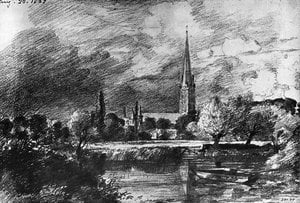
John Constable's 'Scene on a River 2,' painted in 1837, is more than just a depiction of a riverbank; it’s a profound meditation on the relationship between humanity and the natural world. Executed during a pivotal moment in British art history – a period grappling with Romantic ideals and the burgeoning Industrial Revolution – this work embodies Constable's unique ability to capture not merely the appearance of landscape, but its very soul. Measuring 61 x 78 cm, the painting invites the viewer into a tranquil scene brimming with subtle details that speak volumes about the artist’s meticulous observation and deeply felt connection to his beloved Suffolk countryside.
Born in 1776 in East Bergholt, Suffolk, Constable’s artistic trajectory was profoundly shaped by his upbringing. His father's ownership of the Dedham Vale – a landscape renowned for its beauty and agricultural significance – provided an inexhaustible source of inspiration. This intimate knowledge of the local terrain is immediately apparent in ‘Scene on a River 2,’ where every ripple, shadow, and variation in color feels authentically rooted in the Suffolk countryside. Constable’s work aligns perfectly with the tenets of Romanticism, which emphasized emotion, imagination, and the sublime power of nature – a reaction against the Enlightenment's focus on reason and scientific inquiry.
Influenced by artists like Claude Lorrain, Constable sought to capture not just a realistic representation but an *emotional* truth about the landscape. His use of light and color is particularly noteworthy, reflecting the constantly shifting conditions of the River Stour – a key element in his artistic vocabulary. The painting’s subdued palette, dominated by greens, blues, and browns, evokes a sense of peace and contemplation, inviting viewers to lose themselves in the beauty of the scene.
Constable's technique is characterized by its directness and spontaneity. He employed loose, expressive brushstrokes – a deliberate departure from the highly polished surfaces favored by some of his contemporaries – to convey the fleeting effects of light and atmosphere. The painting’s surface is built up through multiple layers of thin washes, allowing for subtle gradations in color and texture. This layering technique, combined with Constable's keen eye for detail, creates a remarkably luminous effect, as if the scene were bathed in an ethereal glow.
His approach to depicting water was revolutionary at the time. Rather than attempting to render the surface perfectly smooth, he captured the movement and reflection of light on the river’s surface with remarkable accuracy, creating a sense of dynamism and vitality. This focus on capturing transient effects – the way light changes throughout the day – is a hallmark of Constable's style and a key element in his enduring appeal.
'Scene on a River 2’ transcends a simple landscape painting; it’s a powerful statement about the restorative power of nature. The tranquil scene evokes feelings of serenity, peace, and connection to the natural world – emotions that resonated deeply with audiences during Constable's time and continue to captivate viewers today. The horse, often associated with freedom and nobility, further enhances this sense of harmony and balance. This artwork offers a timeless reminder of the beauty and importance of preserving our natural heritage.
The format of "Scene on a River 2" is landscape. This is useful when planning where a reproduction will be placed.
The earthy colors of "Scene on a River 2" by John Constable match its recommended space: a living room.
John Constable's recurring themes include claude lorrain influence, english rural life, constable’s dedham vale, landscape poetry themes, key suffolk artwork; "Scene on a River 2" focuses on river scene, john constable, landscape painting, english countryside, horse imagery, cloudy sky, rural harmony.


1776 - 1837 , United Kingdom

Explore the profound legacy of John Constable. Discover how his mastery of light, atmosphere, and the English landscape redefined Romanticism through timeless, museum-quality oil reproductions for discerning collectors.

 Preview
 Send
Send Share
Share
 Details
 Guide
Guide

 Download
 Similars
 X-Ray
X-Ray Diaporama
 Stats
Stats Read More









 Glass option is only available in size under 110 CM