FREE ART CONSULTATION

x
Buy Painting Buy PaintingBuy Image Buy Image SendSend
DetailsDetails Add to favorites Add to favorites DownloadDownload SimilarsSimilars X-RayX-Ray DiaporamaDiaporama

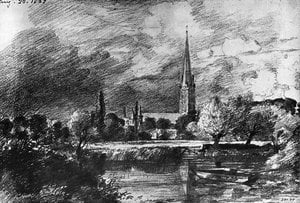
Dedham Vale: Morning

John Constable (1776-1837) revolutionized landscape painting with his emotive depictions of rural England, particularly Dedham Vale. Influenced by Claude Lorrain and mentored by George Beaumont, he achieved lasting fame for his masterful observation of nature.

Discover John Constable (1776-1837), the Romantic British landscape painter who revolutionized the genre with emotive scenes of Suffolk & nature. Explore iconic works now!

Giclée / Art Print

Museum-quality giclée or canvas print with fast production and flexible finish options.

P118B $10
P118H $10
P118W $10
P438Z $10
P508JH $12
P508YH $12
P805H $10
P805Z $10
P919BZ $10
P919G $10
P919XJ $10
P959ZH $10
P968JZ $12
W106C $8
W218G $10
W218JH $8
W218Y $10
W307PJ $10
W316G $10
W316PJ $8
W316Y $10
W398PJ $8
W4111J $10
W500HY $15
W500JH $15
W692G $12
W849H $8
W940BG $15
W953PJ $8

Standard
custom
CM
INCH

Pick from our preset sizes that match the artwork's original proportions.

width
height

You may enter your own dimensions to fit a specific frame or space. If your selected size does not match the original image's proportions, we will either crop the artwork or extend the image with a mirrored or solid-fill edge. A digital mockup will be sent for your approval before production begins.
Please note that the on-screen preview does not reflect the actual cropping or extension. Only the mockup will accurately show the final composition.
While custom sizes are available, we recommend selecting a dimension from the predefined list to preserve the original proportions.

Worldwide Delivery () in 2 weeks instead of standard 4/5 weeks. (4 July)

why_choose_icon
Free Worldwide Express Shipping
why_choose_icon
High-Quality Linen Canvas
why_choose_icon
Full Shipping Insurance
why_choose_icon
Customs Tax Refund Guarantee
why_choose_icon
True Color Matching Guarantee
why_choose_icon
60-Day Return Policy (Defects Only)
why_choose_icon
100% Money-Back Guarantee
why_choose_icon
Bulk Discount Offer

Total Price

-

reproduction

Dedham Vale: Morning

Giclée / Art Print

Reproduction Size

-

Total Price

-

Quick Facts

  • Subject or theme: Rural England; Pastoral scene
  • Location: Private Collection
  • Artist: John Constable
  • Influences: Claude Lorrain
  • Year: 1811
  • Title: Dedham Vale: Morning
  • Medium: Oil on canvas

Art Quiz

There is only one correct answer for each question.

Question 1:
What artistic movement is John Constable’s ‘Dedham Vale: Morning’ primarily associated with?
Question 2:
The painting depicts a scene in which location?
Question 3:
What is the dominant atmospheric element conveyed by Constable’s use of light and cloud formations?
Question 4:
Constable's father owned what significant property that greatly influenced his artistic vision?
Question 5:
Which artist inspired Constable to pursue painting, introducing him to the stylistic principles of Romanticism?

Collectible Description

A Symphony of Light and Landscape: Exploring Constable’s Dedham Vale

John Constable, born in 1776 in the tranquil Suffolk village of East Bergholt, wasn't merely a painter; he was an ardent devotee of the English countryside—a translator of its ephemeral beauty into enduring canvases. His formative years were steeped in the rhythms of rural life – the slow cadence of agricultural labor, the ever-shifting hues of dawn and dusk upon fields bathed in sunlight, and the intimate details of flora and fauna that captivated his youthful imagination. This profound connection to nature would become the bedrock of Constable’s artistic vision, informing every brushstroke and shaping his unwavering commitment to capturing the essence of the British landscape with unparalleled sincerity. Recognizing his innate talent, George Beaumont, a wealthy patron who championed Constable's burgeoning artistic aspirations, introduced him to the luminaries of the Romantic movement – notably Claude Lorrain—whose masterful depictions of idealized landscapes served as an inspirational precedent. However, Constable’s path wasn’t solely dictated by academic influence; it was propelled forward by an inner compulsion to express his own profound emotional response to the natural world. This impulse manifested itself in a revolutionary approach to painting, prioritizing atmospheric perspective and tonal modulation over meticulous detail—a technique that would forever alter the course of landscape art. “Dedham Vale: Morning,” completed in 1811, stands as Constable’s magnum opus – a testament to his unwavering dedication to Romantic idealism. The scene unfolds within the Stour Valley, Suffolk, capturing a quintessential moment of rural tranquility. Dominating the composition is a vast expanse of meadow dotted with grazing cows—their forms rendered with remarkable accuracy yet softened by Constable's masterful blending of colors and textures. Above them stretches a sky ablaze with diffused sunlight, punctuated by wispy clouds that convey an atmosphere of serene contemplation. Scattered throughout the field are horses – some positioned close to the viewer, others receding into the distance – adding dynamism to the stillness of the landscape. Two figures—presumably Beaumont and Constable himself—are subtly integrated into the scene, anchoring the composition while simultaneously emphasizing the human presence within this sublime realm. Constable’s meticulous observation of light and color is evident throughout “Dedham Vale: Morning.” He employed a technique known as aerial perspective – carefully adjusting hues and tonal values to simulate the diminishing intensity of light as it travels through the atmosphere—creating an illusion of depth that transports the viewer into the heart of the landscape. The artist’s palette favored muted greens, blues, and yellows, reflecting the dominant colors of the Suffolk countryside. Furthermore, Constable skillfully utilized impasto – applying paint thickly onto the canvas – to build up textural surfaces that capture the palpable energy of the natural world. This technique not only enhances visual impact but also conveys a sense of immediacy and emotional resonance—mirroring the artist’s own experience of encountering this breathtaking vista. The painting transcends mere representation; it embodies the Romantic spirit's preoccupation with emotion and imagination. Constable sought to evoke feelings of awe and wonder, mirroring the sublime grandeur of nature – a concept championed by Edmund Burke and Coleridge during the era. “Dedham Vale: Morning” is more than just a depiction of a place; it’s an embodiment of a worldview—one that celebrates beauty, humility, and the profound interconnectedness between humanity and the natural environment. It remains a cornerstone of British landscape painting and continues to inspire artists and collectors alike with its timeless appeal.
  • Artist: John Constable
  • Year Created: 1811
  • Style: Romanticism
  • Medium: Oil on Canvas
  • Dimensions: 78 x 129 cm

Artist Biography

A Life Rooted in the English Landscape

John Constable, born in 1776 in the idyllic Suffolk village of East Bergholt, wasn’t merely a painter of landscapes; he was a poet of the land, translating its subtle moods and enduring beauty onto canvas with an unprecedented emotional depth. His father, a prosperous corn merchant who owned both Dedham Vale and mills along the River Stour, provided not only financial security but also the very subject matter that would define Constable’s artistic life. This early immersion in the rural world – the slow rhythm of agricultural life, the ever-changing light on fields and water, the intimate details of nature – became indelibly etched into his sensibility. While initially destined to follow his father into business, a burgeoning passion for art, nurtured by local patrons like George Beaumont who introduced him to the works of Claude Lorrain, ultimately steered him toward a different path. Constable’s artistic journey wasn't immediate; it was a gradual unfolding, shaped by careful observation and a persistent desire to capture not just *what* he saw, but *how* it felt to be present within the landscape.

Breaking with Convention: A New Vision of Nature

Constable’s artistic development was marked by a deliberate rejection of prevailing academic conventions. Dissatisfied with the idealized and often theatrical landscapes favored by the Royal Academy, he sought instead a truthful representation of nature, imbued with personal feeling. He wasn't interested in grand historical narratives or mythological scenes; his focus remained steadfastly on the familiar countryside surrounding him. This commitment to depicting ordinary subjects – hay wains, farm buildings, village life – was initially met with resistance from critics who deemed his work too commonplace and lacking in ambition. However, Constable persevered, driven by a conviction that beauty resided in the everyday. He pioneered a technique of *plein air* painting, venturing outdoors to directly observe and capture the fleeting effects of light and weather. This direct engagement with nature allowed him to infuse his canvases with an immediacy and vitality previously unseen in British landscape art. His brushwork became increasingly loose and expressive, employing impasto – thick layers of paint – to create texture and convey a sense of movement and atmosphere. He wasn’t simply recording what he saw; he was translating his emotional response to the land into visual form.

Iconic Works and Lasting Influence

Constable's most celebrated works stand as testaments to his unique vision. The Hay Wain (1821), perhaps his most recognizable painting, depicts a quintessential rural scene on the River Stour, capturing the tranquility and harmony of agricultural life. Hadleigh Castle (1829) showcases his dramatic use of light and atmospheric effects, transforming a crumbling ruin into a powerful symbol of time’s passage. The series of paintings depicting Salisbury Cathedral from the Meadows (1831) demonstrates his ability to evoke different moods and times of day, revealing the cathedral as an integral part of the natural landscape. Netley Abbey (1824), with its evocative depiction of architectural grandeur amidst encroaching nature, exemplifies his skill in blending human creation with the wild beauty of the countryside. Despite facing initial struggles for recognition in England, Constable achieved considerable acclaim in France, where his innovative techniques and emotional depth resonated deeply with artists seeking a more naturalistic approach to landscape painting. He profoundly influenced the Barbizon School, a group of French painters who shared his commitment to *plein air* painting and direct observation of nature.

A Legacy of Emotional Resonance

John Constable’s historical significance lies not only in his artistic innovations but also in his profound impact on the development of landscape painting. He challenged academic conventions, elevated the status of ordinary subjects, and paved the way for a more personal and emotionally expressive approach to art. His emphasis on direct observation, atmospheric effects, and truthful representation of nature anticipated many of the concerns of later Impressionist painters. He demonstrated that landscape could be a vehicle for profound emotional expression, capable of evoking feelings of nostalgia, tranquility, and awe. Though he faced financial hardship throughout much of his career, and died relatively young in 1837, his legacy endures. Today, Constable is celebrated as one of Britain’s greatest artists, whose paintings continue to captivate audiences with their beauty, sincerity, and enduring power. His work serves as a poignant reminder of the profound connection between humanity and the natural world, and the transformative potential of art to capture its essence.

Personal Life & Final Years

Constable’s personal life was marked by both joy and sorrow. He married Maria Bicknell in 1816, and they had seven children, though sadly several did not survive infancy. His marriage provided him with emotional support but also financial strain. Elected a Royal Academician in 1829, he continued to face criticism from some quarters, particularly regarding his unconventional techniques. His later years were shadowed by Maria’s declining health and eventual death in 1828, an event that deeply affected him. Despite these hardships, Constable remained dedicated to his art, continuing to paint until his own passing on March 31, 1837. He left behind a rich artistic legacy—a testament to his unwavering commitment to capturing the beauty and emotional resonance of the English countryside. His paintings remain powerful evocations of a bygone era, inviting viewers to experience the landscape through his uniquely sensitive eyes.
John Constable

John Constable

1776 - 1837 , United Kingdom

Quick Facts

  • Artistic Movement Or Style: Romanticism
  • Artists Or Movements Influenced By This Artist: ['Barbizon School']
  • Artists Who Influenced This Artist:
    • Claude Lorrain
    • Jacob Ruisdael
  • Date Of Birth: June 11, 1776
  • Date Of Death: March 31, 1837
  • Full Name: John Constable
  • Nationality: British
  • Notable Artworks:
    • The Hay Wain
    • Hadleigh Castle
    • Salisbury Cathedral
    • Netley Abbey
  • Place Of Birth: East Bergholt, UK
Explore artworks organized by themes, styles, and characteristics.