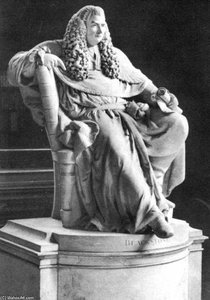
John Bacon: A Portraitist of Dignity and Detail
John Bacon (1740 – 1799) stands as a pivotal figure in British portraiture during the Enlightenment, celebrated for his unwavering commitment to realism and his ability to capture the essence of his subjects with remarkable sensitivity. Born in Southwark, London, Bacon’s artistic journey began amidst the burgeoning intellectual fervor of his time, shaping him into one of the most respected artists of his generation. While biographical details remain somewhat sparse – largely due to the limitations of archival records – his prolific output speaks volumes about his talent and enduring legacy.
Bacon's early training encompassed both drawing and painting, fostering a foundational understanding of artistic principles that would inform his subsequent endeavors. He honed his skills under the tutelage of William Hogarth, arguably London’s most influential painter of the era, absorbing Hogarth’s satirical wit and meticulous observation—traits that would become hallmarks of Bacon's own style. This formative influence undoubtedly contributed to Bacon’s distinctive approach: prioritizing anatomical accuracy alongside psychological insight.
Mastery of Light and Social Prestige
His artistic career flourished during a period marked by significant social and political change. Bacon gained renown for his commissions from prominent figures—nobility, statesmen, and members of the legal profession—resulting in an impressive collection of portraits that offer invaluable glimpses into the lives and aspirations of the British elite. These works were not merely records of appearance but were profound studies of status and character.
Notably, he produced several striking depictions of Sir James Beethom Whitehead & Westminster Abbey, capturing not only physical likeness but also conveying a profound sense of dignity and solemnity. These works exemplify Bacon’s mastery of chiaroscuro—the dramatic interplay of light and shadow—creating depth and texture that imbue each portrait with palpable emotion. Through the careful manipulation of tone, he could elevate a simple sitter to a figure of monumental importance.
Legacy and Artistic Significance
The historical significance of John Bacon lies in his ability to bridge the gap between the rigid traditions of earlier portraiture and the more emotive, realistic sensibilities that would define the coming century. His work serves as a vital visual record of the 18th-century British identity, reflecting the era's preoccupation with order, enlightenment, and the individual's place within a structured society.
As his career progressed, Bacon’s exploration of diverse subjects allowed him to refine a technique that balanced the formal requirements of aristocratic portraiture with an intimate, almost tactile realism. His ability to render the textures of fine fabrics, the subtle sheen of skin, and the depth of a gaze ensured that his portraits remained timeless, continuing to captivate viewers long after the era of the Enlightenment had passed.



 Preview
 Buy Hand Made Painting
 Send
Send Share
Share
 Details

 Download
 Similars
 X-Ray
X-Ray Diaporama
 Read More






































 Glass option is only available in size under 110 CM