
x


Museum-quality giclée or canvas print with fast production and flexible finish options. ( Buy Hand Made Painting Buy Image)
Pick from our preset sizes that match the artwork's original proportions.

You may enter your own dimensions to fit a specific frame or space. If your selected size does not match the original image's proportions, we will either crop the artwork or extend the image with a mirrored or solid-fill edge. A digital mockup will be sent for your approval before production begins.
Please note that the on-screen preview does not reflect the actual cropping or extension. Only the mockup will accurately show the final composition.
While custom sizes are available, we recommend selecting a dimension from the predefined list to preserve the original proportions.
Worldwide Delivery () in 2 weeks instead of standard 4/5 weeks. (30 August)


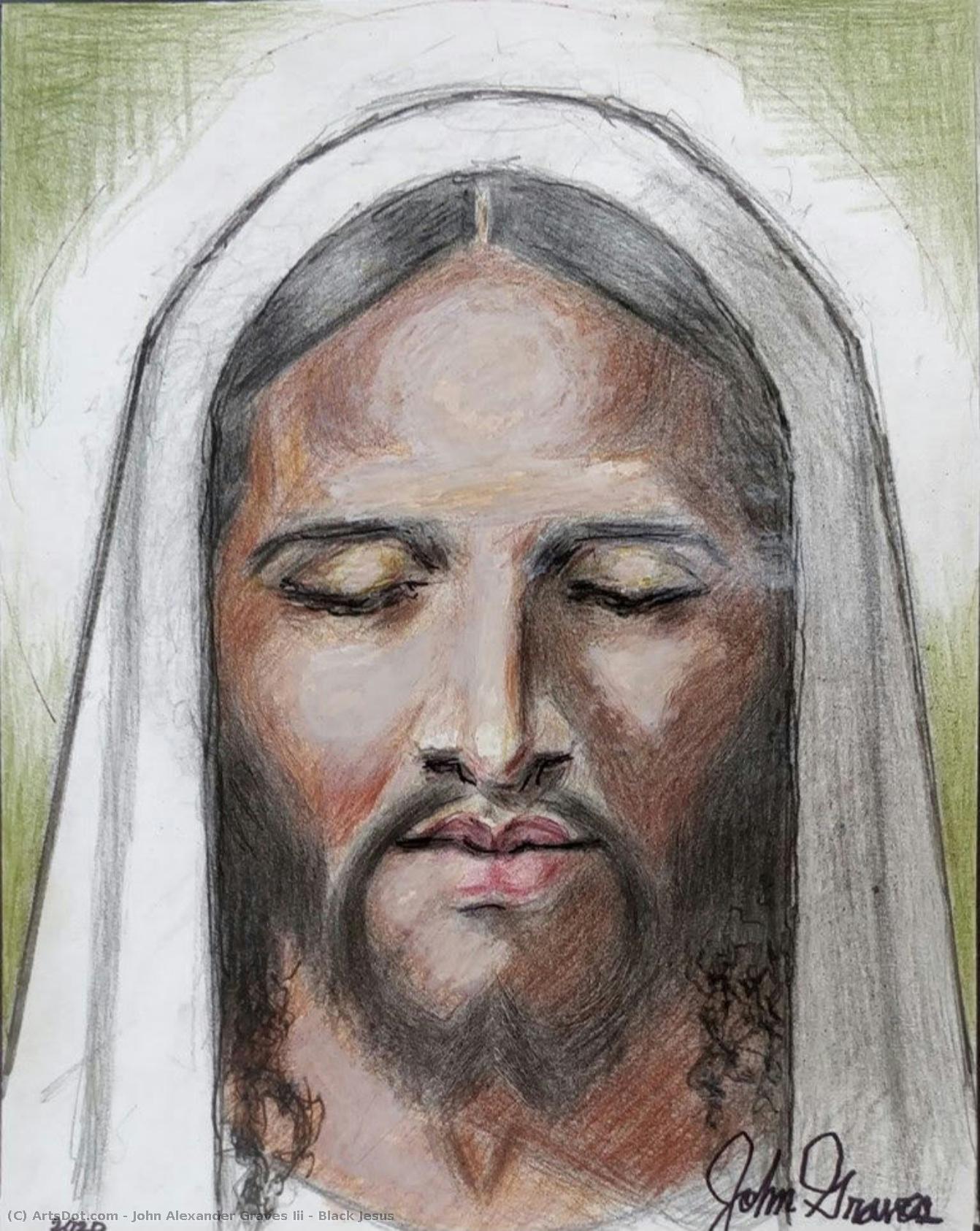
Black Jesus
Reproduction Size

John Alexander Graves III, born in Fort Worth in 1920 and passing away in Glen Rose in 2013, wasn't merely a writer; he was a cartographer of the soul, meticulously charting the landscapes—both physical and emotional—of Texas. His work transcends simple description, offering instead a profound meditation on place, memory, and the enduring connection between humanity and the natural world. Graves’s legacy isn’t defined by grand literary accolades, though he certainly earned his share of recognition, including the Texas Institute of Letters Lon Tinkle Award. Instead, it resides in the quiet resonance of his prose, the evocative power of his observations, and the way he invited readers to truly *see* the land he so deeply loved.
His early life was steeped in the rhythms of rural Texas. Growing up on a family ranch near Cuero and spending formative years in Fort Worth instilled within him an intimate understanding of the state’s diverse terrains—from the rolling hills of the Hill Country to the vast expanse of the Brazos River. This upbringing formed the bedrock of his artistic vision, informing his later work with a sensitivity rarely found in writers focused on regional themes. His formal education at Rice Institute and Columbia University provided him with intellectual tools, but it was his immersion in the Texas landscape that truly shaped his voice.
Graves’s most celebrated work, *Goodbye to a River* (1960), is arguably the cornerstone of his literary career. This memoir-cum-meditation on a three-week canoe trip down a section of the Brazos River isn't simply an account of a journey; it’s a profound exploration of time, loss, and the inexorable march of change. The river itself becomes a metaphor for life—its currents carrying us along, its banks revealing glimpses of the past, and its eventual destination ultimately unknowable. The book’s success wasn't solely due to its lyrical prose; it captured a growing sense of unease about the state’s rapid development and the potential loss of its natural heritage – a theme that would continue to resonate throughout his oeuvre.
Following *Goodbye to a River*, Graves continued to produce works that explored the complexities of Texas life. *Hard Scrabble: Observations on a Patch of Land* (1974) and *From a Limestone Ledge* (1980), collections of essays drawn from his contributions to Texas Monthly, further cemented his reputation as a keen observer of rural America. These pieces demonstrate a remarkable ability to capture the essence of ordinary people and places, revealing the beauty and dignity hidden within seemingly unremarkable lives.
Graves’s career extended beyond the realm of fiction and essays. He served as a consulting writer for the U.S. Department of the Interior's Potomac River Basin Commission from 1965 to 1967, demonstrating his commitment to environmental stewardship. His time at the University of Texas at Austin (1948-1951) and Texas Christian University (1957-1965) provided him with opportunities to nurture a new generation of writers, further solidifying his influence on the literary landscape of Texas.
His later years were marked by continued writing and reflection. He established Hard Scrabble Farm near Glen Rose, becoming deeply intertwined with the land he so eloquently described in his earlier works. This period saw the publication of *Blue & Some Other Dogs* (1981) and *My Dogs and Guns* (2007), offering intimate glimpses into his life as a farmer, rancher, and devoted companion to his dogs.
John Alexander Graves III’s work is more than just literature; it's a testament to the power of observation, the importance of place, and the enduring connection between humans and the natural world. His ability to capture the essence of Texas—its beauty, its challenges, and its people—has left an indelible mark on the state’s literary heritage. He didn’t seek fame or fortune; he simply sought to understand and articulate the landscapes that shaped his life, offering readers a profound invitation to do the same.
His legacy continues through the ongoing study of his works, inspiring writers and artists alike to explore the complexities of Texas and its unique cultural identity. Graves’s writing remains a vital resource for understanding the state's past, present, and future—a reminder that even in the face of change, the land itself holds the key to our memories and our sense of belonging.

1920 - 2013 , United States of America


Stay updated with the latest art news, exclusive offers, and decoration ideas.
Tell us about your project and our art experts will provide you with 3 personalized art suggestions.
Let Us Curate 3 Options Just for You - Free!

 Preview
 Send
Send Share
Share
 Details

 Download
 Similars
 X-Ray
X-Ray Diaporama
 Read More




































 Glass option is only available in size under 110 CM


