PreviewPreview AR previewAR preview Buy Hand Made Painting Buy Hand Made PaintingSwitch to Digital Image Switch to Digital Image SendSend
DetailsDetails Add to favorites Add to favorites DownloadDownload SimilarsSimilars X-RayX-Ray DiaporamaDiaporama StatsStats

Untitled (D2X6GG)

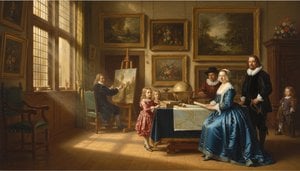
This artwork showcases Pieter Claesz’s signature style: quiet observation and luminous light. Executed in 1626, it portrays Saint Mary Magdalen's temptation by a figure resembling Lucifer, highlighting symbolic elements like an apple – a testament to Claesz’s ability to convey profound emotion through subtle visual cues.

Discover Johann Liss (1597-1630), a Venetian Baroque painter known for vibrant color, dynamic brushstrokes & mythological/biblical scenes. Explore his legacy!

Giclée / Art Print

Museum-quality giclée or canvas print with fast production and flexible finish options. (Buy Hand Made Painting Buy Hand Made PaintingSwitch to Digital Image Switch to Digital Image)

P118B $10
P118H $10
P118W $10
P438Z $10
P508JH $12
P508YH $12
P805H $10
P805Z $10
P919BZ $10
P919G $10
P919XJ $10
P959ZH $10
P968JZ $12
W106C $8
W218G $10
W218JH $8
W218Y $10
W307PJ $10
W316G $10
W316PJ $8
W316Y $10
W398PJ $8
W4111J $10
W500HY $15
W500JH $15
W692G $12
W849H $8
W940BG $15
W953PJ $8

Standard
custom
CM
INCH

Pick from our preset sizes that match the artwork's original proportions.

width
height

You may enter your own dimensions to fit a specific frame or space. If your selected size does not match the original image's proportions, we will either crop the artwork or extend the image with a mirrored or solid-fill edge. A digital mockup will be sent for your approval before production begins.
Please note that the on-screen preview does not reflect the actual cropping or extension. Only the mockup will accurately show the final composition.
While custom sizes are available, we recommend selecting a dimension from the predefined list to preserve the original proportions.

Worldwide Delivery () in 2 weeks instead of standard 4/5 weeks. (8 September)

why_choose_icon
Free Worldwide Express Shipping
why_choose_icon
High-Quality Linen Canvas
why_choose_icon
Full Shipping Insurance
why_choose_icon
Customs Tax Refund Guarantee
why_choose_icon
True Color Matching Guarantee
why_choose_icon
100-Day Return Policy (Defects Only)
why_choose_icon
100% Money-Back Guarantee
why_choose_icon
Bulk Discount Offer

Total Price

$ 69

reproduction

Untitled (D2X6GG)

Giclée / Art Print

Reproduction Size

-

Total Price

$ 69

Quick Facts

  • Movement: Dutch Baroque
  • Dimensions: 99 x 126 cm
  • Artistic style: Still Life
  • Medium: Oil on panel
  • Notable elements or techniques: Light and shadow play
  • Artist: Pieter Claesz
  • Year: 1626

Art Quiz

There is only one correct answer for each question.

Question 1:
What is the primary subject matter depicted in this painting?
Question 2:
Which artistic technique is prominently utilized by Johann Liss to convey the mood and atmosphere of this artwork?
Question 3:
In what city was Johann Liss primarily active during his artistic career?
Question 4:
What stylistic influence can be observed in Liss's work, particularly evident in his early paintings?
Question 5:
The painting’s color palette is described as ‘rich,’ suggesting a deliberate consideration of...

A Moment Frozen in Time: Pieter Claesz’s “The Temptation of Saint Mary Magdalen”

Pieter Claesz (1597 – 1630), though overshadowed by the titans of Dutch Baroque like Rembrandt and Vermeer, stands as a singular voice within his era—a master of understated elegance who captured the profound beauty found in quiet observation. His painting “The Temptation of Saint Mary Magdalen,” completed around 1626, exemplifies this distinctive approach, offering viewers an intimate glimpse into biblical narrative rendered with meticulous detail and bathed in diffused light that speaks volumes about artistic intention.

Subject Matter and Narrative Depth

The scene depicts a pivotal moment from Christian scripture: Mary Magdalene confronts temptation—represented by a shadowy figure who proffers an apple, symbolizing sin and desire. Claesz eschews dramatic gesture or theatrical presentation; instead, he focuses on the palpable tension between woman and man, conveyed through subtle expressions and gestures. The composition is deceptively simple – three figures dominate the canvas – yet each possesses considerable psychological complexity. Mary Magdalene’s gaze is fixed upward, conveying both vulnerability and defiance as she wrestles with the allure of transgression. The shadowy figure behind her embodies cunning and persuasive influence, while a third woman—likely representing purity—watches silently from the periphery.

Style and Technique: Light and Texture – Claesz's Signature Touch

Claesz’s artistic style is characterized by its remarkable restraint. Unlike Rembrandt’s bold chiaroscuro or Vermeer’s luminous interiors, Claesz employs a diffused light source that casts soft shadows across the figures and drapery, creating an atmosphere of contemplative stillness. This technique—a hallmark of his oeuvre—allows him to emphasize texture and surface detail with exceptional precision. The artist painstakingly renders the folds of Mary Magdalene's robe and shawl, capturing the subtle nuances of fabric weave and sheen. Similarly, the apple itself is rendered with meticulous attention to its form and color, highlighting its glossy surface and conveying a sense of tactile realism.

Historical Context: Venetian Influence Amidst Dutch Tradition

Claesz’s artistic development coincided with his travels through Venice around 1620–1622, where he encountered the influence of Caravaggio—a revolutionary artist who championed dramatic lighting and emotional intensity. However, Claesz skillfully blended Venetian techniques with the established traditions of Haarlem painting, resulting in a style that is both innovative and deeply rooted in Dutch artistic sensibilities. The painting reflects the broader cultural landscape of its time – a period marked by intellectual ferment and religious fervor—and speaks to the enduring fascination with biblical themes within European art history.

Symbolism: Apples and Temptation - A Visual Representation of Spiritual Struggle

The apple itself serves as a potent symbol of temptation, echoing classical myths and representing the deceptive allure of evil. Its placement in the figure’s hand underscores Mary Magdalene's internal conflict—her struggle to resist sinful desires and maintain spiritual purity. Claesz’s masterful depiction of this symbolic gesture elevates the painting beyond mere narrative illustration; it invites contemplation on themes of morality, faith, and human vulnerability.

Emotional Impact: Quiet Contemplation – The Enduring Appeal of Claesz's Vision

Ultimately, “The Temptation of Saint Mary Magdalen” achieves its emotional impact through its profound stillness and understated beauty. Claesz’s careful observation of light and texture—combined with his nuanced portrayal of human psychology—creates an experience that is both intellectually stimulating and emotionally resonant. The painting lingers in the viewer's mind long after viewing, prompting reflection on questions of faith, desire, and the complexities of human existence – a testament to Claesz’s enduring artistic legacy.

Artist Biography

Pieter Claesz: The Quiet Master of Light and Still Life

Born in Burgsteinfurt, Germany, in 1597 – a date often debated by scholars – Pieter Claesz emerged as one of the most distinctive figures in 17th-century Dutch painting. While his name might not be as instantly recognizable as Rembrandt or Vermeer, Claesz’s quietly assured style and masterful manipulation of light and atmosphere have secured him a unique place within the history of still life. His work offers a serene contemplation on everyday objects, imbued with an understated elegance that continues to captivate viewers today. He died in Haarlem in 1661, leaving behind a legacy of meticulously observed scenes that reveal a profound understanding of texture, color, and the subtle poetry of domesticity.

Early Life and Training

Information about Claesz’s early life is surprisingly sparse. He was likely apprenticed to a Haarlem painter, though the identity of his master remains unknown. His artistic development coincided with a period of significant change in Dutch art – the rise of the “diamond painters,” a group known for their monochrome still lifes that focused on capturing the play of light and shadow on simple objects. This movement, largely influenced by Italian Mannerism and Caravaggio’s dramatic use of chiaroscuro, provided the foundation for Claesz's distinctive style. Interestingly, he was admitted to the Antwerp Guild of Saint Luke in 1620, suggesting a period of artistic exploration and refinement in Flanders before settling permanently in Haarlem.

A Style Defined by Restraint and Observation

Claesz’s paintings are characterized by an extraordinary restraint. Unlike the more flamboyant still lifes of his contemporaries, he eschewed elaborate compositions and vibrant colors. Instead, he favored a limited palette – primarily browns, grays, blacks, and muted yellows – creating a sense of quiet intimacy and understated beauty. His subjects—breakfast tables laden with simple objects like wine glasses, knives, plates of bread or fish, and bowls of fruit—are rendered with meticulous detail, capturing the textures of metal, glass, and fabric with remarkable accuracy. The key to Claesz’s success lies not in dramatic effects but in his ability to evoke a sense of atmosphere through subtle variations in light and shadow. He expertly used reflected light to create depth and volume, transforming ordinary objects into miniature worlds of quiet contemplation.

  • Monochrome Dominance: Claesz’s signature style was defined by the use of monochrome palettes, emphasizing tonal shifts and atmospheric effects.
  • Detailed Observation: He meticulously rendered textures – from the sheen of polished silver to the rough surface of linen—demonstrating a keen eye for detail.
  • Subtle Lighting: Claesz masterfully manipulated reflected light to create depth, volume, and a sense of realism within his confined spaces.

Influences and Connections

While often considered an independent innovator, Claesz’s work was undoubtedly influenced by several key artistic currents. Caravaggio's dramatic use of light and shadow is evident in the way Claesz employs reflected light to create a sense of drama within his still lifes. Furthermore, he shared stylistic affinities with other Haarlem painters like Jacob van Stoorfoot and Pieter Van Neste, both known for their monochrome landscapes and still lifes. Notably, his son, Nicolaes Pietersz Berchem, continued the family tradition, developing into a renowned landscape painter in his own right, demonstrating a clear lineage of artistic skill and aesthetic sensibility.

Legacy and Historical Significance

Pieter Claesz’s contribution to Dutch still life painting is often underestimated. Despite not achieving widespread fame during his lifetime, his work has been increasingly recognized for its quiet beauty, technical mastery, and profound sense of atmosphere. His paintings offer a unique window into the domestic lives of 17th-century Hollanders, revealing a world of simple pleasures and understated elegance. Today, his works are held in prestigious collections worldwide, including the National Gallery of Art in Washington D.C., and the Frans Hals Museum in Haarlem, ensuring that this “quiet master” continues to be appreciated for his remarkable artistic vision.

His work stands as a testament to the power of restraint, observation, and the ability to find beauty in the everyday—qualities that resonate deeply with viewers centuries after his time.

johann liss

johann liss

1597 - 1630 , Germany

Quick Facts

  • Artistic Movement Or Style: Tonal landscapes
  • Artists Or Movements Influenced By This Artist: ['Esaias van de Velde']
  • Artists Who Influenced This Artist:
    • Jan van Goyen
    • Salomon van Ruisdael
  • Date Of Birth: 1597
  • Date Of Death: 1661
  • Full Name: Pieter Claesz van Haarlem
  • Nationality: Dutch
  • Notable Artworks:
    • Breakfast Still Life
    • Still Life with a Burning Candle
  • Place Of Birth: Burgsteinfurt, Germany
Explore artworks organized by themes, styles, and characteristics.