
x


 Northern Renaissance
 1457Renaissance
 93.0 x 65.0 cm
Museum-quality giclée or canvas print with fast production and flexible finish options. ( Buy Hand Made Painting Buy Image)





























Pick from our preset sizes that match the artwork's original proportions.

You may enter your own dimensions to fit a specific frame or space. If your selected size does not match the original image's proportions, we will either crop the artwork or extend the image with a mirrored or solid-fill edge. A digital mockup will be sent for your approval before production begins.
Please note that the on-screen preview does not reflect the actual cropping or extension. Only the mockup will accurately show the final composition.
While custom sizes are available, we recommend selecting a dimension from the predefined list to preserve the original proportions.
Worldwide Delivery () in 2 weeks instead of standard 4/5 weeks. (5 September)


The Ascension
Reproduction Size

Jean Fouquet, a figure shrouded in intriguing mystery, stands as one of the most significant yet enigmatic artists of early 15th-century France. Born around 1420 in Tours and passing away in 1481, he was more than just a painter; he was a revolutionary innovator who fundamentally altered the course of European art, particularly in the realm of portraiture. While much about his life remains speculative, his artistic legacy—characterized by exquisite detail, vibrant colors, and a unique blend of Gothic and Italian influences—continues to captivate scholars and art enthusiasts alike.
Fouquet’s early training is debated, with theories suggesting an apprenticeship under the enigmatic “Bedford Master” in Paris or perhaps even the more established Giovanni di Paolo. However, the most compelling evidence points towards a formative period spent in Italy during the mid-1440s. This journey proved transformative, exposing him to the burgeoning Renaissance style of Florence and Rome—a style that would profoundly shape his artistic vision. He encountered masters like Fra Angelico and Filarete, absorbing their techniques for modeling form, utilizing perspective, and employing rich color palettes. Returning to France, Fouquet skillfully synthesized these influences with the established Gothic traditions of his homeland, forging a distinctive style that became instantly recognizable.
Fouquet’s artistic output is remarkably diverse, encompassing panel paintings, illuminated manuscripts, and, crucially, portrait miniatures—a genre he essentially invented. His works frequently served the French court, reflecting the political and social dynamics of the time. He created elaborate altarpieces for Dominican churches, often depicting religious scenes with a remarkable attention to detail and a subtle elegance. The “Nativity” attributed to him (though debated) showcases his mastery of naturalistic representation and his ability to imbue even sacred subjects with a sense of human emotion. His most famous works include the “Adoration of the Magi,” a lavish panel painting brimming with vibrant colors, intricate details, and a dynamic composition that foreshadows Renaissance developments in perspective and spatial organization. The "Quaratesi Polyptych" is another significant example, demonstrating his skill in depicting multiple figures within a complex narrative.
However, Fouquet’s most enduring contribution lies in the realm of portraiture. He pioneered the technique of miniature painting—creating small-scale portraits on ivory or vellum that were highly sought after by European royalty and nobility. These miniatures weren't merely likenesses; they were carefully constructed narratives, often depicting the subject engaged in a specific activity or surrounded by symbolic objects. His portrait of Pope Eugene IV, though existing only as copies, is considered a landmark achievement—a testament to his technical skill and his ability to capture the personality and status of his subject. The depiction of Charles VII as one of the three magi in a religious panel exemplifies this trend, showcasing how Fouquet used portraiture to subtly assert royal authority and national identity.
Fouquet’s time in Italy was undeniably pivotal. He didn't simply copy Italian styles; he actively engaged with them, adapting and transforming them to suit his own artistic sensibilities and the demands of the French court. The influence of Florentine artists like Masaccio and Fra Angelico is readily apparent in his use of perspective—a technique that was still in its nascent stages in France at the time—and his emphasis on volumetric modeling of forms. His adoption of brighter, more vibrant colors also reflects the Italian Renaissance’s shift away from the muted palette of Gothic art.
Furthermore, Fouquet's encounter with Filarete, a master sculptor and architect known for his innovative use of perspective in architectural design, likely influenced his approach to spatial organization. The dynamic compositions of his panel paintings—characterized by complex arrangements of figures and a sense of depth—demonstrate the impact of this Italian influence. It’s important to note that Fouquet didn't simply import Italian techniques; he integrated them into his own artistic language, creating a unique hybrid style that is both distinctly French and undeniably influenced by the Renaissance.
Fouquet was renowned for his meticulous attention to detail—a hallmark of his distinctive style. He employed a wide range of techniques to achieve this level of precision, including layering thin glazes of paint to create subtle gradations of color, using fine brushes to render intricate details, and employing gold leaf to highlight important elements within his compositions. His use of tempera on panel was particularly noteworthy—allowing him to achieve both brilliance of color and remarkable durability.
The materials he used were equally significant. He favored ivory or vellum for miniature portraits, meticulously applying paint with a fine brush to create incredibly detailed likenesses. For his larger panel paintings, he utilized wood panels prepared with gesso—a plaster-like material that provided a smooth surface for painting. His ability to manipulate these materials and techniques demonstrates a remarkable level of artistic skill and control.
Jean Fouquet’s impact on the development of European art is profound, despite the relative obscurity surrounding his life. He is widely considered one of the earliest French artists to embrace Renaissance principles, paving the way for subsequent generations of painters. His pioneering work in portraiture—particularly his invention of miniature painting—established a new genre that would become increasingly popular among European courts and nobility.
Fouquet’s legacy extends beyond his individual works; he represents a crucial transitional figure between the Gothic and Renaissance periods in French art. He embodies the spirit of innovation and experimentation that characterized this era, demonstrating a willingness to challenge established conventions and explore new artistic possibilities. His work serves as a reminder that even amidst historical obscurity, an artist’s contribution can continue to resonate through the centuries, shaping the course of art history.

1420 - 1491 , Germany

Explore the rich symbolism of the red dress in art history! From ancient power displays to iconic portraits like Cézanne’s 'Madame Cezanne', discover the cultural and artistic significance behind this captivating color. Expert analysis & insights.

Journey into the Dutch Golden Age! Explore 10 iconic paintings by Rembrandt, Vermeer & Hals. Discover the stories behind these Baroque masterpieces and find museum-quality art reproductions to elevate your home decor on .

Explore 25 breathtaking masterpieces by Fra Angelico, a Renaissance master. Discover the stories behind his iconic frescoes, Annunciations & religious art. Find museum-quality reproductions and elevate your home decor with WahooArt.com.
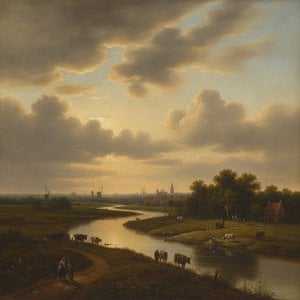
Discover the breathtaking beauty of Dutch Golden Age landscapes. Explore the mastery of light, chiaroscuro, and 17th-century realism through an expert art history lens, celebrating the enduring legacy of the Dutch Masters for discerning collectors and art lovers.
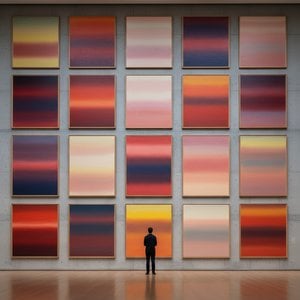
Explore 25 iconic Mark Rothko paintings that define Abstract Expressionism. Discover the stories, colors & emotions behind these masterpieces. Find museum-quality art reproductions and curated decor ideas at WahooArt.com.


Stay updated with the latest art news, exclusive offers, and decoration ideas.
Tell us about your project and our art experts will provide you with 3 personalized art suggestions.
Let Us Curate 3 Options Just for You - Free!

 Preview
 Send
Send Share
Share
 Details

 Download
 Similars
 X-Ray
X-Ray Diaporama
 Read More







 Glass option is only available in size under 110 CM


