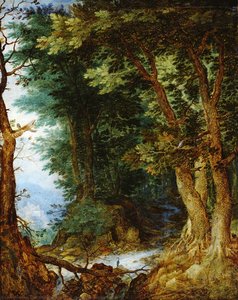
Charon by Joachim Patenier, hand-painted oil painting reproduction by a master artist
Preview AR preview Switch to Print Switch to Digital Image Send
Details Guide Add to favorites Download Similars X-Ray Diaporama Q&A Presentation Stats

Charon Hand-painted oil painting reproduction

Dimensions
64.0 x 103.0 cm

A hauntingly atmospheric descent into the underworld by Flemish Renaissance master Joachim Patenier captures Charon ferrying souls across the Styx with dramatic chiaroscuro, inviting you to explore this sublime masterpiece.

A pioneer of the world landscape style known for works like St Jerome. Discover the atmospheric beauty of his Flemish masterpieces today.

Hand Made Oil Reproduction

Hand-painted oil on canvas in your size and frame, made to order by our artists. ( Switch to Print Switch to Digital Image)

Corner sample of the P118B picture frame: moulded polystyrene, 5 cm wide and 3 cm thick
P118B $10
Corner sample of the P118H picture frame: moulded polystyrene, 5 cm wide and 3 cm thick
P118H $10
Corner sample of the P118W picture frame: moulded polystyrene, 5 cm wide and 3 cm thick
P118W $10
Corner sample of the P438Z picture frame: moulded polystyrene, 5.5 cm wide and 3.5 cm thick
P438Z $10
Corner sample of the P508JH picture frame: moulded polystyrene, 7 cm wide and 3.5 cm thick
P508JH $12
Corner sample of the P508YH picture frame: moulded polystyrene, 7 cm wide and 3.5 cm thick
P508YH $12
Corner sample of the P805H picture frame: moulded polystyrene, 5 cm wide and 3.5 cm thick
P805H $10
Corner sample of the P805Z picture frame: moulded polystyrene, 5 cm wide and 3.5 cm thick
P805Z $10
Corner sample of the P919BZ picture frame: moulded polystyrene, 7 cm wide and 3.5 cm thick
P919BZ $10
Corner sample of the P919G picture frame: moulded polystyrene, 7 cm wide and 3.5 cm thick
P919G $10
Corner sample of the P919XJ picture frame: moulded polystyrene, 7 cm wide and 3.5 cm thick
P919XJ $10
Corner sample of the P959ZH picture frame: moulded polystyrene, 5 cm wide and 3 cm thick
P959ZH $10
Corner sample of the P968JZ picture frame: moulded polystyrene, 6 cm wide and 4 cm thick
P968JZ $12
Corner sample of the W106C picture frame: solid wood, 5 cm wide and 3 cm thick
W106C $8
Corner sample of the W218G picture frame: solid wood, 5 cm wide and 3 cm thick
W218G $10
Corner sample of the W218JH picture frame: solid wood, 5 cm wide and 3 cm thick
W218JH $8
Corner sample of the W218Y picture frame: solid wood, 5 cm wide and 3 cm thick
W218Y $10
Corner sample of the W307PJ picture frame: solid wood, 6 cm wide and 3 cm thick
W307PJ $10
Corner sample of the W316G picture frame: solid wood, 6 cm wide and 3 cm thick
W316G $10
Corner sample of the W316PJ picture frame: solid wood, 6 cm wide and 3 cm thick
W316PJ $8
Corner sample of the W316Y picture frame: solid wood, 6 cm wide and 3 cm thick
W316Y $10
Corner sample of the W398PJ picture frame: solid wood, 5 cm wide and 3 cm thick
W398PJ $8
Corner sample of the W4111J picture frame: solid wood, 6.5 cm wide and 3.5 cm thick
W4111J $10
Corner sample of the W500HY picture frame: solid wood, 7 cm wide and 5 cm thick
W500HY $15
Corner sample of the W500JH picture frame: solid wood, 7 cm wide and 5 cm thick
W500JH $15
Corner sample of the W692G picture frame: solid wood, 8 cm wide and 4 cm thick
W692G $12
Corner sample of the W849H picture frame: solid wood, 5 cm wide and 3 cm thick
W849H $8
Corner sample of the W940BG picture frame: solid wood, 7.5 cm wide and 4.5 cm thick
W940BG $15
Corner sample of the W953PJ picture frame: solid wood, 6 cm wide and 3.5 cm thick
W953PJ $8

Standard
custom
CM
INCH

Pick from our preset sizes that match the artwork's original proportions.

width
height

Type the width and the height you need, to fit your frame or your wall. This is hand-painted, so for a size with a different shape the artist can paint a bit more around the picture, or cut a bit — you choose. We send you a digital mockup to approve before the painting starts. The picture shown on this page does not show the real result — only the mockup does.

Examples of what can be changed: Replace face with customer photo; Add pet (e.g., replace cat with dog); Include hidden message in background; Change background landscape or elements.
After order, WahooArt.com team will email client for instructions and provide a mockup preview

Worldwide Delivery () in 3/4 weeks instead of standard 5 weeks. (9 November). No compromise on quality.

Free Worldwide Express Shipping
High-Quality Linen Canvas
Full Shipping Insurance
Customs Tax Refund Guarantee
True Color Matching Guarantee
100-Day Return Policy (Defects Only)
100% Money-Back Guarantee
Bulk Discount Offer

Total Price

$ 272

Charon

Reproduction Medium

Reproduction Size

-

Total Price

$ 272

Quick Facts

  • Medium: Oil on panel
  • Subject or theme: Mythology; Death and afterlife
  • Influences:
    • Jan van Eyck
    • Rogier van der Weyden
  • Artistic style: Emotional Landscape Painting
  • Artist: Joachim Patenier

Art Quiz

There is only one correct answer for each question.

Question 1:
What is Charon’s role in the depiction of Hades according to Greek mythology?
Question 2:
Joachim Patenier’s painting distinguishes itself from earlier Flemish art primarily due to:
Question 3:
The image description mentions birds scattered throughout the scene. What is their significance?
Question 4:
Albrecht Dürer described Joachim Patenier as ‘the good painter of landscapes.’ Why was this assessment considered important?
Question 5:
What artistic technique is evident in the painting based on its rich colors and detailed depiction?

A Vision of the Eternal Descent

Joachim Patenier stands as a singular figure in the burgeoning landscape of Flemish Renaissance painting, a master who dared to prioritize atmosphere and emotion alongside meticulous detail. While many of his contemporaries focused on the rigid precision of portraiture or genre scenes, Patiner revolutionized the medium by treating the landscape not merely as a backdrop, but as a profound psychological conduit. As Albrecht Dürer famously observed, Patenier was “the good painter of landscapes,” possessing an uncanny ability to channel the very essence of nature into his canvases. In his haunting masterpiece, Charon, we are invited to witness a vision of descent, where the boundaries between the physical world and the spiritual realm blur into a singular, breathtaking experience of the sublime.

The landscape serves as a soulful reflection of the human condition, utilizing the brooding expanse of water and rocky shores to convey deep-seated psychological states. The painting is a masterful exploration of chiaroscuro, employing dramatic contrasts between light and dark to sculpt the scene and create an illusionistic depth that draws the viewer inward, mirroring the very descent into Hades itself. This technique serves a profound symbolic purpose, representing the eternal struggle between darkness and illumination—the earthly realm versus the afterlife—a central theme within Christian iconography of the era.

The Journey Through Myth and Spirit

At the heart of this evocative composition lies the mythological ferryman, Charon, navigating his vessel across the dark, swirling waters of the River Styx. This is not merely a depiction of classical myth; it is a profound meditation on mortality and the transition of souls toward their eternal destiny. The scene is populated by a delicate balance of figures—spirits and angels drifting through the gloom, alongside birds that punctuate the heavy atmosphere with life. Through this interplay of characters, Patenier explores the tension between the earthly and the divine, using the rugged terrain to ground the supernatural elements in a tangible, visceral reality.

The painting draws heavily upon classical antiquity, referencing the ferryman who transports souls into the abyss of Tartarus. Yet, there is an understated power in the depiction of Charon rowing his boat, a quiet strength that anchors the more ethereal elements of the piece. For collectors and interior designers, this work offers a captivating narrative depth; it is a piece that demands contemplation, inviting anyone who views it to reflect on the mysteries of existence and the beauty found within the unknown.

A Masterpiece for the Discerning Collector

Visually, Charon is a triumph of color and texture. The rich and vibrant tones used by Patenier make this an eye-catching piece that commands attention in any setting. The intricate details—from the spray of the water to the weathered textures of the rocky shore—showcase a level of skill that remains breathtaking centuries later. For those seeking to incorporate art into a sophisticated interior, this reproduction offers more than just aesthetic beauty; it provides an emotional anchor and a window into the profound spiritual landscapes of the Renaissance.

Whether placed in a gallery-style study or as a focal point in a grand living space, the painting’s ability to evoke wonder and solemnity makes it a timeless addition. It is an invitation to experience the sublime, capturing a moment of transition that is as hauntingly beautiful as it is historically significant.

Questions & Answers

Is "Charon" held in the country of its creator?

No - the artwork is kept abroad. Joachim Patenier was born in Belgium, and the original "Charon" is held in a museum in Spain.

What art movement does "Charon" by Joachim Patenier belong to?

"Charon" by Joachim Patenier belongs to the Flemish Renaissance movement. This movement provides the stylistic context of the work.

Where is the panoramic format of "Charon" recommended to be displayed?

Format (panoramic) and recommended space (living room) are the two placement facts recorded for "Charon" by Joachim Patenier.


Artist Biography

The Quiet Shift in the Flemish Landscape

In the early sixteenth century, the focus of Netherlandish painting began to drift away from the tight, meticulous details of the previous generation. Joachim Patenier, born around 1480 in Dinant or Bouvignes, was at the center of this change. While his predecessors like Jan van Eyck and Rogier van der Weyden focused on the sharp precision of textures and figures, Patenier looked toward the horizon. He was a man who lived and worked in Antwerp, eventually becoming a member of the city's Guild of Saint Luke in 1515. His work suggests a mind preoccupied with the way light and air change the appearance of distant mountains and winding paths.

He did not merely use nature as a backdrop for religious stories. Instead, the landscape became the primary subject. In his hands, the natural world took on a sense of scale that felt both vast and intimate. He moved away from the crowded compositions of the past, opting instead for wide, panoramic views. This approach helped create what would later be known as the world landscape style, where the eye is led through layers of terrain, from the dark, textured foreground to the pale, hazy blue of the furthest peaks.

The Language of Light and Space

Patenier’s technique relied heavily on atmospheric perspective. By using soft gradations of color, he captured the way moisture and distance blur the edges of the world. This was a departure from the hard lines of earlier Flemish art. In works like Landscape with St Jerome, the figure of the saint is small, dwarfed by the immense, rocky terrain. The landscape is not a passive setting; it is a space of solitude and contemplation. The jagged cliffs and deep shadows create a sense of physical and spiritual weight.

His development as an artist shows a steady movement toward this expansive view. His early years were spent absorbing the traditions of the North, but his later works show a growing interest in spatial depth. He experimented with how light filters through clouds and how shadows fall across a valley. This was not about capturing a specific place, but about constructing a space that felt deep and breathable. His workshop in Antwerp was a busy place, and he often worked alongside others, such as Quentin Metsys, to bring these large-scale visions to life.

A Legacy of the Horizon

By the time of his death in Antwerp in 1524, Patenier had helped establish landscape as an independent genre. He was among the first to treat the natural world as a subject worthy of study in its own right. His influence can be seen in the way later artists approached the depiction of the earth, moving toward a more integrated relationship between the human figure and the environment. His paintings remain in collections such as the Museo del Prado in Madrid and the Louvre in Paris, where they continue to show the early steps toward modern landscape painting.

His life was marked by these shifts in perspective. He was a man of his time, connected to figures like Albrecht Dürer, yet he carved out a specific niche for himself. He looked at the world and saw more than just objects; he saw the air between them and the light that moved through it. This focus on the atmosphere changed the direction of Flemish art, moving it from the microscopic detail of the surface to the vastness of the sky.

Joachim Patenier

Joachim Patenier

1481 - 1524 , Belgium

Quick Facts

  • Artistic Movement Or Style: Flemish Renaissance
  • Artists Or Movements Influenced By This Artist: ['Landscape as an independent genre']
  • Artists Who Influenced This Artist:
    • Jan van Eyck
    • Rogier van der Weyden
  • Full Name: Joachim Patenier
  • Nationality: Flemish
  • Notable Artworks:
    • Landscape with St Jerome
    • Rest during the Flight into Egypt
    • The Deposition
    • The Holy Family
    • Temptation of St Anthony
  • Place Of Birth: Dinan, Belgium
  • Date Of Birth: 1481
  • Date Of Death: 1524
Explore artworks organized by themes, styles, and characteristics.