
x


 PaintingContemporary Realism
 2004Contemporary
 41.0 x 54.0 cm
 Central Goldfields Art Gallery
Hand-painted oil on canvas in your size and frame, made to order by our artists. ( Buy Print Buy Image)





























Pick from our preset sizes that match the artwork's original proportions.

You may enter your own dimensions to fit a specific frame or space. If your selected size does not match the original image's proportions, we will either crop the artwork or extend the painting with additional hand-painted elements. A digital mockup will be sent for your approval before production begins.
Please note that the on-screen preview does not reflect the actual cropping or extension. Only the mockup will accurately show the final composition.
While custom sizes are available, we recommend selecting a dimension from the predefined list to preserve the original proportions.
Worldwide Delivery () in 3/4 weeks instead of standard 5 weeks. (28 August). No compromise on quality.


Cape Pillar Rouge
Reproduction Size
In the evocative landscape of Cape Pillar Rouge, the viewer is immediately transported to a realm where the earth itself seems to pulse with a primal, rhythmic energy. Created in 2004 by the esteemed Australian master Jeffrey Makin, this painting serves as a breathtaking window into the rugged soul of the continent. The composition is dominated by a monumental red cliff, a striking geological feature that commands the foreground with an almost architectural strength. This vibrant, ferruginous precipice acts as a gateway, inviting the eye to traverse the textured terrain and ascend toward a sky heavy with the drama of shifting clouds. The interplay between the solid, unyielding weight of the stone and the ephemeral, drifting atmosphere above creates a profound sense of depth, capturing a moment in time where the terrestrial and the celestial meet in silent communion.
Makin’s technique is a masterclass in the plein air tradition, reflecting his lifelong dedication to painting directly from the living environment. Through a sophisticated application of color and light, he achieves a tactile quality that makes the ruggedness of the Cape Pillar feel tangible. The artist utilizes a rich palette of ochres, deep crimsons, and earthy siennas to articulate the heat and ancient history embedded within the rock face. This is not merely a depiction of scenery; it is an exploration of light as a transformative force. The way the soft, diffused light filters through the cloudy sky to graze the edges of the cliffs and the solitary rocks on the right side of the canvas demonstrates a profound understanding of atmospheric perspective, lending the work an immersive, three-dimensional presence that breathes with life.
Beyond its technical brilliance, Cape Pillar Rouge carries a deep symbolic resonance, touching upon themes of permanence and the fleeting nature of existence. The enduring, ancient cliffs stand as silent witnesses to the passage of eons, representing the steadfast spirit of the Australian landscape. In contrast, the swirling clouds suggest the transient, ever-changing moods of the natural world. For the discerning collector or interior designer, this piece offers more than just aesthetic beauty; it provides a focal point of contemplative power. Whether placed in a sophisticated gallery setting or as a centerpiece in a curated residential space, the painting radiates a sense of grounded tranquility and awe. It is an invitation to pause, to breathe, and to reconnect with the raw, untamed majesty of the natural world through the lens of one of Australia's most significant landscape painters.

Born in 1943 in Wagga Wagga, New South Wales, Jeffrey Makin has emerged as a profound voice in the realm of Australian landscape painting. His journey is one deeply rooted in both personal heritage and academic rigor, beginning with an early spark of creativity nurtured by his parents and refined under the guidance of his art teacher at Cowra High School. A defining moment in his youth was receiving a set of pastels from his grandmother—a gift that carried the weight of a prestigious lineage tracing back to the legendary English portraitist Sir Joshua Reynolds. This connection to the masters of the past instilled in him a lifelong respect for artistic tradition, even as he sought to forge a modern visual language for the Australian continent.
Makin’s formal evolution began in 1961 at the Julian Ashton School of Art in Sydney, where he studied under the esteemed Desiderius Orban. This period of mentorship was crucial, placing him within a lineage of significant Australian talent, as Orban would also go on to mentor the celebrated artist John Olsen. Seeking deeper technical mastery, Makin pursued a diploma in Painting at the National Art School in Sydney between 1962 and 1966, earning an Art Progression Student Scholarship that allowed him to focus intensely on his craft. However, his approach to art was never merely aesthetic; it was deeply intellectual. Through a Masters by Research at Deakin University, he explored the philosophical depths of his subject matter, producing a thesis titled ‘Meaning, Significance, and the Sublime in the Depiction of the Australian Landscape.’ This academic foundation allowed him to approach the canvas not just as a painter, but as a scholar of the sublime.
At the heart of Makin’s practice is a devotion to en plein air painting—the act of working outdoors, directly in the presence of the subject. This method allows him to capture the fleeting nuances of light, atmosphere, and the raw essence of the Australian environment as it unfolds in real-time. His style is a sophisticated tapestry woven from Impressionistic light and Expressionist texture. By blending these two movements, he achieves a sense of movement and vitality that transcends mere representation. He does not simply document a scene; he interprets the emotional resonance of the land, using bold strokes and layered textures to evoke the ruggedness and the quiet majesty of the bush and coastline.
The significance of his work lies in its ability to bridge the gap between traditional observation and modern interpretation. His paintings serve as a meditation on the Australian identity, reflecting a deep-seated connection to the natural world. Through his mastery of color and form, Makin invites the viewer to experience the landscape not as a distant vista, but as a living, breathing entity. His contributions to the Australian art canon are marked by this unique ability to find the eternal within the ephemeral, making him a pivotal figure in contemporary landscape art.

1943 - , Australia

Explore the history of plein air painting, from its origins with the Barbizon school to Impressionism's revolution & contemporary practice. Discover techniques, artists like Monet & Renoir, and find museum-quality reproductions at WahooArt.

Explore the rich history of outdoor painting! From Romantic landscapes to Impressionism's revolution, discover key artists, techniques & the enduring legacy of capturing light and nature in art. Learn more at WahooArt.

Explore the life & work of Alfred East, a pioneer of British plein air painting. Discover his techniques for capturing atmospheric landscapes, Barbizon influences, and lasting legacy. Learn more at WahooArt.

Explore the rich history of plein air painting, from its origins with Constable & Corot to Impressionism's revolution. Discover techniques, key artists, and the enduring legacy of capturing light outdoors. Learn more at WahooArt.
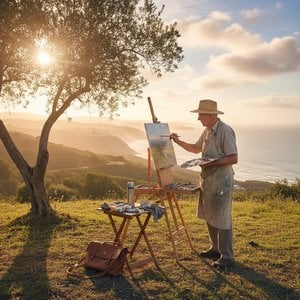
Explore the rich history of plein air painting, from its origins to Impressionism & beyond. Discover key artists, techniques, and the enduring legacy of capturing light in landscape art. Find museum-quality reproductions at WahooArt.


Stay updated with the latest art news, exclusive offers, and decoration ideas.
Tell us about your project and our art experts will provide you with 3 personalized art suggestions.
Let Us Curate 3 Options Just for You - Free!

 Preview
 Send
Send Share
Share
 Details

 Download
 Similars
 X-Ray
X-Ray Diaporama
 Read More







 Glass option is only available in size under 110 CM


