

Museum-quality giclée or canvas print with fast production and flexible finish options. ( Buy Hand Made Painting Switch to Digital Image)
Pick from our preset sizes that match the artwork's original proportions.

You may enter your own dimensions to fit a specific frame or space. If your selected size does not match the original image's proportions, we will either crop the artwork or extend the image with a mirrored or solid-fill edge. A digital mockup will be sent for your approval before production begins.
Please note that the on-screen preview does not reflect the actual cropping or extension. Only the mockup will accurately show the final composition.
While custom sizes are available, we recommend selecting a dimension from the predefined list to preserve the original proportions.
Worldwide Delivery () in 2 weeks instead of standard 4/5 weeks. (15 September)


Jesus at the Tomb
Reproduction Size
Jean-Jacques Henner’s "Jesus at the Tomb" is a profoundly moving work that captures a moment of quiet contemplation following Christ's crucifixion. The artwork depicts a nude male figure lying supine on a dark surface, bathed in dramatic lighting that emphasizes his vulnerability and mortality. This piece isn't a depiction of resurrection; rather, it focuses on the stillness and solemnity of death, inviting viewers to reflect upon themes of loss, sacrifice, and spiritual reflection.
"Jesus at the Tomb" exemplifies Henner’s mastery of both Romantic and Symbolist artistic currents. The dramatic lighting – a hallmark of Romanticism – creates strong contrasts between illuminated areas and deep shadows, heightening the emotional intensity of the scene. The emphasis on the human figure as a subject of contemplation aligns with Symbolist ideals, prioritizing emotional depth over strict realism. Henner’s technique involves broad brushstrokes applied with oil paints, resulting in a textured surface that adds to the work's tactile quality and visual richness. The use of sfumato, a technique characterized by subtle gradations of tone, softens the edges and creates an ethereal atmosphere.
The composition is predominantly horizontal, drawing attention to the body’s form and its relationship with the surrounding darkness. The flattened perspective prioritizes emotional impact over spatial accuracy. The nude figure itself symbolizes vulnerability and humanity, stripped bare of earthly power and glory. The enveloping shadows represent not only physical darkness but also a sense of isolation and introspection. The absence of other figures reinforces this feeling of solitude, focusing solely on the profound stillness of death. The organic lines following the curves of the body contribute to the overall sense of naturalism and emotional resonance.
Henner (1829-1905) was a prominent French painter known for his nudes, religious subjects, and portraits. He studied under Michel Martin Drolling and François-Édouard Picot before entering the École des Beaux-Arts in Paris. His work frequently explored themes of mortality and spirituality, often employing dramatic lighting and expressive figures to evoke powerful emotions. "Jesus at the Tomb" is considered one of his most significant works, demonstrating his ability to blend technical skill with profound emotional depth. The painting reflects a broader artistic trend in 19th-century France towards exploring religious subjects through a lens of Romantic sensibility and Symbolist introspection.


1829 - 1905 , France

Discover the captivating world of Yvonne Jean Haffen, a leading figure in post-war French abstraction. Explore her unique style, vibrant color palettes, and investment potential with WahooArt.

Discover the captivating world of Jean-Antoine Watteau, master of the Fête Galante! Explore his iconic paintings, symbolism, and lasting influence on Rococo art. A deep dive for classic art enthusiasts.

Explore the captivating world of Jean-Louis Forain, a master Impressionist chronicler of Belle Époque Paris. Discover his satirical paintings, realistic scenes & lasting legacy. Learn about collecting Forain's art today!

Explore the captivating world of Jean-Baptiste Pater, a master of Rococo painting. Discover his elegant *fête galante* scenes and shimmering portraits – a glimpse into 18th-century French aristocracy. Learn about his legacy & find high-quality reproductions.
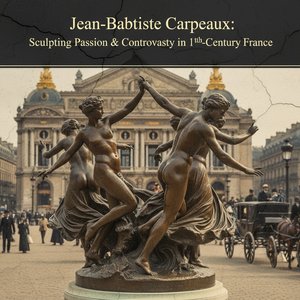
Explore the passionate life & controversial works of Jean-Baptiste Carpeaux, a leading French sculptor of the Second Empire. Discover his realism, iconic sculptures like 'Ugolino,' and lasting legacy as a precursor to Rodin.

 Preview
 Send
Send Share
Share
 Details

 Download
 Similars
 X-Ray
X-Ray Diaporama
 Stats
Stats
 Read More




































 Glass option is only available in size under 110 CM


