Preview AR preview Buy Hand Made Painting Switch to Digital Image Send
Details Guide Add to favorites Download Similars X-Ray Diaporama Stats

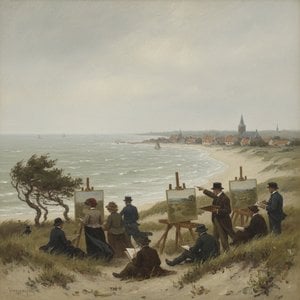
Obstruction, Box Hill

Discover "Obstruction, Box Hill" by Jane Sutherland – a stunning 1887 Australian landscape painting. Explore Impressionistic beauty & the Heidelberg School at the Art Gallery of Ballarat.

Jane Sutherland (1853-1928) was a pioneering Australian Impressionist painter of the Heidelberg School, known for her plein-air landscapes & depictions of rural life. Advocate for women artists.

Giclée / Art Print

Museum-quality giclée or canvas print with fast production and flexible finish options. ( Buy Hand Made Painting Switch to Digital Image)

Corner sample of the P118B picture frame: moulded polystyrene, 5 cm wide and 3 cm thick
P118B $10
Corner sample of the P118H picture frame: moulded polystyrene, 5 cm wide and 3 cm thick
P118H $10
Corner sample of the P118W picture frame: moulded polystyrene, 5 cm wide and 3 cm thick
P118W $10
Corner sample of the P438Z picture frame: moulded polystyrene, 5.5 cm wide and 3.5 cm thick
P438Z $10
Corner sample of the P508JH picture frame: moulded polystyrene, 7 cm wide and 3.5 cm thick
P508JH $12
Corner sample of the P508YH picture frame: moulded polystyrene, 7 cm wide and 3.5 cm thick
P508YH $12
Corner sample of the P805H picture frame: moulded polystyrene, 5 cm wide and 3.5 cm thick
P805H $10
Corner sample of the P805Z picture frame: moulded polystyrene, 5 cm wide and 3.5 cm thick
P805Z $10
Corner sample of the P919BZ picture frame: moulded polystyrene, 7 cm wide and 3.5 cm thick
P919BZ $10
Corner sample of the P919G picture frame: moulded polystyrene, 7 cm wide and 3.5 cm thick
P919G $10
Corner sample of the P919XJ picture frame: moulded polystyrene, 7 cm wide and 3.5 cm thick
P919XJ $10
Corner sample of the P959ZH picture frame: moulded polystyrene, 5 cm wide and 3 cm thick
P959ZH $10
Corner sample of the P968JZ picture frame: moulded polystyrene, 6 cm wide and 4 cm thick
P968JZ $12
Corner sample of the W106C picture frame: solid wood, 5 cm wide and 3 cm thick
W106C $8
Corner sample of the W218G picture frame: solid wood, 5 cm wide and 3 cm thick
W218G $10
Corner sample of the W218JH picture frame: solid wood, 5 cm wide and 3 cm thick
W218JH $8
Corner sample of the W218Y picture frame: solid wood, 5 cm wide and 3 cm thick
W218Y $10
Corner sample of the W307PJ picture frame: solid wood, 6 cm wide and 3 cm thick
W307PJ $10
Corner sample of the W316G picture frame: solid wood, 6 cm wide and 3 cm thick
W316G $10
Corner sample of the W316PJ picture frame: solid wood, 6 cm wide and 3 cm thick
W316PJ $8
Corner sample of the W316Y picture frame: solid wood, 6 cm wide and 3 cm thick
W316Y $10
Corner sample of the W398PJ picture frame: solid wood, 5 cm wide and 3 cm thick
W398PJ $8
Corner sample of the W4111J picture frame: solid wood, 6.5 cm wide and 3.5 cm thick
W4111J $10
Corner sample of the W500HY picture frame: solid wood, 7 cm wide and 5 cm thick
W500HY $15
Corner sample of the W500JH picture frame: solid wood, 7 cm wide and 5 cm thick
W500JH $15
Corner sample of the W692G picture frame: solid wood, 8 cm wide and 4 cm thick
W692G $12
Corner sample of the W849H picture frame: solid wood, 5 cm wide and 3 cm thick
W849H $8
Corner sample of the W940BG picture frame: solid wood, 7.5 cm wide and 4.5 cm thick
W940BG $15
Corner sample of the W953PJ picture frame: solid wood, 6 cm wide and 3.5 cm thick
W953PJ $8

Standard
custom
CM
INCH

Pick from our preset sizes that match the artwork's original proportions.

width
height

Type the width and the height you need, to fit your frame or your wall. A print can only be cut, never made bigger than the picture, so a size with a different shape loses a part of the image. We send you a digital mockup to approve before we print anything. The picture shown on this page does not show the real cut — only the mockup does.

Worldwide Delivery () in 2 weeks instead of standard 4/5 weeks. (24 October)

Free Worldwide Express Shipping
High-Quality Linen Canvas
Full Shipping Insurance
Customs Tax Refund Guarantee
True Color Matching Guarantee
100-Day Return Policy (Defects Only)
100% Money-Back Guarantee
Bulk Discount Offer

Total Price

$ 69

Obstruction, Box Hill

Giclée / Art Print

Reproduction Size

-

Total Price

$ 69

Quick Facts

  • Notable elements: Woman in pink, bench, flying bird
  • Location: Art Gallery of Ballarat
  • Year: 1887
  • Movement: Australian Impressionism
  • Artist: Jane Sutherland

A Serene Encounter in the Australian Wild

In the quiet, dappled light of 1887, Jane Sutherland captured a moment of profound stillness in her masterpiece, Obstruction, Box Hill. This evocative oil on canvas invites the viewer into a lush, pastoral sanctuary where the boundaries between humanity and nature seem to dissolve. At the heart of the composition, a young woman in a soft pink dress wanders through a verdant woodland, her presence adding a delicate touch of color against the deep, organic tones of the Australian landscape. The scene is far from a mere depiction of scenery; it is an immersive experience of tranquility, where the rustle of leaves and the distant flight of a single bird create a sensory tapestry that resonates with the soul of anyone seeking refuge from the modern world.

The painting’s composition is masterfully orchestrated to evoke a sense of gentle enclosure. Tall, commanding trees frame the subject, their branches reaching across the sky to create a natural cathedral of foliage. This layering of vegetation provides an incredible sense of depth, drawing the eye past the central figure toward the soft, hazy distance. A subtle presence—a bench nestled near the path—suggests a place for quiet contemplation or a momentary rest during a long walk, grounding the ethereal beauty of the woods in a relatable human experience. The inclusion of a bird in flight adds a vital pulse of life, breaking the stillness with a fleeting movement that reminds us of the vibrant, breathing ecosystem Sutherland so lovingly rendered.

The Impressionistic Touch and Artistic Legacy

As a prominent figure of the Heidelberg School, Jane Sutherland utilized an Impressionistic technique that was revolutionary for the Australian art scene of the late 19th century. Her brushwork in Obstruction, Box Hill is characterized by a beautiful fluidity; rather than rigid lines, she employs loose, expressive strokes that capture the ephemeral quality of light and atmosphere. The color palette is a sophisticated blend of muted greens, earthy browns, and soft pinks, all working in harmony to create a diffused, gentle glow reminiscent of an overcast morning. This technique allows the textures of the grass, the bark of the trees, and the fabric of the woman's dress to feel tactile and alive, as if one could reach out and feel the cool, damp air of the Box Hill woods.

Beyond its aesthetic brilliance, the painting serves as a poignant symbol of connection. The interaction between the solitary figure and the wild landscape evokes themes of innocence, curiosity, and the eternal bond between humankind and the natural world. For collectors and interior designers, this piece offers more than just decoration; it provides an emotional anchor for a room. A high-quality reproduction of this work brings a sense of nostalgic peace and historical weight to any space, making it an ideal centerpiece for those looking to infuse their homes with the timeless elegance of Australian Impressionism. To possess such a piece is to hold a fragment of 1887, preserved in pigment and light.

Questions & Answers

Are there works similar to "Obstruction, Box Hill"?

Works similar to "Obstruction, Box Hill" are listed on the artwork's Similars page.

Which artistic current is "Obstruction, Box Hill" by Jane Sutherland part of?

"Obstruction, Box Hill" by Jane Sutherland belongs to the Heidelberg School movement. This movement provides the stylistic context of the work.

How do medium and movement combine in "Obstruction, Box Hill"?

"Obstruction, Box Hill" is made in oil on canvas, in the Heidelberg School style.


Artist Biography

Early Life and Artistic Beginnings

Jane Sutherland, born in New York City on December 26th, 1853, emerged as a pivotal figure in the development of Australian Impressionism. Her story is remarkable not only for her artistic talent but also for the unusual level of familial support she received—a rarity for women pursuing professional careers during the Victorian era. The Sutherland family’s emigration to Sydney in 1864 and subsequent move to Melbourne in 1870 placed young Jane within a burgeoning cultural landscape, where her father, George Sutherland, a woodcarver and drawing instructor, actively fostered her artistic inclinations. This encouragement was crucial; it allowed Sutherland to enroll at the National Gallery School of Design in 1871, embarking on a formal art education that would shape her future path. The family’s commitment to the arts—with brothers Alexander, George, and William also contributing significantly to Melbourne's cultural life—created an environment where artistic pursuits were not merely tolerated but actively celebrated. This foundation was particularly significant given the societal expectations of women at the time, which often prioritized domestic roles over professional ambitions.

Pioneering Plein Air Painting and the Heidelberg School

Sutherland quickly distinguished herself as a dedicated student, studying under prominent instructors like Thomas Clark, Frederick McCubbin, Eugen von Guerard, and George Folingsby. However, it was her embrace of plein air painting—the practice of working directly from nature outdoors—that truly set her apart. In the 1880s, this approach was revolutionary in Australia, challenging the established tradition of studio-based art. She became a central member of the Heidelberg School, a group of artists committed to capturing the unique light and atmosphere of the Australian bush. Artists like Tom Roberts, Walter Withers, and Charles Conder shared her passion for working en plein air, but Sutherland faced unique challenges as a woman. Unlike her male counterparts, she was unable to participate in overnight camping trips, limiting her outdoor sessions to day journeys. Despite this constraint, she persevered, creating evocative landscapes that reflected the beauty of rural Victoria. Her early works often depicted scenes around Alphington, Templestowe, and Box Hill, showcasing a keen eye for detail and a growing mastery of Impressionistic techniques.

Development of Style and Subject Matter

Sutherland’s artistic style evolved through her consistent engagement with the Australian landscape. Initially influenced by the tonal realism prevalent in academic painting, she gradually adopted the brighter palette and looser brushwork characteristic of Impressionism. Her paintings are notable for their textured surfaces, capturing the play of light on wheat fields, gum trees, and rural scenes. The Harvest Field (1897) exemplifies this development—a vibrant depiction of golden wheat stacks under a brilliant blue sky, showcasing her ability to convey both the physical beauty and emotional resonance of the countryside. Beyond landscapes, Sutherland also explored portraiture, as seen in Blue and Gold: Portrait of Dorothy Sutherland, demonstrating her versatility and skill in capturing human character. Her subject matter often focused on rural life, depicting scenes of labor, leisure, and the changing seasons. This focus reflected a deep connection to the land and a desire to capture the essence of Australian identity.

Advocacy for Women Artists and Lasting Legacy

Jane Sutherland was not only a talented painter but also a passionate advocate for women artists. In 1884, she became one of the first female members of the Buonarotti Club, an important artistic society that fostered collaboration and exchange among Melbourne painters. She later served as a councillor of the Victorian Artists’ Society, actively working to promote the professional standing of her female colleagues. Her commitment to advancing women in the arts was particularly significant during a time when they faced considerable discrimination and limited opportunities. Sutherland's influence extended beyond her own artistic achievements; she inspired generations of women to pursue their creative passions and challenge societal norms. Her paintings, exhibited widely throughout Australia and even in London, helped establish Australian Impressionism as a distinct artistic movement. While recognition of her work waned after her death in 1928, it has experienced a resurgence in recent years, solidifying her place as a pioneering figure in Australian art history.

Major Achievements and Historical Significance

Jane Sutherland’s legacy is multifaceted. She was instrumental in establishing plein air painting as a dominant force in Australian art, contributing significantly to the development of the Heidelberg School's unique aesthetic. Her paintings are celebrated for their evocative depictions of rural life, capturing the beauty and atmosphere of the Australian landscape with remarkable sensitivity and skill.
  • Pioneering member of the Heidelberg School.
  • Advocate for women artists in a male-dominated field.
  • Masterful use of Impressionistic techniques to capture Australian light and color.
  • Significant contributor to the development of Australian national identity through her art.
Her commitment to working directly from nature, despite the challenges she faced as a woman, paved the way for future generations of artists. Today, Sutherland’s paintings are held in major public collections across Australia, including the National Gallery of Victoria and the Art Gallery of Ballarat, ensuring her enduring contribution to Australian art history is celebrated and appreciated by audiences worldwide. Her story serves as an inspiring example of artistic dedication, perseverance, and a commitment to social change.
Jane Sutherland

Jane Sutherland

1853 - 1928 , United States of America

Quick Facts

  • Full Name: Vincent Willem van Gogh
  • Nationality: Dutch
  • Date Of Birth: 1853
  • Date Of Death: 1928
  • Place Of Birth: New York City, United States of America
  • Notable Artworks:
    • Sunflowers
    • Bedroom in Arles
    • Starry Night
    • Wheatfield with Crows
  • Artistic Movement Or Style: Post-Impressionism
  • Artists Who Influenced This Artist: ['Jean-François Millet']
  • Artists Or Movements Influenced By This Artist:
    • Fauves
    • Expressionism
Explore artworks organized by themes, styles, and characteristics.