

The artwork displayed on this page is protected by copyright law, which means we cannot legally create or sell an identical reproduction. This protection is enforced under international agreements such as the Berne Convention and by national laws, including those outlined by the U.S. Copyright Law - Title 17.
As a respectful and legal alternative, we offer custom, hand-painted artworks inspired by the original. Our skilled and professional artists carefully study the original's style, mood, and artistic essence to create a new, unique piece that evokes the same feeling - while remaining an original creation in its own right.
This method fully complies with copyright regulations because it does not involve copying or duplicating the protected artwork. Instead, it is a creative reinterpretation - a new painting that is influenced by the original but not identical to it.
Hand-painted oil on canvas in your size and frame, made to order by our artists. ( Switch to Print Switch to Digital Image)





























Pick from our preset sizes that match the artwork's original proportions.

Type the width and the height you need, to fit your frame or your wall. This is hand-painted, so for a size with a different shape the artist can paint a bit more around the picture, or cut a bit — you choose. We send you a digital mockup to approve before the painting starts. The picture shown on this page does not show the real result — only the mockup does.
Worldwide Delivery () in 3/4 weeks instead of standard 5 weeks. (22 October). No compromise on quality.
Longipteryx
Reproduction Size
Jane Kim's "Longipteryx," a monumental hand-painted reproduction of a prehistoric bird, isn’t merely an illustration; it’s a portal to the dawn of avian evolution. Commissioned for the 100th anniversary of the Cornell Lab of Ornithology, this expansive artwork transcends its physical dimensions, inviting viewers on a journey through 125 million years of feathered history. Kim's meticulous attention to detail and her masterful command of grayscale—a deliberate choice that emphasizes form and texture rather than vibrant color—transform a scientific discovery into a profoundly moving experience.
“Longipteryx chaoyangensis,” unearthed in China's Jiufotang Formation, represents one of the earliest known bird species. This remarkable fossil, dating back to the Early Cretaceous period, offers a crucial window into the evolutionary lineage leading to modern birds. Kim’s artwork meticulously recreates this ancient creature, drawing upon paleontological research and her own artistic interpretation. The inclusion of the Longipteryx alongside other Mesozoic dinosaurs—a deliberate juxtaposition—highlights the interconnectedness of life on Earth and underscores the bird's surprisingly advanced features for its time: a long bill equipped with hooked teeth, proportionally long wings, and even rudimentary claws, suggesting an early adaptation to flight.
Kim’s technique is rooted in the traditions of scientific illustration, yet imbued with a distinctly contemporary sensibility. The artwork relies heavily on precise pencil lines—a testament to her dedication to accuracy—combined with subtle variations in shading achieved through meticulous hatching and cross-hatching. This creates an astonishingly realistic depiction of feathers, musculature, and skeletal structure, conveying both the bird’s delicate beauty and its robust physicality. The deliberate use of grayscale isn't a limitation; it’s a strategic choice that amplifies the sense of depth and volume, mimicking the way light and shadow sculpt form in three-dimensional space. The absence of color directs the viewer’s attention to the intricate details of the bird’s anatomy and its dynamic pose.
“Longipteryx” is more than just a representation of a fossil; it's an emblem of evolution itself. The bird in mid-flight embodies the spirit of freedom, suggesting the boundless potential inherent within the natural world. Its upward trajectory speaks to aspiration and progress—a visual metaphor for the relentless drive towards adaptation and innovation that has shaped life on Earth. The inclusion of smaller birds in the background adds a layer of complexity, hinting at the ongoing process of diversification and the interconnectedness of species. The artwork subtly reminds us of our own place within this vast evolutionary narrative.
A hand-painted reproduction of "Longipteryx" is a unique addition to any art collection or interior design scheme. Its monumental scale commands attention, while its understated elegance seamlessly integrates into diverse settings—from museums and galleries to private residences and corporate offices. The artwork’s timeless appeal lies in its ability to evoke both scientific curiosity and emotional resonance. It's a powerful reminder of the beauty and wonder of the natural world, and a testament to Jane Kim’s extraordinary artistic talent.
The image of "Longipteryx" by Jane Kim can be downloaded from the artwork's Download page: a high-resolution digital image download.
The artist behind "Longipteryx" is Jane Kim. The work is catalogued under Jane Kim's name.
The overall mood of "Longipteryx" by Jane Kim is calm. The mood describes the general atmosphere of the work.
Jane Kim stands at the intersection of fine art and scientific precision, a painter and science illustrator whose work serves as a vibrant bridge between humanity and the natural world. Born in 1981 and raised in Mount Prospect, Illinois, Kim’s artistic journey is deeply rooted in an intimate observation of life. Her practice, often executed through her Ink Dwell studio, transcends mere decoration; it is a form of visual advocacy designed to promote the protection and celebration of our planet's diverse ecosystems. By blending the meticulous detail of scientific illustration with the grand scale of public murals, she transforms urban landscapes into immersive educational experiences.
Kim’s formal training provided the technical foundation for her unique aesthetic. She earned her B.F.A. in printmaking from the Rhode Island School of Design in 2003, a period that likely honed her appreciation for texture and layered composition. Seeking to deepen the connection between art and ecology, she later attended California State University, Monterey Bay, where she studied scientific illustration, graduating in 2010. This dual expertise allows her to capture the iridescent qualities of plumage and the delicate anatomy of flora with an accuracy that honors the biological reality of her subjects while maintaining a profound emotional resonance.
The true impact of Kim’s work is perhaps most felt in her large-scale murals, which turn city walls into windows onto vanishing habitats. Her projects are often much more than aesthetic endeavors; they are ecological narratives. One of her most ambitious undertakings was the Migrating Mural, a series of six works spanning 120 miles along California’s Highway 395, featuring the Sierra Nevada bighorn sheep. Such works demonstrate her ability to use public space to foster a sense of shared stewardship for local wildlife.
Her mastery of detail is equally evident in her more concentrated works, such as the monumental Wall of Birds at Cornell University's Lab of Ornithology. Completed in 2015, this massive piece depicts 243 modern bird families, rendered at life size and superimposed upon a map of the earth. In pieces like South Island Wren or Jocotoco Antpitta, Kim invites viewers into a meditative state, using a layered painting technique that builds richness through visible brushstrokes and a vibrant palette. Through these works, she captures the fragility of endangered species, turning every stroke of paint into a plea for conservation.
Beyond the technical execution, Kim’s significance lies in her ability to weave social and historical narratives into the natural landscape. Her Flora From Fauna series in Redwood City, California, serves as a poignant example, commemorating the lost chrysanthemum industry of the 1920s and the history of Japanese immigrants in the region. This ability to intertwate human history with ecological study defines her contribution to contemporary art.
Whether through her residency at the de Young Museum or her presence on corporate campuses, Kim continues to push the boundaries of where art can live and what it can achieve. Her work remains a testament to the power of observation, reminding us that by truly seeing the intricate beauty of a single bird or a hidden flower, we might find the inspiration necessary to protect the entire tapestry of life.

1981 - , United States of America
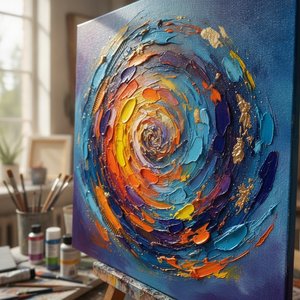
Discover the exquisite world of acrylic on canvas. From textured impasto to vibrant modern hues, explore how WahooArt's master artists create premium, hand-painted reproductions and bespoke commissions for discerning collectors and luxury interiors.

Discover the profound beauty of wildlife art through a curated journey of masterworks. From classical naturalism to bespoke oil commissions, explore how premium textures and expert craftsmanship capture nature's untamed spirit for the discerning collector.

Elevate your artistry with our expert guide to acrylic on paper. Master advanced techniques in texture, color theory, and layering to create professional-grade modern masterpieces. Perfect for art students seeking technical depth and creative excellence.

Discover the vibrant world of acrylic on canvas. Our expert guide explores the technical versatility, rich textures, and enduring beauty of modern acrylic masterpieces, offering essential insights for discerning art collectors seeking quality and longevity.

Unlock your creative potential with this expert guide for art students. Master acrylic painting techniques, from fluid washes to textured impasto. Learn about essential brushes, surfaces, and advanced color theory to elevate your fine arts practice with professional precision.

 Preview
 Send
Send Share
Share
 Details
 Guide
Guide

 Download
 Similars
 X-Ray
X-Ray Diaporama
 Stats
Stats


 Read More









 Glass option is only available in size under 110 CM


