

 Oil On PanelEarly Netherlandish Renaissance
 1437Renaissance
 27.0 x 21.0 cm
 Gemäldegalerie
Museum-quality giclée or canvas print with fast production and flexible finish options. ( Buy Hand Made Painting Switch to Digital Image)





























Pick from our preset sizes that match the artwork's original proportions.

You may enter your own dimensions to fit a specific frame or space. If your selected size does not match the original image's proportions, we will either crop the artwork or extend the image with a mirrored or solid-fill edge. A digital mockup will be sent for your approval before production begins.
Please note that the on-screen preview does not reflect the actual cropping or extension. Only the mockup will accurately show the final composition.
While custom sizes are available, we recommend selecting a dimension from the predefined list to preserve the original proportions.
Worldwide Delivery () in 2 weeks instead of standard 4/5 weeks. (26 September)


Small Triptych
Reproduction Size
In the quiet corners of art history, few works command as much reverence through their sheer intimacy as Jan van Eyck’s Small Triptych. Created in 1437, this diminutive masterpiece—measuring a mere 27 x 21 cm—defies its small scale by offering an expansive window into the divine. At first glance, the viewer is drawn into a sacred tableau: the Virgin Mary cradling the Christ Child within a richly detailed church interior. The scene is not merely a depiction of religious figures but a profound meditation on presence and grace. Beside them, the presence of St. Michael and a kneeling donor figure invites us into a private moment of prayer, bridging the gap between the earthly realm and the celestial. For the collector or lover of fine art, this piece represents the pinnacle of Early Netherlandish devotion, where every millimeter of the panel is saturated with spiritual intent.
The emotional resonance of the work lies in its ability to make the monumental feel personal. There is a tender, almost palpable warmth in the way the light falls across Mary’s serene countenance, a testament to Van Eyck's unparalleled ability to capture human emotion through a divine lens. To gaze upon this triptych is to participate in a centuries-old tradition of contemplation. It is an ideal centerpiece for a curated space, offering a sense of historical depth and quiet sophistication that can anchor a room, whether placed in a sunlit study or a formal gallery setting.
What truly elevates this triptych above its contemporaries is the revolutionary technique employed by Jan van Eyck. As a pioneer of the oil painting medium, Van Eyck moved away from the flatter, more opaque qualities of tempera to embrace the translucent possibilities of oil. This allowed him to employ meticulous glazing—layering thin, transparent skins of pigment to build up a depth of color that seems to glow from within. When observing a high-quality reproduction, one can truly appreciate the subtle gradations of shadow and the brilliant, jewel-like luminosity of the textures. The artist’s hand is visible in the breathtaking realism of the fabrics, the soft skin tones, and the intricate architectural details of the background.
This mastery of light serves a symbolic purpose as much as a technical one. In the 15th century, light was often viewed as a metaphor for the divine presence; by manipulating light through oil, Van Eyck literally brought the "light of God" into the physical world. The bronze frames, inscribed with Latin lettering, further reinforce this connection to medieval theological thought, acting as a threshold between our world and the sacred narrative contained within the panels. For interior designers, the interplay of these rich textures and deep, luminous tones provides an exquisite opportunity to introduce classical elegance and a sense of timelessness into modern decor.
Owning or displaying a reproduction of the Small Triptych is more than an aesthetic choice; it is an engagement with one of the most significant turning points in Western art. This work marks the moment when realism began to merge with mysticism, creating a visual language that would influence generations of painters. The composition, carefully orchestrated to guide the eye from the donor's humble plea to the radiant Christ Child, remains a masterclass in narrative flow and iconographic complexity.
Whether you are an art historian captivated by the technical innovations of the Flemish Primitives or a decorator seeking to infuse a space with a sense of quiet majesty, this triptych offers endless inspiration. It stands as a testament to the idea that true greatness is not measured by physical dimensions, but by the depth of the soul captured upon the panel. A hand-painted reproduction of such a masterpiece allows the splendor of Van Eyck’s vision to reside within your own home, serving as a permanent reminder of the beauty found in the smallest, most sacred details.


1390 - 1441 , Netherlands
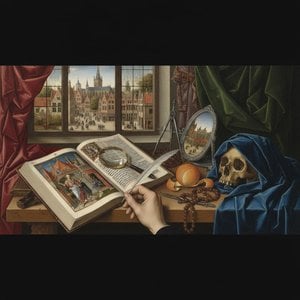
Discover the profound beauty of the Early Netherlandish Renaissance. Explore the revolutionary oil techniques, intricate symbolism, and masterful realism of Northern masters like Jan van Eyck in this expert-led guide for classical art enthusiasts.

Delve into the luminous revolution of Early Netherlandish painting. Unveil how Jan van Eyck and Flemish masters pioneered oil techniques to achieve unparalleled depth, sacred symbolism, and breathtaking realism, forever shaping the legacy of Western art history.
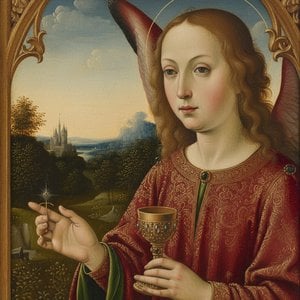
Embark on a journey through the luminous world of Early Netherlandish art. Discover the revolutionary oil techniques, microscopic realism, and sacred symbolism used by masters like Jan van Eyck to redefine Western art history in this expert-led guide.

 Preview
 Send
Send Share
Share
 Details
 Guide
Guide

 Download
 Similars
 X-Ray
X-Ray Diaporama
 Stats
Stats Read More







 Glass option is only available in size under 110 CM


