

Hand-painted oil on canvas in your size and frame, made to order by our artists. ( Switch to Print Switch to Digital Image)





























Pick from our preset sizes that match the artwork's original proportions.

You may enter your own dimensions to fit a specific frame or space. If your selected size does not match the original image's proportions, we will either crop the artwork or extend the painting with additional hand-painted elements. A digital mockup will be sent for your approval before production begins.
Please note that the on-screen preview does not reflect the actual cropping or extension. Only the mockup will accurately show the final composition.
While custom sizes are available, we recommend selecting a dimension from the predefined list to preserve the original proportions.
Worldwide Delivery () in 3/4 weeks instead of standard 5 weeks. (25 September). No compromise on quality.


Man in a Turban
Reproduction Size
This captivating portrait by Jan van Eyck presents an arresting study of an elderly man distinguished by his striking red turban. Completed around 1433, this work is a prime example of the Early Netherlandish style – renowned for its meticulous detail, realism, and symbolic depth. More than just a likeness, it’s a window into the intellectual currents and artistic innovations of the Renaissance.
Van Eyck's mastery of oil paint is on full display here. He employed layered glazes – thin, translucent applications of pigment – to achieve an unparalleled luminosity and depth of color. Notice the incredible rendering of skin texture, from the delicate wrinkles around the eyes to the subtle flush of the cheeks. The folds of the turban are depicted with astonishing realism, conveying both the weight and luxuriousness of the fabric. This technique wasn’t merely about visual accuracy; it allowed Van Eyck to capture a sense of inner life and psychological complexity.
During the Renaissance, turbans were often associated with Eastern scholarship and wisdom. While the sitter's identity remains debated – some scholars propose it may be a self-portrait – the unusual headwear suggests an individual of learning or someone connected to distant lands. The inscription “ALS ICH KAN” (“As I can”), prominently displayed on the frame, is Van Eyck’s personal motto and underscores his artistic prowess and confidence. This was a period where artists were increasingly asserting their individuality and skill.
The man's direct gaze is both compelling and unsettling. He looks out at the viewer with an intensity that transcends time, inviting contemplation. His expression hints at wisdom, experience, and perhaps a touch of melancholy. The dark background serves to isolate the figure, drawing our attention to his face and emphasizing the intimacy of the encounter. This isn’t simply a portrait; it's a psychological study, capturing a fleeting moment of human presence.
A reproduction of this iconic work adds a touch of historical sophistication and intellectual depth to any interior. Its rich color palette – dominated by the vibrant red of the turban against muted skin tones and dark shadows – complements both traditional and contemporary settings. Whether displayed in a study, living room, or gallery wall, this painting serves as a powerful conversation starter and a testament to the enduring legacy of Jan van Eyck.


1390 - 1441 , Netherlands

Explore the revolutionary art of Hugo van der Goes – a master of Early Netherlandish painting renowned for his dramatic realism, psychological depth & profound influence on Renaissance artists. Discover his iconic works and lasting legacy.

Journey through Rembrandt van Rijn's 25 most iconic paintings & etchings. Explore Dutch Golden Age masterpieces, dramatic chiaroscuro, and timeless portraits. Find museum-quality art reproductions to elevate your home decor on WahooArt.com.
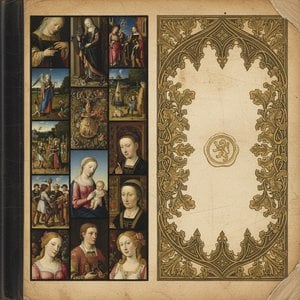
Journey into the world of Early Netherlandish painting! Explore 10 masterpieces by Jan van Eyck, Rogier van der Weyden & more. Discover stunning detail, symbolism & Renaissance art for your home decor. Find museum-quality reproductions on WahooArt.com

Explore the revolutionary art of Jan van Eyck! Discover his groundbreaking oil painting techniques, hidden symbolism, and lasting impact on the Early Netherlandish Renaissance. A deep dive for art enthusiasts.
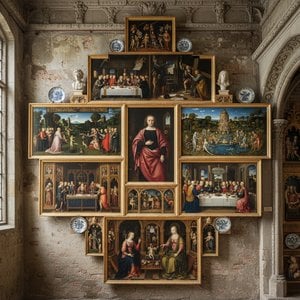
Journey into the Early Netherlandish Renaissance! Explore 10 iconic paintings by Jan van Eyck, Rogier van der Weyden & more. Discover stunning detail, symbolism, and oil painting techniques. Find museum-quality art reproductions for your home at WahooArt.com.

 Preview
 Send
Send Share
Share
 Details
 Guide
Guide

 Download
 Similars
 X-Ray
X-Ray Diaporama
 Stats
Stats

 Read More







 Glass option is only available in size under 110 CM


