

 Oil On CanvasWallArtBaroque
 1810
1810 19.0 x 29.0 cm
 Yale Center for British Art
Museum-quality giclée or canvas print with fast production and flexible finish options. ( Buy Hand Made Painting Switch to Digital Image)





























Pick from our preset sizes that match the artwork's original proportions.

Type the width and the height you need, to fit your frame or your wall. A print can only be cut, never made bigger than the picture, so a size with a different shape loses a part of the image. We send you a digital mockup to approve before we print anything. The picture shown on this page does not show the real cut — only the mockup does.
Worldwide Delivery () in 2 weeks instead of standard 4/5 weeks. (22 October)
The Straw Yard
Reproduction Size
James Ward's "The Straw Yard," painted in 1810, isn’t merely a depiction of a rural scene; it’s a carefully constructed tableau brimming with quiet observation and the subtle poetry of everyday life. This oil painting, now housed within the Yale Center for British Art’s Paul Mellon Collection, transports us to a tranquil corner of England – a world seemingly untouched by the grand narratives of war or revolution, yet profoundly resonant with human experience. Ward, a master of animal portraiture and Romantic landscapes, here demonstrates his remarkable ability to capture not just the outward appearance of a scene, but also its underlying mood and spirit.
The composition immediately draws the eye towards a central grouping of livestock – a slumbering sheep, a cluster of donkeys, and a flurry of chickens. These animals, rendered with an almost tactile realism, are not presented as symbols of wealth or industry, but rather as participants in a simple, cyclical existence. A weathered fence, partially enclosing the scene, subtly guides our gaze into the background, where a modest barn with a thatched roof stands as a testament to humble prosperity. The perspective is deliberately flattened, prioritizing clarity and inviting us to fully immerse ourselves within this contained world. The diffused lighting suggests an overcast day, casting soft shadows that enhance the textures of the bark, wood, and wool – elements meticulously rendered by Ward’s skilled hand.
Ward's style firmly resides within the realm of Baroque realism, a movement characterized by its meticulous attention to detail, dramatic lighting, and a deep engagement with classical art. However, “The Straw Yard” also possesses qualities that align with the burgeoning Romantic sensibility taking hold in England at the time. The emphasis on nature’s beauty, the exploration of human connection with the land, and the portrayal of ordinary subjects – all hallmarks of the Romantic movement – are subtly interwoven into Ward's composition. He wasn’t simply documenting a scene; he was imbuing it with an emotional resonance, inviting us to contemplate the quiet dignity of rural life.
The painting’s historical context is crucial to understanding its significance. Painted in 1810, during a period of significant social and political upheaval following the Napoleonic Wars, “The Straw Yard” offers a poignant counterpoint to the turmoil of the era. It's a return to a simpler time, a celebration of the enduring values of community, labor, and connection with the natural world. The scene evokes a sense of timelessness, suggesting that these fundamental human experiences transcend specific historical moments.
Beyond its immediate visual appeal, “The Straw Yard” is rich in symbolic detail. The sleeping sheep, for instance, can be interpreted as representing peace, tranquility, and the cyclical nature of life. The donkeys, often associated with hard work and diligence, contribute to the painting’s theme of honest labor. Even the chickens, seemingly insignificant, symbolize fertility and abundance. Ward's masterful use of oil paint is equally noteworthy. He employs a layering technique, building up textures and colors through numerous thin applications of pigment – a method that lends the scene remarkable depth and luminosity.
The brushstrokes are visible yet controlled, creating a sense of immediacy while maintaining a polished finish. The careful rendering of light and shadow not only enhances the realism of the painting but also contributes to its overall mood—a feeling of gentle warmth and quiet contemplation. The muted color palette – dominated by browns, greens, and subtle yellows – further reinforces this atmosphere of rustic serenity. “The Straw Yard” is a testament to Ward’s technical skill and his ability to capture not just what he saw, but also the essence of the world around him.
“The Straw Yard” remains a captivating work of art, offering viewers a glimpse into a bygone era while simultaneously resonating with universal themes of simplicity, community, and connection to nature. Whether displayed in a private collection or within a public gallery, this painting continues to evoke a sense of peace and contemplation—a reminder that beauty can be found in the most unassuming corners of life. Reproductions of this remarkable artwork offer an accessible way to bring its tranquil charm into any home or space, allowing you to experience the artistry and emotional depth of James Ward’s masterpiece.
"The Straw Yard" by James Ward is recorded with a balanced soft saturation.
"The Straw Yard" shares with James Ward's other works its Baroque style and the recorded themes: animal genre focus, landscape series, early career work, baroque realism, romantic landscape, detailed observation, rural simplicity, traditional values.
"The Straw Yard" was created by James Ward, born in United Kingdom, within the Baroque movement. The artist's origin links the work to Baroque as practiced by artists from United Kingdom.

James Ward (1769-1859) was a prominent British painter renowned for his captivating animal paintings, romantic landscapes, and insightful portraits. Though often overshadowed by contemporaries, his unique style and skill significantly impacted the development of British art during the 19th century.
Born on October 23, 1769, in London, United Kingdom, James Ward was the younger brother of engraver William Ward. His early artistic inclinations were nurtured within a creative family environment. While he received some formal training, his development was largely self-directed and heavily influenced by observation and practice.
Ward’s career is conventionally divided into two distinct periods regarding influence. Initially, until around 1803, his work bore a strong resemblance to that of his brother-in-law, George Morland, characterized by genre scenes and a focus on everyday life. Following this period, he became deeply inspired by the Baroque master Peter Paul Rubens, adopting a more dynamic composition, rich color palette, and dramatic use of light and shadow.
Ward’s singular style set him apart from many contemporaries. He excelled in various genres, including history painting, portraiture, landscape, and animal art. Some of his most celebrated works include:
His paintings are characterized by a meticulous attention to detail, particularly in the rendering of animals, combined with a romantic sensibility that emphasizes the beauty and power of nature.
Ward enjoyed patronage from prominent figures like Theophilus Levett, leading to numerous commissions. He regularly exhibited his work at the Royal Academy, gaining recognition for his skill and originality. His admission as a member in 1811 solidified his standing within the British art establishment.
Ward continued to paint prolifically until a stroke in 1855 curtailed his career. He passed away on November 17, 1859, in relative poverty despite his earlier success.
Despite facing financial hardship later in life, James Ward’s influence on British art remains undeniable. His unique blend of realism and romanticism paved the way for future generations of animal painters and landscape artists. His works are now held in prestigious collections such as Tate Britain and the Yale Center for British Art.
James Ward occupies a significant position within the transition from the Neoclassical to the Romantic era in British art. He bridged the gap between traditional genre painting and the burgeoning interest in landscape and naturalism, leaving behind a legacy of captivating works that continue to inspire and delight.

1769 - 1859 , United Kingdom

Explore the captivating world of James Ward (1769-1859), a master of British Romantic landscape & animal painting. Discover his iconic 'Gordale Scar' and exquisite portraits – a timeless art investment. Learn about his influences, style, and enduring legacy.

Journey through 25 iconic James Abbott McNeill Whistler paintings! Explore his masterpieces of Aestheticism, from 'Nocturne in Black and Gold' to captivating portraits. Find museum-quality art reproductions & elevate your home decor with WahooArt.com. Discover the full collection online.

Explore the opulent world of Baroque interior design! Discover key elements, modern applications & how to bring dramatic elegance into your home with WahooArt.com's authentic reproductions.
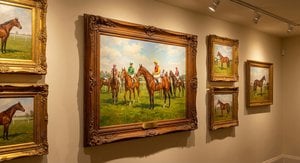
Explore 25 iconic Sir Alfred Munnings paintings! Discover the beauty of British Impressionism, equine art & rural England. Find museum-quality reproductions and elevate your home decor with WahooArt. Explore the full collection online.

Explore the dramatic world of Baroque art! Discover iconic artists like Caravaggio & Rubens, defining techniques, and its lasting impact on art history. Expert insights for collectors & enthusiasts at WahooArt.

 Preview
 Send
Send Share
Share
 Details
 Guide
Guide

 Download
 Similars
 X-Ray
X-Ray Diaporama
 Stats
Stats Read More









 Glass option is only available in size under 110 CM


