x


Hand-painted oil on canvas in your size and frame, made to order by our artists. ( Buy Print Buy Image)
Pick from our preset sizes that match the artwork's original proportions.

You may enter your own dimensions to fit a specific frame or space. If your selected size does not match the original image's proportions, we will either crop the artwork or extend the painting with additional hand-painted elements. A digital mockup will be sent for your approval before production begins.
Please note that the on-screen preview does not reflect the actual cropping or extension. Only the mockup will accurately show the final composition.
While custom sizes are available, we recommend selecting a dimension from the predefined list to preserve the original proportions.
Worldwide Delivery () in 3/4 weeks instead of standard 5 weeks. (26 August). No compromise on quality.


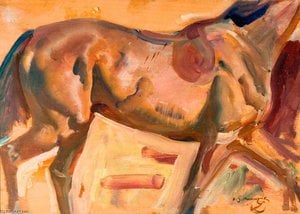
A Bay Charger in His Stable
Reproduction Size

Born in 1784 to a Scottish clergyman in the historic city of Edinburgh, James Loder emerged from a background of intellectual rigor to become one of the most evocative voices of the Romantic era. His early years were defined by a profound, self-driven passion for the visual arts, as he navigated the rich artistic traditions of Scotland and England. While his initial training leaned toward the structured discipline of classical portraiture, Loder’s spirit was fundamentally drawn to the untamed grandeur of the natural world. This transition from the precise depiction of human character to the sweeping narratives of the landscape marked the beginning of a career dedicated to capturing the sublime.
As his travels took him across Europe, Loder found a spiritual and artistic home in the rugged landscapes of Cornwall. The dramatic coastline, with its jagged cliffs and the rhythmic, powerful motion of the Atlantic, provided the perfect canvas for his developing Romantic sensibility. He did not merely seek to document these scenes; he sought to translate the emotional weight of the environment onto the canvas. Through his eyes, the Cornish coast became a stage for exploring the relationship between human emotion and the overwhelming majesty of nature, a hallmark of the 19th-century aesthetic that celebrated both beauty and terror.
Loder’s technical prowess was rooted in an extraordinary ability to manipulate light and atmosphere. Drawing deep inspiration from the innovative approaches of masters such as J.M.W. Turner and John Constable, he mastered the use of atmospheric perspective to instill his works with a sense of breathing life and immense depth. His technique involved a meticulous observation of how light interacts with mist, sea spray, and shifting clouds, creating luminous compositions that seem to glow from within. His brushwork, while deliberate and controlled, possessed an expressive quality that allowed him to capture the intangible moods of a setting—the quiet serenity of a sheltered bay or the turbulent energy of a storm-tossed sea.
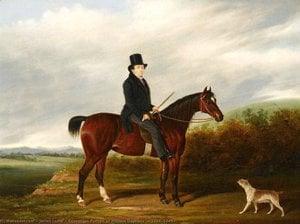
This skill was perhaps most strikingly displayed in his animalier works, where he applied his landscape sensibilities to the study of equine subjects. In masterpieces such as "A Bay Charger in His Stable," Loder demonstrated an unparalleled command over tonal harmony and texture. The way soft sunlight filters through a stable to illuminate the muscular detail of a horse reveals a painter deeply attuned to the subtle nuances of light. Similarly, his "Equestrian Portrait of William Stephens" showcases his ability to blend the dignity of portraiture with the dynamic energy of the animal subject, creating a sense of noble character that transcends simple representation.
The historical significance of James Loder lies in his role as a bridge between the formal traditions of the late 18th century and the emotive, atmospheric freedom of the Romantic movement. His work serves as a vital record of the British landscape during a period of profound cultural shift. By focusing on the rugged beauty of the Cornish coast and the intimate details of pastoral life, he contributed to a lasting visual language that continues to resonate with viewers today.
Loder’s enduring impact can be summarized through several key artistic contributions:

1784 - 1860
Embark on a visual journey through the romantic world of horse carriage art. Discover the mastery of equestrian oil paintings, from Impressionist textures to classical realism, and learn how to bring timeless elegance into your home with museum-quality reproductions.

Explore the profound secrets of classical oil painting. From the delicate mastery of glazing to the dramatic depth of chiaroscuro, discover the timeless techniques used by Old Masters to create enduring, museum-quality masterpieces that capture light and emotion.


Stay updated with the latest art news, exclusive offers, and decoration ideas.
Tell us about your project and our art experts will provide you with 3 personalized art suggestions.
Let Us Curate 3 Options Just for You - Free!

 Preview
 Send
Send Share
Share
 Details

 Download
 Similars
 X-Ray
X-Ray Diaporama


 Read More




































 Glass option is only available in size under 110 CM