

Museum-quality giclée or canvas print with fast production and flexible finish options. ( Buy Hand Made Painting Switch to Digital Image)





























Pick from our preset sizes that match the artwork's original proportions.

Type the width and the height you need, to fit your frame or your wall. A print can only be cut, never made bigger than the picture, so a size with a different shape loses a part of the image. We send you a digital mockup to approve before we print anything. The picture shown on this page does not show the real cut — only the mockup does.
Worldwide Delivery () in 2 weeks instead of standard 4/5 weeks. (21 October)
Rip Van Winkle
Reproduction Size
"Rip Van Winkle" by James Bard shows a balanced color intensity.
"Rip Van Winkle" is available as a high-resolution digital image download, purchased directly on its Digital Image page.
The color analysis of "Rip Van Winkle" by James Bard records a statement contrast and a strong color unity harmony.

James Bard (1815-1897) occupies a singular, often overlooked position within the landscape of 19th-century American art. He wasn't driven by aspirations for grand historical narratives or sweeping landscapes; instead, this largely self-taught New York City artist devoted his life to meticulously documenting the vibrant maritime world that defined his city’s identity. While not widely celebrated during his lifetime alongside some of his contemporaries, Bard’s paintings now offer invaluable glimpses into a bygone era—an age of steam and sail, commerce and innovation—providing a visual record unmatched in its detail and dedication. His work isn't about romanticizing the sea; it *is* the sea, or rather, the working waterfront, faithfully rendered with a remarkable eye for accuracy. He wasn’t seeking to create ‘high art’ but instead offered an unparalleled historical archive through his brushstrokes.
Born in New York City in 1815, James Bard's early life remains somewhat shrouded in mystery. Details regarding formal artistic training are scarce, leading scholars to believe he was largely self-taught. This isn’t to suggest a lack of sophistication; rather, it points to a keen observational ability honed through years of immersion in the world he would later depict with such precision. He possessed an innate talent for capturing the intricacies of shipbuilding and nautical life. Bard worked closely with his twin brother, John, during their early careers, creating joint works signed “J & J Bard.” These collaborative pieces, often watercolors, demonstrate a shared dedication to precise representation and a nascent artistic partnership that would define their initial output. After 1849, James continued independently, producing an astonishing number of paintings—over 430 are currently known—throughout the latter half of the century. His style, frequently described as “naive,” isn’t born of simplicity but rather a deliberate focus on factual accuracy over elaborate artistic flourishes. It is a testament to his commitment to representing what he *saw*, not what he imagined.
Bard's oeuvre is overwhelmingly focused on marine subjects: steamboats, sailing vessels, ferries, and the bustling harbor scenes that characterized New York City’s waterways. He frequently worked on commission, creating “portraits” of individual ships for their owners—a testament to the value placed on his meticulous depictions. These weren’t merely aesthetic representations; they were detailed inventories of rigging, hull designs, and flags, offering invaluable information for maritime historians today. Works like "Commodore" (1857), a striking depiction of a paddle steamer, showcase his ability to capture the grandeur of these vessels while maintaining an unwavering commitment to realism. Other notable examples include paintings of the “James A. Stevens” and “James W. Baldwin,” each serving as a unique visual record of its subject. "Sylvan Shore" exemplifies his broader focus on documenting not just the ships themselves, but also the landscapes and transportation networks that defined 19th-century America. He captured the energy of a city inextricably linked to the water, a city constantly in motion.
Though he died in relative obscurity, James Bard’s legacy has steadily grown as scholars have recognized the historical importance of his work. He wasn't concerned with creating “high art” in the traditional sense; his contribution lies in his unwavering dedication to documentation. His paintings offer a unique window into a period of rapid technological advancement and economic growth, providing insights into shipbuilding practices, shipping routes, and the daily lives of those who navigated these waters. The Thomas Hunt and the America, for example, captures not only the beauty of the vessels but also the excitement surrounding the first America’s Cup race in 1851. Bard's paintings are more than just pretty pictures; they are historical artifacts, offering a tangible connection to a bygone era. His work stands as a testament to the power of observation and the enduring value of preserving visual records. Today, his paintings are increasingly sought after by maritime historians and collectors, ensuring that his contribution to American art and history will continue to be appreciated for generations to come.
The story of James Bard is also a poignant reminder of the many talented artists who labored in relative anonymity during their lifetimes. He wasn’t driven by fame or fortune, but by a genuine passion for his subject matter and a desire to accurately capture the world around him. His paintings offer a refreshing contrast to the often-idealized depictions of maritime life found in other 19th-century art. They provide a valuable counterpoint to romanticized narratives, offering instead a grounded and realistic portrayal of working vessels and bustling harbors. Bard’s legacy is one of meticulous observation, unwavering dedication, and the enduring power of visual documentation. As more of his work comes to light, James Bard is finally taking his rightful place as a significant figure in American art history—a chronicler of New York's maritime era whose paintings continue to resonate with viewers today. He was, in essence, a historian wielding a paintbrush.

1815 - 1897 , United States of America

Journey through Rembrandt van Rijn's 25 most iconic paintings & etchings. Explore Dutch Golden Age masterpieces, dramatic chiaroscuro, and timeless portraits. Find museum-quality art reproductions to elevate your home decor on WahooArt.com.

Journey through 25 iconic James Abbott McNeill Whistler paintings! Explore his masterpieces of Aestheticism, from 'Nocturne in Black and Gold' to captivating portraits. Find museum-quality art reproductions & elevate your home decor with WahooArt.com. Discover the full collection online.

Explore the captivating world of James Bard (1815-1897), a meticulous chronicler of 19th-century American maritime life. Discover his detailed steamboat paintings and lasting legacy within the American Impressionism movement.
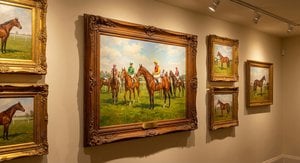
Explore 25 iconic Sir Alfred Munnings paintings! Discover the beauty of British Impressionism, equine art & rural England. Find museum-quality reproductions and elevate your home decor with WahooArt. Explore the full collection online.
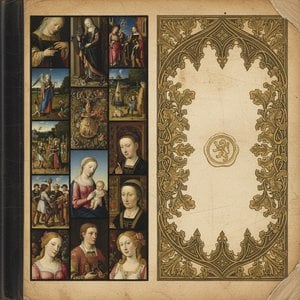
Journey into the world of Early Netherlandish painting! Explore 10 masterpieces by Jan van Eyck, Rogier van der Weyden & more. Discover stunning detail, symbolism & Renaissance art for your home decor. Find museum-quality reproductions on WahooArt.com

 Preview
 Send
Send Share
Share
 Details
 Guide
Guide

 Download
 Similars
 X-Ray
X-Ray Diaporama
 Stats
Stats


 Read More









 Glass option is only available in size under 110 CM


