Oil On CanvasWallArtImpressionism
 1901
1901 127.0 x 114.0 cm
 Dublin City Gallery The Hugh Lane
Museum-quality giclée or canvas print with fast production and flexible finish options. ( Buy Hand Made Painting Switch to Digital Image)





























Pick from our preset sizes that match the artwork's original proportions.

You may enter your own dimensions to fit a specific frame or space. If your selected size does not match the original image's proportions, we will either crop the artwork or extend the image with a mirrored or solid-fill edge. A digital mockup will be sent for your approval before production begins.
Please note that the on-screen preview does not reflect the actual cropping or extension. Only the mockup will accurately show the final composition.
While custom sizes are available, we recommend selecting a dimension from the predefined list to preserve the original proportions.
Worldwide Delivery () in 2 weeks instead of standard 4/5 weeks. (13 October)
Mischief
Reproduction Size
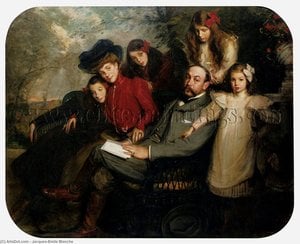
Jacques-Émile Blanche's "Mischief," painted in 1901, is more than just a portrait; it’s a carefully constructed tableau vivant capturing the essence of Belle Époque Paris. The painting immediately draws the eye with its dramatic chiaroscuro – a masterful manipulation of light and shadow that plunges the scene into an intimate, almost secretive atmosphere. Blanche, a key figure in the Impressionist movement yet deeply influenced by earlier artistic traditions, particularly the elegance of 18th-century English portraiture, has created a work brimming with quiet observation and subtle psychological depth.
The composition centers around two figures: a seated woman and a man standing behind her. Their postures suggest an easy familiarity, perhaps even playful banter, yet there’s also a palpable sense of contained energy. The details are meticulously rendered – the folds of the woman's dress, the texture of the fabric, the subtle expressions on their faces – all contribute to a remarkably realistic portrayal of human interaction. The muted color palette, dominated by deep browns, rich reds, and hints of yellow, reinforces the painting’s somber mood while simultaneously highlighting key elements within the scene.
Blanche's technique is a fascinating blend of observation and artistic license. He employs loose brushstrokes, characteristic of Impressionism, to capture the fleeting effects of light and atmosphere. However, these are not haphazard; they’re carefully considered choices that build up layers of color and texture, creating a remarkably tactile surface. Notice particularly the impasto – the thick application of paint – in areas like the woman's dress and the man's jacket, adding depth and visual interest. The artist skillfully utilizes glazing techniques, applying thin washes of translucent color over dried underlayers to achieve luminous effects and subtle shifts in tone.
The flattened perspective, a common feature of 19th-century painting, contributes to the intimate feel of the scene. Rather than striving for strict realism, Blanche prioritizes representation – capturing the *impression* of space and form. This stylistic choice allows him to focus on conveying mood and emotion, creating a sense of immediacy that draws the viewer into the moment depicted.
"Mischief" is deeply rooted in its historical context – the vibrant yet often decadent world of Belle Époque Paris. The painting reflects the social dynamics of the time, capturing a private conversation within a refined domestic setting. The figures themselves represent a microcosm of Parisian society: an educated woman and her companion, likely a gentleman of means, engaged in a relaxed exchange. Blanche’s frequent depictions of this social stratum offer a rare glimpse into the lives of those who shaped the cultural landscape of the era.
The title itself is intriguing. It suggests a playful transgression, a hint of mischief or rebellion within the confines of polite society. While the painting doesn't depict overt scandal, it subtly hints at an underlying current of unrest and unconventionality – a characteristic often associated with the artistic circles of Paris during this period.
Jacques-Émile Blanche’s “Mischief” remains a captivating work of art, offering viewers a poignant glimpse into the social and cultural fabric of Belle Époque Paris. Reproductions of this painting capture its atmospheric depth and nuanced details, allowing it to be enjoyed by a wider audience. Whether displayed in a private residence or a public gallery, "Mischief" continues to resonate with its evocative portrayal of human connection and the subtle complexities of Parisian life.
Consider commissioning a high-quality reproduction – a tangible reminder of Blanche’s artistic vision and a beautiful addition to any collection. It's a piece that invites contemplation, sparking curiosity about the lives and times it depicts.
"Mischief" by Jacques-Émile Blanche depicts portraiture, parisian society, intimacy, chiaroscuro, domestic scene, late 19th century, elegant art, in an elegant mood. Subject and atmosphere together describe the work.
"Mischief" was made in 1901, within the Impressionism movement.
Behind "Mischief" stand Jacques-Émile Blanche and the Impressionism movement.
"Mischief" by Jacques-Émile Blanche combines the oil on canvas technique with the Impressionism style. Technique and movement describe the making and the style of the work.
In the catalog, "Mischief" by Jacques-Émile Blanche is filed as wall art. The category helps find similar works.
The recommended use of a print of "Mischief" is statement.
The color analysis of "Mischief" by Jacques-Émile Blanche records a serene contrast and a strong color unity harmony.
"Mischief" is available as a high-resolution digital image download, purchased directly on this page.


1861 - 1942 , France

Elevate your home with bespoke Impressionist oil paintings. WahooArt transforms your cherished photos into museum-quality masterpieces through expert hand-painting and academic rigor. Discover a timeless legacy of light, texture, and unparalleled craftsmanship for the discerning collector.

Explore the ethereal beauty of Impressionist landscapes. Discover how masters like Monet captured fleeting light through color and texture, and learn to curate these timeless, luminous masterpieces for your home collection.

Discover the breathtaking allure of Impressionistic Realism. Explore how master artists blend luminous light with lifelike detail to create timeless works. From iconic landscapes to bespoke oil reproductions, immerse yourself in an era where atmosphere meets exquisite craftsmanship.

Elevate your personal landscapes into breathtaking Impressionist oil masterpieces. WahooArt transforms your cherished photos into museum-quality, hand-painted treasures through academic artistry and premium craftsmanship. Invest in a timeless legacy for your home today.

 Preview
 Send
Send Share
Share
 Details
 Guide
Guide

 Download
 Similars
 X-Ray
X-Ray Diaporama
 Stats
Stats Read More









 Glass option is only available in size under 110 CM