
Purchase a high-resolution, enhanced digital image, far superior to the online preview.
Each file is meticulously prepared by our in-house specialists using advanced tools and expert manual retouching. We ensure every image has exceptional clarity, precise color accuracy, and fine detail.
The final file is delivered via email within 72 hours, optimized for immediate use in professional, editorial, and print environments. This is the same quality trusted by top-tier design studios, publishers, and galleries.
Download a high-resolution file for personal display, printing, and creative projects. ( Switch to Print Buy Hand Made Painting)
When you choose WahooArt.com, you're not just getting an image - you're receiving a professionally enhanced digital artwork, crafted with precision and backed by a satisfaction guarantee. Here's everything that comes with your order, automatically:

Your high-resolution digital image file will be emailed to you within 72 hours of ordering - ready for immediate use.

Your artwork is professionally optimized using advanced AI tools and manual editing, ensuring maximum detail, clarity, and color accuracy.

Accidentally deleted or lost your file? No worries - we'll resend it to you anytime, free of charge.

Enjoy your artwork instantly with zero customs, duties, or delivery fees - digital downloads are always tax-free.

We ensure your digital image reflects the original colors as closely as possible using professional tools and color management.

If you're not satisfied with your digital image, we'll revise it or refund 100% within 100 days - no questions asked.

Not satisfied? Get a full refund within 100 days of receiving your digital file - no questions asked.

Buy 3 images, save 10% - Buy 5, save 15% - Buy 10+, save 20%. Great for creative projects, galleries, and agencies.
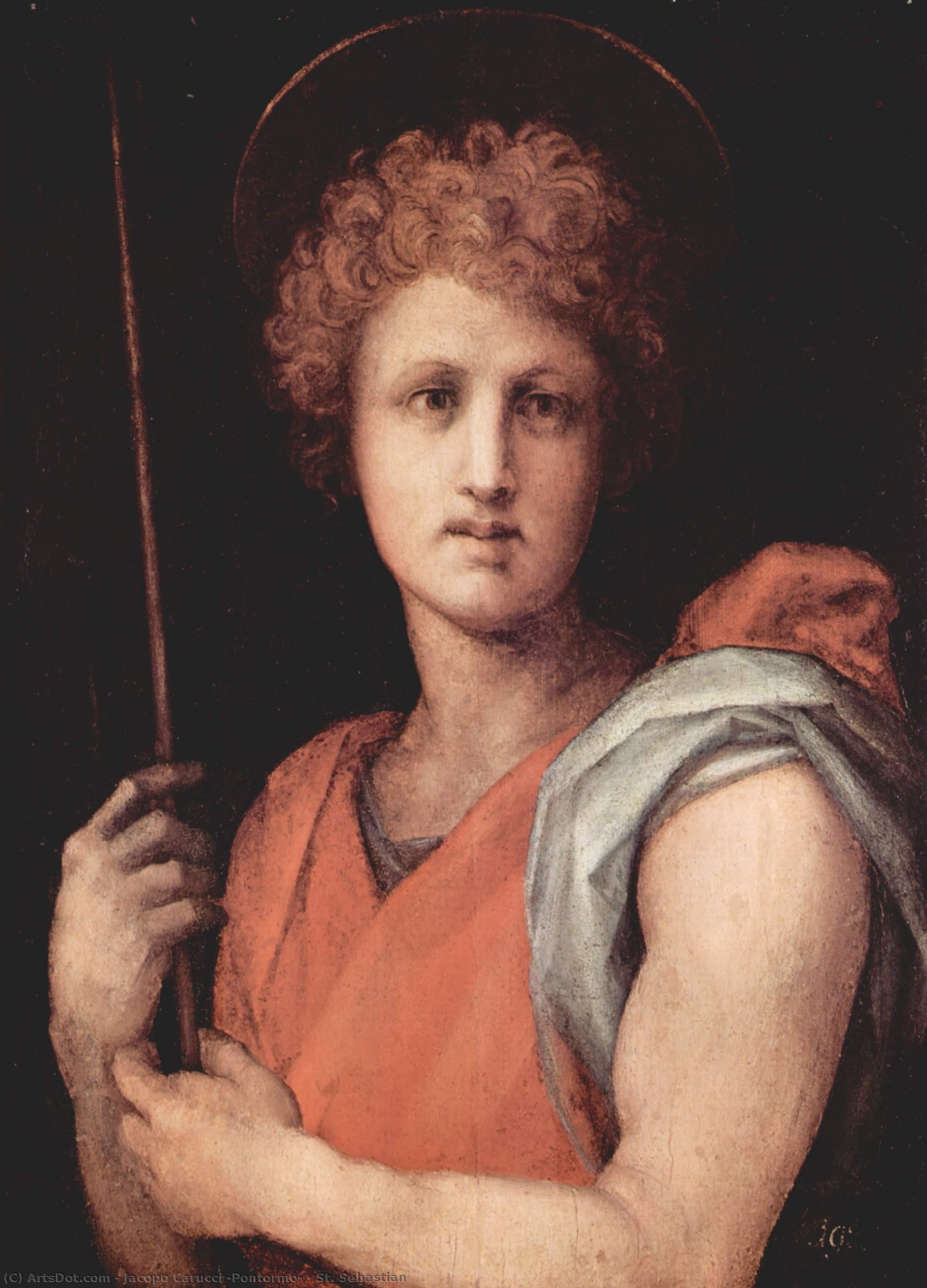
Jacopo Pontormo's 1515 depiction of Saint Sebastian is not merely a portrait; it’s an immersion into the heart of Mannerist emotion, a profound exploration of faith, suffering, and the human condition. Painted during a period of artistic upheaval—a deliberate departure from the idealized beauty of the High Renaissance—Pontormo crafted a work that anticipates the dramatic intensity of the Baroque while retaining a distinctly personal and haunting quality. The painting immediately commands attention with its stark contrast: a dark, almost impenetrable background against which the figure of St. Sebastian is rendered in rich, warm hues, creating an immediate sense of isolation and vulnerability.
The composition itself is meticulously constructed, adhering to the pyramidal structure favored by Renaissance artists but imbued with a subtle instability that speaks to the era’s fascination with ambiguity. St. Sebastian's head, centrally positioned, dominates the canvas, his gaze direct and unwavering – an invitation, perhaps, or a plea for understanding. The crossed arms, a gesture of both defense and acceptance, suggest a man caught between earthly suffering and divine grace. The halo encircling his head is not a symbol of triumphant victory but rather a quiet acknowledgment of his martyrdom, a subtle reminder of the spiritual weight he carries.
Pontormo’s masterful use of color is central to the painting's emotional impact. The dominant palette—deep reds, oranges, and earthy terracotta tones—evokes a sense of warmth and vitality, yet this is immediately tempered by the surrounding darkness. These warm hues are juxtaposed against cooler blues and whites in the draped fabric, creating visual tension and highlighting the figure’s isolation. The artist employs a technique known as *sfumato*, subtly blurring lines and edges to create an atmosphere of ethereal softness—a hallmark of Mannerism. Lines are deliberately soft and blended, avoiding sharp definition; this contributes significantly to the painting's overall sense of fluidity and emotional intensity.
Furthermore, Pontormo’s manipulation of light is particularly noteworthy. It isn’t a dramatic spotlight but rather a diffused illumination that seems to emanate from multiple sources, gently sculpting St. Sebastian’s form and emphasizing his face. This subtle lighting creates a sense of depth and volume while simultaneously flattening the space, drawing the viewer's attention solely to the figure himself. The textures are rendered with remarkable delicacy—the smooth skin, the flowing fabric—suggesting an almost tactile quality that invites close observation.
Beyond its aesthetic qualities, St. Sebastian’s image is rich in symbolic meaning. As a martyr for his Christian faith, he represents sacrifice, endurance, and the triumph of spirit over adversity. The arrows piercing his body are not merely depictions of physical pain but potent symbols of spiritual wounds—a visual representation of the suffering endured by all believers. The painting reflects the turbulent religious climate of 16th-century Florence, a city grappling with political instability and religious reform. Pontormo’s embrace of Mannerism can be seen as a response to the perceived rigidity of the High Renaissance, a willingness to explore subjective experience and emotional intensity.
Born Jacopo Carucci in Pontorme, Tuscany, around 1494, Pontormo was a pivotal figure bridging the Renaissance and Baroque eras. His life was marked by both artistic brilliance and personal tragedy – a loss of his wife and children profoundly impacting his work. This experience undoubtedly contributed to the melancholic tone that permeates St. Sebastian, transforming it into a timeless meditation on grief, faith, and the enduring power of the human spirit.
Reproductions of Jacopo Pontormo’s *St. Sebastian* offer an exceptional opportunity to experience this profoundly moving work firsthand. The meticulous detail, evocative color palette, and masterful composition are faithfully captured in high-quality reproductions, allowing viewers to appreciate the artist's genius from any vantage point. Whether adorning a grand salon or a more intimate space, this painting continues to resonate with its powerful message of resilience and spiritual depth.


1494 - 1557 , Italy

 Preview
 Send
Send Share
Share
 Details

 Download
 Similars
 X-Ray
X-Ray Diaporama
 Stats
Stats


 Read More


![Legend Of St Francis - [23] - St Francis Mourned By St Clare — Giotto Di Bondone, Gothic](/media/artworks/images-thumb/17/1c/171c284c41dc3ef8bca83e51c1e1e531.jpg)


