x


 Oil On PanelWallArtRenaissance Portraiture
 1519Renaissance
 78.0 x 66.0 cm
 Galleria degli Uffizi
Museum-quality giclée or canvas print with fast production and flexible finish options. ( Buy Hand Made Painting Buy Image)





























Pick from our preset sizes that match the artwork's original proportions.

You may enter your own dimensions to fit a specific frame or space. If your selected size does not match the original image's proportions, we will either crop the artwork or extend the image with a mirrored or solid-fill edge. A digital mockup will be sent for your approval before production begins.
Please note that the on-screen preview does not reflect the actual cropping or extension. Only the mockup will accurately show the final composition.
While custom sizes are available, we recommend selecting a dimension from the predefined list to preserve the original proportions.
Worldwide Delivery () in 2 weeks instead of standard 4/5 weeks. (5 September)


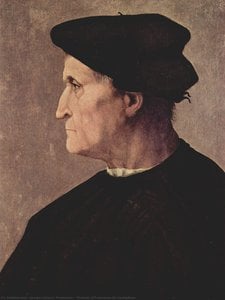
St. Anthony Abbot
Reproduction Size
In the quietude of a Florentine studio around 1519, Jacopo Carucci—the master known to history as Pontormo—captured a moment of profound spiritual stillness that continues to resonate centuries later. His depiction of St. Anthony Abbot is far more than a mere portrait of a desert saint; it is a window into the burgeoning Mannerist movement, where the serene balance of the High Renaissance began to yield to a more complex, psychological intensity. As one gazes upon this work, there is an immediate sense of encountering a soul in contemplation, a figure emerging from a muted, greenish-yellow void to offer a glimpse of divine light.
The painting serves as a masterful bridge between eras. While the anatomical precision and sculptural presence of the subject echo the monumental influence of Michelangelo, Pontormo introduces an emotional depth that anticipates the dramatic tension of the Baroque. The saint is rendered with a striking realism; his weathered face, the texture of his long, flowing beard, and the heavy drape of his dark, ascetic robes all speak to a life of rigorous devotion and solitude. This meticulous attention to detail does not merely serve to document the physical form but to ground the spiritual subject in a palpable, human reality.
Technique and symbolism are inextricably linked in this evocative composition. Pontormo employs chiaroscuro with surgical precision, utilizing a light source that strikes the figure from the left to carve his features out of the shadows. This play of light and dark does more than create a three-dimensional illusion; it acts as a metaphor for the saint's spiritual journey through the darkness of temptation toward the clarity of faith. The subtle use of shadow on the right side of the face adds a layer of mystery, suggesting the internal struggles inherent in the monastic life.
Central to the painting’s narrative is the scroll held firmly in St. Anthony's hand. Upon it, the Latin inscription "EGO SUM LUX MUNDI"—I am the light of the world—serves as a powerful theological anchor. Though these words are attributed to Christ, their presence in the hands of the Abbot connects the saint to the divine essence, reinforcing his role as a beacon of spiritual truth. The muted, atmospheric background, devoid of distracting landscapes, ensures that the viewer’s focus remains locked onto this sacred message and the luminous countenance of the saint himself.
For the art lover or the interior designer, a reproduction of Pontormo’s St. Anthony Abbot offers much more than aesthetic beauty; it provides an atmosphere of contemplative gravity. The painting's sophisticated palette—dominated by earthy tones, deep shadows, and that singular, haunting greenish-yellow hue—makes it a versatile centerpiece for spaces that value historical depth and intellectual character. It is a piece that invites long periods of study, rewarding the observer with new layers of emotional complexity upon every viewing.
Whether placed in a private library, a formal study, or a curated gallery setting, this work brings with it the weight of Florentine history and the melancholic beauty of the Mannerist vision. To possess such a piece is to invite the spirit of Pontormo into one's environment—a master who dared to look inward and capture the turbulent, beautiful complexity of the human soul through the medium of oil and light.


1494 - 1557 , Italy

Explore the profound beauty of religious processions in art history. From Baroque drama to spiritual transcendence, discover how masters captured faith. WahooArt.com offers exquisite, hand-painted oil reproductions for discerning collectors seeking timeless grandeur.


Stay updated with the latest art news, exclusive offers, and decoration ideas.
Tell us about your project and our art experts will provide you with 3 personalized art suggestions.
Let Us Curate 3 Options Just for You - Free!

 Preview
 Send
Send Share
Share
 Details

 Download
 Similars
 X-Ray
X-Ray Diaporama
 Read More







 Glass option is only available in size under 110 CM