
x


Hand-painted oil on canvas in your size and frame, made to order by our artists. ( Buy Print Buy Image)
Pick from our preset sizes that match the artwork's original proportions.

You may enter your own dimensions to fit a specific frame or space. If your selected size does not match the original image's proportions, we will either crop the artwork or extend the painting with additional hand-painted elements. A digital mockup will be sent for your approval before production begins.
Please note that the on-screen preview does not reflect the actual cropping or extension. Only the mockup will accurately show the final composition.
While custom sizes are available, we recommend selecting a dimension from the predefined list to preserve the original proportions.
Worldwide Delivery () in 3/4 weeks instead of standard 5 weeks. (28 August). No compromise on quality.


Tea scoop and case
Reproduction Size

In the heart of the Edo period, amidst the burgeoning cultural refinement of Tokyo, lived a master whose hands breathed life into the quietest moments of Japanese tradition. Ichio Iori was not merely a craftsman but a poet of form, an artist who understood that true beauty often resides in the spaces between breaths. Born in 1600, his life coincided with a transformative era in Japan, a time when the rigid structures of the past began to harmonize with a new, sophisticated appreciation for the aesthetic of simplicity and the ritualistic grace of the tea ceremony.
Iori’s journey was one of disciplined devotion. His early years were spent absorbing the meticulous techniques of traditional Japanese craftsmanship, yet he possessed an innate ability to transcend mere imitation. While many of his contemporaries focused on the opulence of gold and heavy lacquer, Iori sought a different path—one defined by what he termed the shin style. This approach emphasized a refined, essentialist beauty, stripping away the superfluous to reveal the soul of the object. His work became a bridge between the functional requirements of tea ceremony utensils and the profound spiritual depth required by the practitioners of the Way of Tea.
The mastery of Iori is most profoundly felt in his treatment of organic materials, particularly bamboo. He possessed an uncanny ability to manipulate this resilient medium, creating tea scoop cases and other ceremonial objects that felt both incredibly delicate and remarkably enduring. His technique involved a deep understanding of the natural grain and tension of the wood, allowing him to craft pieces that seemed to grow naturally from the earth itself. Through his hands, a simple piece of bamboo could become a vessel for meditation, an object that commanded respect through its understated elegance rather than through outward display.
The historical significance of Ichio Iori lies in his ability to elevate functional craft to the realm of fine art. He did not separate the utility of an object from its aesthetic value; instead, he argued that their union was the highest form of artistic expression. His influence can be traced through the generations of tea masters who found in his work a physical manifestation of wabi-sabi—the appreciation of imperfection, impermanence, and the beauty of the natural cycle.
To study the works attributed to Iori is to engage in a silent dialogue with history. His achievements are not measured by grand monuments or sprawling canvases, but by the enduring presence of his objects in the most sacred of Japanese rituals. His legacy remains a testament to the power of precision and the profound impact of a singular, focused vision:
Today, the name Ichio Iori evokes a sense of profound tranquility. In an era of constant motion and noise, his work serves as a reminder of the value of stillness, the importance of detail, and the enduring strength found in simplicity.

1600 - 1676 , Japan

Explore the profound beauty of Japanese landscape painting. From Hokusai's iconic vistas to Zen-inspired compositions, discover the spiritual depth and historical mastery of Ukiyo-e art in this expert cultural retrospective.

Explore the profound beauty of Japanese Ukiyo-e art. Discover the legacy of Hokusai and the Utagawa school through an expert exploration of Edo-period aesthetics, seasonal motifs, and the enduring global influence of Japan's 'Floating World' on fine art history.

Explore the ephemeral beauty of Japanese Ukiyo-e art. From the dynamic warriors of Kuniyoshi to serene landscapes, discover the profound history, masterful techniques, and global influence of these iconic woodblock prints in our deep cultural retrospective.
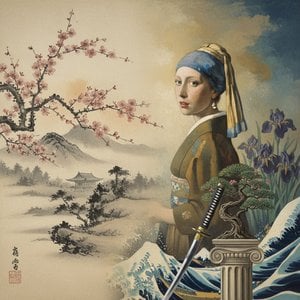
Explore the profound influence of Japanese artistry on global masterpieces. From Ukiyo-e prints to Zen aesthetics, discover how Eastern elegance transformed Western art history in this deep cultural reflection for fine art enthusiasts and collectors.

Embark on a visual journey through the ephemeral beauty of Ukiyo-e. Discover the masters of the floating world, from dynamic warriors to Kabuki legends, and explore the profound cultural legacy of Japanese woodblock printing in this expert guide for art enthusiasts.


Stay updated with the latest art news, exclusive offers, and decoration ideas.
Tell us about your project and our art experts will provide you with 3 personalized art suggestions.
Let Us Curate 3 Options Just for You - Free!

 Preview
 Send
Send Share
Share
 Details

 Download
 Similars
 X-Ray
X-Ray Diaporama


 Read More




































 Glass option is only available in size under 110 CM


