

 Acrylic On CanvasWallArtRomanticism
 1790
1790 40.0 x 30.0 cm
 Hermitage Museum
Purchase a high-resolution, enhanced digital image, far superior to the online preview.
Each file is meticulously prepared by our in-house specialists using advanced tools and expert manual retouching. We ensure every image has exceptional clarity, precise color accuracy, and fine detail.
The final file is delivered via email within 72 hours, optimized for immediate use in professional, editorial, and print environments. This is the same quality trusted by top-tier design studios, publishers, and galleries.
Download a high-resolution file for personal display, printing, and creative projects. ( Switch to Print Buy Hand Made Painting)
When you choose WahooArt.com, you're not just getting an image - you're receiving a professionally enhanced digital artwork, crafted with precision and backed by a satisfaction guarantee. Here's everything that comes with your order, automatically:

Your high-resolution digital image file will be emailed to you within 72 hours of ordering - ready for immediate use.

Your artwork is professionally optimized using advanced AI tools and manual editing, ensuring maximum detail, clarity, and color accuracy.

Accidentally deleted or lost your file? No worries - we'll resend it to you anytime, free of charge.

Enjoy your artwork instantly with zero customs, duties, or delivery fees - digital downloads are always tax-free.

We ensure your digital image reflects the original colors as closely as possible using professional tools and color management.

If you're not satisfied with your digital image, we'll revise it or refund 100% within 100 days - no questions asked.

Not satisfied? Get a full refund within 100 days of receiving your digital file - no questions asked.

Buy 3 images, save 10% - Buy 5, save 15% - Buy 10+, save 20%. Great for creative projects, galleries, and agencies.
Hubert Robert's "Inhabited Ruins," painted in 1790, is more than just a picturesque landscape; it’s a poignant meditation on time, memory, and the enduring allure of vanished grandeur. Executed during a period of profound social and political upheaval in France – the twilight years of the Ancien Régime and the dawn of the Revolution – Robert's work captures a melancholic beauty, reflecting both the decay of ancient structures and the wistful longing for a lost past. The painting depicts a crumbling Roman ruin, partially overgrown with vegetation, yet teeming with life: figures wander amongst the fallen columns and weathered arches, suggesting an ongoing human connection to these remnants of antiquity.
Hubert Robert (1733-1808) was a pivotal figure in 18th-century French art, renowned for his mastery of the “capriccio,” a genre that blended realistic landscape with fantastical elements and imaginative narratives. Unlike traditional topographical paintings focused on accurate representation, Robert’s capricci prioritized atmosphere, mood, and the evocative power of suggestion. He wasn't merely documenting ruins; he was crafting visions—a skill honed during his extensive travels through Italy, where he became deeply fascinated by the remnants of Roman civilization. His early training with sculptor Michel-Ange Slodtz instilled in him a strong foundation in perspective and design, while his time in Rome under Giovanni Paolo Panini further refined his understanding of architectural detail and atmospheric effects.
"Inhabited Ruins" exemplifies Robert’s signature style—a masterful blend of observation and imagination. The painting is rendered with a delicate, almost ethereal quality, achieved through the use of soft brushstrokes and subtle gradations of light and shadow. Robert expertly employs atmospheric perspective, creating a sense of depth and distance by diminishing the clarity and intensity of colors in the background. Notice how he uses dappled sunlight filtering through the foliage to illuminate key elements within the ruin, drawing the viewer’s eye towards the figures and highlighting the textures of the crumbling stone. The composition is carefully balanced, with the ruins acting as a central focal point while the surrounding landscape provides a sense of scale and context. The inclusion of human figures—a small group gathered near an archway—adds a vital element of narrative and invites the viewer to contemplate their relationship to this ancient space.
Beyond its aesthetic beauty, “Inhabited Ruins” is rich in symbolic meaning. The ruins themselves represent the transience of power, the inevitable decay of all things, and the cyclical nature of history. The figures within the scene are not simply observers; they embody humanity’s enduring fascination with the past and our attempts to find meaning and connection amidst the ruins of bygone eras. Robert's choice of a Roman setting—a civilization renowned for its architectural achievements and philosophical legacy—underscores this theme, suggesting that even in decline, these remnants hold profound significance. The painting evokes a sense of melancholy and nostalgia, prompting viewers to reflect on their own mortality and the fleeting nature of human existence. It’s a powerful reminder that beauty can be found not only in pristine monuments but also in the weathered stones of forgotten places.
Hubert Robert's work profoundly influenced subsequent generations of artists, particularly those associated with the Romantic movement. His emphasis on atmosphere, emotion, and the sublime—the awe-inspiring power of nature—laid the groundwork for later painters like Caspar David Friedrich and J.M.W. Turner. “Inhabited Ruins” stands as a testament to Robert’s artistic genius and his ability to capture the enduring spirit of a bygone era, inviting us to contemplate the beauty and melancholy inherent in the passage of time.

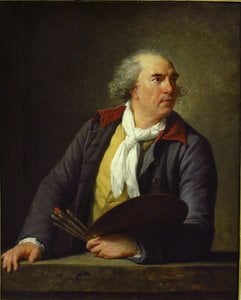
1733 - 1808 , France

 Preview
 Send
Send Share
Share
 Details
 Guide
Guide

 Download
 Similars
 X-Ray
X-Ray Diaporama
 Stats
Stats Read More


