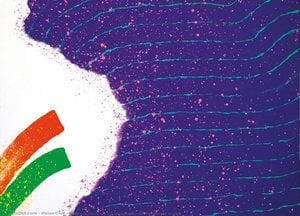
Acrylic On CanvasWallArtPunto International
 1962Modern
 70.0 x 80.0 cm
 Song Art Museum
Purchase a high-resolution, enhanced digital image, far superior to the online preview.
Each file is meticulously prepared by our in-house specialists using advanced tools and expert manual retouching. We ensure every image has exceptional clarity, precise color accuracy, and fine detail.
The final file is delivered via email within 72 hours, optimized for immediate use in professional, editorial, and print environments. This is the same quality trusted by top-tier design studios, publishers, and galleries.
Download a high-resolution file for personal display, printing, and creative projects. ( Switch to Print Buy Hand Made Painting)
When you choose WahooArt.com, you're not just getting an image - you're receiving a professionally enhanced digital artwork, crafted with precision and backed by a satisfaction guarantee. Here's everything that comes with your order, automatically:

Your high-resolution digital image file will be emailed to you within 72 hours of ordering - ready for immediate use.

Your artwork is professionally optimized using advanced AI tools and manual editing, ensuring maximum detail, clarity, and color accuracy.

Accidentally deleted or lost your file? No worries - we'll resend it to you anytime, free of charge.

Enjoy your artwork instantly with zero customs, duties, or delivery fees - digital downloads are always tax-free.

We ensure your digital image reflects the original colors as closely as possible using professional tools and color management.

If you're not satisfied with your digital image, we'll revise it or refund 100% within 100 days - no questions asked.

Not satisfied? Get a full refund within 100 days of receiving your digital file - no questions asked.

Buy 3 images, save 10% - Buy 5, save 15% - Buy 10+, save 20%. Great for creative projects, galleries, and agencies.
Hsiao Chin’s “La Forza,” painted in 1962, is more than just a depiction of a wave; it's a potent statement born from the burgeoning artistic currents of the Punto International Movement. This vibrant canvas, measuring 70 x 80 cm, immediately captivates with its dynamic composition – a surging blue and green wave punctuated by a startlingly bright pink square. The work’s genesis within the movement itself is crucial to understanding its significance; the Punto International Movement, founded in 1962, sought to bridge Eastern and Western artistic traditions through bold experimentation and a rejection of established norms. Chin's piece exemplifies this ethos perfectly.
Born in China in 1935, Hsiao Chin’s artistic journey is defined by a remarkable synthesis of Eastern heritage and Western innovation. His early training at the Guangzhou Academy of Fine Arts instilled him with the foundational techniques of traditional Chinese painting – meticulous brushwork, layered washes, and an understanding of *qi* (life force) – yet he refused to be confined by convention. He embraced vibrant color palettes, a hallmark of his style, and incorporated modern Western influences, particularly abstract expressionism, into his approach. “La Forza” showcases this brilliantly; the bold strokes mimicking traditional Chinese painting are juxtaposed with the geometric abstraction of the pink square, creating a compelling tension.
The wave itself is a recurring motif in Chin’s work, often interpreted as representing both natural forces and human emotion. Here, its dynamic movement suggests power, energy, and perhaps even chaos. The introduction of the pink square introduces an element of deliberate disruption. Pink, historically associated with femininity and spirituality in Chinese art, stands in stark contrast to the raw power of the wave. Its placement at the heart of the composition draws immediate attention, demanding interpretation. Some scholars suggest it represents a focal point for contemplation or perhaps a symbol of the artist's own internal struggle between tradition and modernity – a core theme within his oeuvre.
"La Forza" was created during a pivotal moment in art history. The Punto International Movement, with its emphasis on simplified forms, bold color, and the rejection of representational realism, sought to create a universal language of art accessible across cultures. This piece embodies that spirit perfectly. The movement’s influence can be seen in Chin's willingness to experiment with abstraction while retaining elements of his cultural heritage. The work’s creation in 1962, just after the founding of the movement, firmly places it within this influential artistic dialogue. It is a testament to Hsiao Chin's ability to navigate and contribute meaningfully to these complex artistic conversations.


1935 - , China

 Preview
 Send
Send Share
Share
 Details

 Download
 Similars
 X-Ray
X-Ray Diaporama
 Stats
Stats Read More