

Hand-painted oil on canvas in your size and frame, made to order by our artists. ( Switch to Print Switch to Digital Image)





























Pick from our preset sizes that match the artwork's original proportions.

You may enter your own dimensions to fit a specific frame or space. If your selected size does not match the original image's proportions, we will either crop the artwork or extend the painting with additional hand-painted elements. A digital mockup will be sent for your approval before production begins.
Please note that the on-screen preview does not reflect the actual cropping or extension. Only the mockup will accurately show the final composition.
While custom sizes are available, we recommend selecting a dimension from the predefined list to preserve the original proportions.
Worldwide Delivery () in 3/4 weeks instead of standard 5 weeks. (26 September). No compromise on quality.


Three Jockeys
Reproduction Size
Edgar Degas's "Three Jockeys," painted in 1900, isn’t merely a depiction of horse racing; it’s a vibrant distillation of movement, energy, and the fleeting beauty of a pivotal moment. This pastel masterpiece, housed within the Metropolitan Museum of Art, offers a captivating glimpse into the world of Parisian equestrian sport through Degas's uniquely Impressionistic lens. The painting immediately draws the eye with its dynamic composition – three figures suspended in a flurry of motion against a backdrop of lush green grass and a hazy sky. It’s a scene brimming with life, capturing not just the physical exertion of the jockeys but also their competitive spirit and the inherent drama of the race.
Degas's masterful use of pastel is central to the work’s evocative power. The medium allows for an astonishing level of subtlety and nuance – a delicate layering of color that creates a sense of atmospheric depth and captures the soft, diffused light characteristic of Impressionism. Notice how he employs broken strokes, building up layers of pigment to suggest texture and movement. The pastel's inherent softness contrasts beautifully with the sharp lines of the horses’ forms, emphasizing their speed and power. The vibrant oranges, blues, and reds of the jockeys’ jackets punctuate the muted tones of the landscape, further intensifying the visual impact.
While often categorized as an Impressionist, Degas resisted this label, preferring to describe himself as a “realist.” He was deeply interested in portraying modern life – particularly the burgeoning world of leisure and entertainment that defined late 19th-century Paris. Horse racing, with its blend of athleticism, spectacle, and social interaction, became a recurring subject for Degas. He wasn’t simply documenting a race; he was dissecting it, analyzing its components—the horses, the jockeys, the spectators—and presenting them in a way that revealed their inherent drama and complexity.
The painting's composition is deliberately asymmetrical, contributing to its sense of dynamism. The first jockey, clad in an eye-catching orange jacket, turns his head back towards his fellow competitors, creating a visual dialogue between the figures. This subtle gesture hints at rivalry and competition, while also suggesting a shared experience. The horses themselves are rendered with remarkable detail – their muscles straining, their nostrils flared, their manes flowing in the wind. Degas’s ability to capture the essence of movement is truly astonishing; you can almost feel the thundering hooves beneath your feet.
Beyond its purely visual appeal, “Three Jockeys” offers a glimpse into the social context of the time. Horse racing was immensely popular in Paris during the late 19th century, attracting a diverse audience from all walks of life – wealthy aristocrats, working-class spectators, and fashionable ladies. The painting subtly reflects this social stratification, with the jockeys representing both skill and status. The detail of the onlookers adds to this sense of community and shared experience.
Interestingly, Degas’s depiction of the horses is somewhat unconventional. One jockey is shown extending his neck to graze, a behavior that contradicts traditional training methods – a small detail that injects a touch of humor into the scene. This playful element underscores Degas's critical eye and his willingness to challenge conventional representations. The painting also subtly hints at the precariousness of life for these jockeys, highlighting their vulnerability amidst the excitement and spectacle of the race.
WahooArt offers meticulously crafted hand-painted reproductions of Edgar Degas’s "Three Jockeys," allowing you to experience this iconic masterpiece in stunning detail. Our skilled artists replicate Degas's delicate pastel strokes and vibrant color palette, capturing the essence of his artistic vision with unparalleled accuracy. Whether you are an art enthusiast, a collector, or simply seeking to add a touch of Impressionistic elegance to your interior design, our reproductions provide a beautiful and authentic way to own a piece of art history. Explore the full reproduction on WahooArt.com and discover the timeless beauty of “Three Jockeys.”

Born Hilaire-Germain-Edgar De Gas in Paris, 1834, Edgar Degas was an artist of fascinating contradictions. While often grouped with the Impressionists—Monet, Renoir, and others who revolutionized painting in the late 19th century—he actively resisted that label, identifying instead as a realist. This commitment stemmed from his meticulous observation of the world around him and a dedication to portraying it with unflinching honesty. Degas’s early life was comfortably bourgeois; his father was a banker, and his mother hailed from a Creole family in New Orleans. This background afforded him access to education and artistic training, though he often chafed against academic constraints. He initially enrolled at the Lycée Louis-le-Grand, but his true education began when he started copying works in the Louvre, honing his skills and igniting a lifelong passion for classical art. However, Degas’s path wasn't one of strict adherence to tradition; it was marked by constant questioning and reevaluation of artistic norms. He possessed an independent spirit that would define his entire career.
While contemporaries like Monet chased the fleeting effects of light outdoors, Degas largely worked within the confines of his studio, meticulously constructing scenes from observation and memory. His subject matter was decidedly modern—a departure from the historical or mythological themes favored by many academic painters. He found inspiration in the everyday lives of Parisians: laundresses, cabaret singers, milliners, and, most famously, dancers. It is this fascination with ballet that defines much of his oeuvre. Degas didn’t simply paint beautiful ballerinas; he captured the grueling reality of their profession—the endless rehearsals, the physical strain, the fleeting moments of grace amidst a world of hard work. His compositions are often unconventional, cropping figures in unexpected ways and utilizing asymmetrical arrangements that create a sense of dynamism and immediacy. He was a master of capturing movement, not through blurred lines or hazy effects, but through precise observation and careful rendering of form. Dancer, A Group of Dancers, and Women Combing Their Hair are prime examples of this dedication to portraying the human figure in motion and revealing the complexities of modern life. He wasn’t interested in superficial beauty; he sought to reveal the truth beneath the surface.
Degas’s artistic journey was shaped by a diverse range of influences. His early training emphasized classical principles, particularly the work of Jean-Auguste-Dominique Ingres, whose emphasis on draftsmanship and precise form left a lasting impression. However, Degas also admired the Realists, such as Gustave Courbet, who challenged academic conventions and championed the depiction of contemporary life. A pivotal moment in his development came through his association with Camille Pissarro, a leading Impressionist who introduced him to other artists and encouraged him to experiment with new techniques. He was captivated by Japanese prints—Ukiyo-e—which influenced his use of asymmetrical compositions, flattened perspectives, and bold patterns. He also embraced photography, recognizing its potential as a tool for studying movement and capturing fleeting moments in time. This willingness to incorporate diverse influences into his work is what sets Degas apart and contributes to the unique character of his art. He wasn’t afraid to borrow from different sources, synthesizing them into something entirely new.
Edgar Degas died in Paris in 1917, leaving behind a body of work that continues to captivate and inspire audiences today. His innovative approach to composition, his masterful draftsmanship, and his unflinching portrayal of modern life have had a profound impact on the course of art history. He paved the way for future generations of artists who sought to break free from traditional conventions and explore new ways of representing the world around them. His influence can be seen in the work of Pablo Picasso and Henri Matisse, among others. Museums worldwide—including the Musée d'Orsay and the Musée de l’Orangerie in Paris—house significant collections of his paintings, pastels, sculptures, and prints, ensuring that his legacy will endure for generations to come. Degas wasn’t merely a painter of dancers or racehorses; he was a keen observer of human nature, a master of form and movement, and a true innovator who redefined the possibilities of art.

1834 - 1917 , France
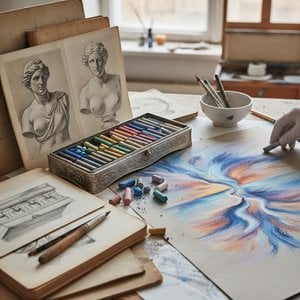
Explore the ethereal beauty of pastel art. Discover how Impressionist masters used soft hues and velvety textures to capture light. A professional guide for art enthusiasts seeking to understand, collect, and appreciate the delicate magic of this timeless medium.

Master the nuances of Impressionism vs. Post-Impressionism with our expert guide. Explore the revolutionary shift from Monet’s fleeting light to Van Gogh’s emotional depth. Discover how these iconic movements continue to inspire fine art collectors and modern interiors today.

 Preview
 Send
Send Share
Share
 Details
 Guide
Guide

 Download
 Similars
 X-Ray
X-Ray Diaporama
 Stats
Stats

 Read More







 Glass option is only available in size under 110 CM


